Summit ahead of 2027: Uncertainty trails opposition parties’ single candidate plan against Tinubu
• Atiku, Obi, Kwankwaso, Makinde, others remain on separate platforms
• G-100 in search of structure as Wike predicts easiest election yet for president
By Clifford Ndujihe, Omeiza Ajayi & Liminous Jannamike
Uncertainty is trailing tomorrow’s much-anticipated opposition summit in Abuja, with questions mounting over whether the meeting will succeed in laying the groundwork for a consensus presidential candidate to challenge President Bola Tinubu in the 2027 election.
Although the G-100, the convener of the Summit, has made it clear that tomorrow’s meeting is not designed to immediately determine who will fly the opposition’s presidential ticket, the question of who eventually steps down for whom is already hanging over the gathering.
The issue was at the heart of an earlier opposition coalition effort which brought major opposition figures together in Ibadan, Oyo State, in April.
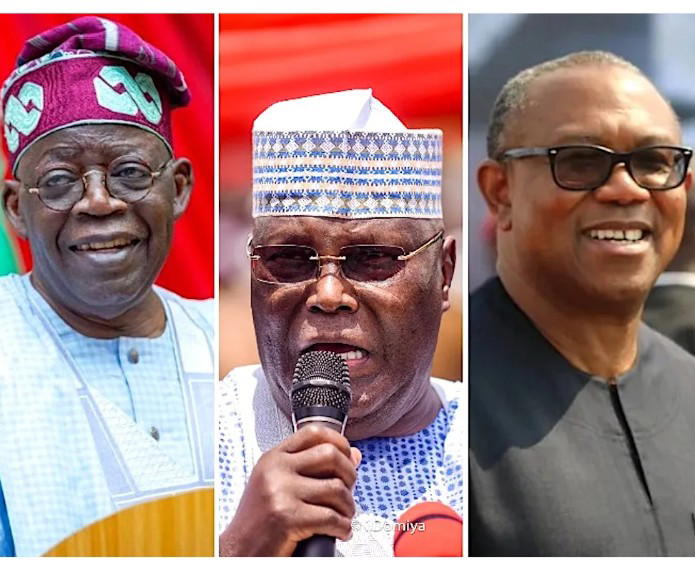
That initiative subsequently lost momentum, with former Vice President and 2023 presidential candidate of the Peoples Democratic Party, PDP, Alhaji Atiku Abubakar; former Anambra State Governor, Mr Peter Obi; former Kano State Governor, Rabiu Kwankwaso; and Oyo State Governor, Seyi Makinde, eventually pursuing separate political platforms and presidential ambitions.
Framework
The G-100 process is therefore entering tomorrow’s Summit with the difficult task of creating a framework that can prevent a repeat of the old pattern in which opposition leaders agree on the need to defeat the ruling party but struggle to agree on who should lead the charge.
This came even as Minister of the Federal Capital Territory, FCT, Nyesom Wike, insists that the exercise is dead on arrival, saying 2027 will be a foregone conclusion for Tinubu.
The G-100, in a statement, late last week, by its convener, Salihu Mohammed Lukman, said tomorrow’s Summit, convened under the theme, ‘A Framework for Opposition Cooperation and Coordination,’ would bring together the leadership of Nigeria’s principal opposition political parties to begin a structured negotiation on the terms, institutions and principles upon which they may cooperate ahead of the 2027 general elections.
Among the proposals before the Summit, the G-100 said, will be the establishment of structures to facilitate negotiations and cooperation, including five specialised Working Groups.
Subject to the decisions of the participating parties, the bodies will be mandated to develop, within four weeks, the principal documents and agreements required to give institutional form to opposition cooperation.
Opposition
The statement listed expected participants as national chairmen, party leaders and members of the National Working Committees of the African Democratic Congress, ADC; Allied Peoples Movement, APM; New Democratic Congress, NDC; PDP; Peoples Redemption Party, PRP; and Social Democratic Party, SDP.
Also expected are presidential candidates and running mates of the participating political parties; G-100 signatories and members of the Minority Caucus of the House of Representatives.
The G-100 said the gathering followed its publication, on August 2, of the ‘Doctrine of a Necessary Democratic Opposition’ and several weeks of direct consultations with the leadership of the six opposition parties.
Those consultations, it said, culminated in a shared briefing titled, ‘A Framework for Opposition Cooperation and Coordination,’ which identified areas of convergence among the participating parties while recognising their distinct histories, identities and political interests.
At the centre of the consultations, according to the statement, was a common recognition of the need for a credible, organised and competitive democratic opposition, alongside a willingness to engage the difficult questions that meaningful cooperation ahead of 2027 will require.
“Cooperation does not require any party to disappear into another. The first question before party leaders is not who leads the ticket. It is what we are, together, prepared to do for this country,” the statement said.
Decisions
The G-100 said the first Summit was not intended to resolve questions of presidential candidacy or the final form opposition cooperation may take in a single sitting.
Its immediate purpose, the group explained, is more fundamental: To establish and authorise a formal architecture through which those questions can be negotiated collectively, transparently and in good faith.
Each participating political party is expected to attend with a delegation of leaders and key stakeholders drawn from its national leadership and other relevant constituencies.
The delegations, the group said, will participate fully in deliberations to ensure the process extends beyond principal party leaders and draws on a broader range of political experience, perspectives and interests.
The G-100 stressed that it is convening the Summit strictly as a facilitator and observer, not as a substitute for the constitutional authority, independence or decision-making structures of the participating political parties.
Decisions arising from the process, it added, will remain the responsibility of the parties themselves.
How latest move started
After the hotly contested 2023 poll won by Tinubu, former Vice President and 2023 presidential standard bearer of the PDP, Atiku Abubakar, mooted the idea of a merger by opposition political parties while hosting the Inter-Party Advisory Council, IPAC, in November 2024.
He said the country was sliding into a one-party state, and added that it was crucial for the opposition parties to come together to wrest power from the APC.
He told the IPAC team: “You have come here today to say that we should cooperate in order to promote democracy. “But, the truth of the matter is that our democracy is fast becoming a one-party system; and of course, you know that when we have a one party system, we should just forget about democracy.
“We have all seen how the APC is increasingly turning Nigeria into a dictatorship of one party.
“If we don’t come together to challenge what the ruling party is trying to create, our democracy will suffer for it, and the consequences of it will affect the generations yet unborn.”
The National Chairman of the ADC, Chief Ralph Okey Nwosu, said leaders of opposition parties were in talks to build a more formidable party to oust the ruling APC in 2027.
“Twenty-two of the thoughtful and proactive leaders of political parties in blazing the trail have joined hands with our party, ADC, and like us, are committed to building a larger party that will give accommodation to all well-meaning patriots”, Nwosu said.
“We have resolved to work with all political leaders across that appreciate the need for coming together for a new Nigeria.
‘We discriminate against none; our commitment is a new Nigeria that will lead our dear continent out of its present abyss.
“We have therefore set up committees to consult far and wide to ensure the dawn of a new era”.
Consolidation of move
Indeed, after much consultations, on April 25, 2026, 14 opposition parties gathered at the Banquet Hall of Agodi Government House, Ibadan, hosted by Makinde, and resolved to field a joint presidential candidate against the ruling APC.
The parties present included the PDP; Labour Party, LP; New Nigeria Peoples Party, NNPP; ADC; Peoples Redemption Party, PRP; and Young Progressives Party, YPP, and the communiqué pledged a unified ticket to challenge the APC in 2027.
Momentum
The gathering, attended by former Vice President Atiku Abubakar, also took aim at the Independent National Electoral Commission, INEC, passing a vote of no confidence in its Chairman.
However, the momentum did not survive the months that followed.
Former Anambra State Governor, Mr Peter Obi, who left the LP to join Atiku in ADC, also left the ADC for the NDC and emerged as its 2027 presidential candidate. Rabiu Kwankwaso of the NNPP also joined Obi in the NDC and became his vice presidential candidate.
For his part, Atiku won the ADC presidential ticket and picked former Rivers State Governor, Rotimi Amaechi, as his running mate.
The host of the Ibadan Summit, Makinde, left the PDP for the APM and won its presidential ticket.
As it is, the ring leaders of the proposed coalition, Atiku, Obi and Makinde, who sat side by side at Ibadan, have since gone their separate ways as flag bearers of different platforms, raising questions over whether the new move can avoid the same fate.
The ADC has since said that discussions on building the broad opposition coalition remain open even after the exit of Obi and Kwankwaso from the earlier coalition arrangement.
ADC National Publicity Secretary, Bolaji Abdullahi, insisted the project had not been abandoned, maintaining that the window for a coalition ahead of 2027 remains open because the opposition stands a better chance of working together.
The Dumebi Kachikwu faction of the ADC immediately rejected the meeting.
G-100 intervenes
Into this vacuum has stepped in a new push.
The G-100, a coalition of some Nigerians led by former APC North-East Vice Chairman, Salihu Lukman, published an open letter on August 2, 2026, titled, ‘The Doctrine of a Necessary Democratic Opposition.’
The letter argued that only a united opposition could prevent the gradual erosion of Nigeria’s democracy and the continued dominance of the APC.
The G-100 called on opposition leaders to unite behind a single presidential candidate, warning that a divided opposition cannot defeat what it described as a consolidating ruling party, and pledged to convene a National Council of Opposition Leaders where every aspirant’s ambition would be tested against national interest.
The group said it had completed a first round of consultations with leaders of six opposition parties, including Atiku Abubakar of the ADC, Peter Obi and Rabiu Kwankwaso of the NDC, and Seyi Makinde’s APM, alongside the PDP, PRP and SDP.
A planned Summit of opposition parties, originally billed for August 18, 2026, in Abuja, was pushed back. The G-100 rescheduled the Summit for Monday, August 31, 2026, citing the need to accommodate a National Peace Summit also convened around the same period.
The latest statement from the group has now clarified that the Summit will not attempt to settle the presidential ticket immediately, but rather establish the mechanism through which the parties can negotiate that and other difficult questions.
Separate tracks for Accord, AAC and SDP
As the G-100 process unfolds, a third strand of coalition-building has emerged outside its umbrella.
Presidential hopefuls of Accord, the African Action Congress, AAC, and the SDP have agreed to form a joint democratic force, led by figures like Gbenga Olawepo-Hashim of Accord and Omoyele Sowore of the AAC.
No single candidate or formal coalition structure has yet emerged from that grouping, and notably, Accord’s own national leadership has publicly backed Tinubu, underscoring how even smaller parties remain internally divided over whether to fight the president or align with him.
The INEC-recognised tendency of the PDP, which is led by the FCT Minister, Nyesom Wike, is also putting a ‘National Rainbow Coalition’ in support of Tinubu.
The multiplicity of these initiatives has further complicated the opposition landscape, as various groups seek to achieve broadly similar objectives through different platforms and processes.
Who steps down for who?
This is the question that sank the Ibadan project, and it remains unanswered.
Atiku, Obi, Kwankwaso and Makinde all currently sit atop different party structures, each with delegates, structures and personal war chests built around their individual ambitions.
Analysts tracking the field say this is precisely where any fresh coalition will be tested, not in communiqués or open letters, but in the willingness of at least three or four front-runners to step aside for a single candidate, something none of them managed to do after Ibadan.
And it is here that tomorrow’s summit faces its biggest uncertainty.
Even if the participating parties succeed in agreeing on a framework for cooperation, the ultimate test will come when the negotiations move from general principles to the presidential ticket.
Speaking at the Nigerian Bar Association, NBA, conference in Port Harcourt, last week, Amaechi said building a strong opposition coalition is difficult because of competing personal ambitions among political leaders who find it difficult to step down for one another.
Still last week, Obi disagreed with Atiku on removal of fuel subsidy. While Atiku said he would remove fuel subsidy, if elected, Obi disagreed, saying poor implementation and mismanagement of subsidy savings were not enough to discard the policy.
Agreeing on policies to pursue and how to implement them are critical ingredients of forging a successful coalition/alliance.
Risk advisory firm, SBM Intelligence, has been blunt about the consequences of this failure. An opposition coalition formed by Atiku and Obi in 2023 to unseat Tinubu collapsed before it took off, and analysts say a split anti-incumbent vote could hand Tinubu the advantage despite widespread voter dissatisfaction over inflation, insecurity and unemployment among others.
Opposition is ‘crippled and depleted’ — Wike
That analysis finds a forceful echo in Wike, who declared, last week, in Abuja, that the 2027 presidential election will be the easiest contest of Tinubu’s career, describing the opposition as “crippled and depleted.”
Asked to react to the opposition’s victory in the August 15 governorship election in Osun State, Wike credited the Tinubu administration for allowing democratic processes to run without interference, contrasting it with what he described as the tension surrounding the 2023 election.
He said: “2023 was a tough election for him. Nobody knew what the government at the time was trying to do, and even governors were afraid,” he said, insisting that such unpredictability would not define 2027.
“When they lose, they claim the government manipulated the process; when they win, they show off their might. It does not work that way”, the FCT Minister said.
“From what I have seen, this government allows processes to run their own way, and they must be given credit for that”.
Directly addressing the coalition-building efforts by the G-100, the Ibadan bloc and other opposition formations, Wike argued that unseating an incumbent requires a strong, vibrant opposition built over years, not one still improvising.
“To remove a government, you need a strong, vibrant opposition that has spent over four years planning, not one that is constantly looking for a party to join,” he said, singling out leaders of the ADC for internal divisions and weak showings in recent off-season local council and governorship polls.
The minister also dismissed the possibility that the coordinated support of the G5 governors, which shaped the tightly contested 2023 race, could be replicated in 2027.
“Governorship elections rely on local variables, but a national election is a completely different ballgame”, Wike argued.
“If it is the 2027 election against Bola Tinubu, forget it. It is over”.
On the economic discontent that opposition figures, including Atiku, have sought to weaponise through the ongoing subsidy-revenue reconciliation demands, he urged Nigerians to judge leadership by concrete actions rather than sentiments.
“Leadership is defined by the steps you take to solve problems. When someone identifies a problem and takes concrete action to fix it, that is the effort people should appreciate,” he said.
The chances
Wike’s dismissal notwithstanding, whether the latest coalition push succeeds where Ibadan failed will likely hinge on three unresolved questions.
First is whether the G-100’s pressure can force front-runners to accept a single ticket where a party-to-party Summit could not.
Second is whether the rescheduled August 31 Summit produces a binding mechanism rather than another declaration.
Third, and perhaps most importantly, is whether personal ambition, the single factor most opposition figures privately concede sank the last attempt, can be subordinated to a shared anti-Tinubu project with the clock now running on the election date.
The opposition’s Osun victory offers it a rare counterpoint to Wike’s “crippled and depleted” characterisation, but as the minister himself noted, state-level wins built on local variables are not proof of a national coalition capable of unseating an incumbent.
The APC, meanwhile, commands 31 of Nigeria’s 36 governorship seats, giving the ruling party an extensive political structure across the country.
In any case, the Osun governor-elect, Senator Ademola Adeleke, is one of the promoters of Wike’s rainbow coalition rooting for the re-election of Tinubu.
The development further illustrates the fluidity of Nigeria’s political alignments ahead of 2027, where alliances at the state level do not necessarily translate into a unified national opposition strategy.
Past alliances
Nigeria’s political history is replete with failed alliances and mergers.
In the First Republic, the United Progressive Grand Alliance, UPGA, consisting mainly of the National Council of Nigerian Citizens, NCNC, and the Action Group, AG, could not stop the Northern People’s Congress, NPC, because UPGA leaders could not sink their ambitions and differences.
In the Second Republic, the Nigerian People’s Party, NPP, Unity Party of Nigeria, UPN, People’s Redemption Party, PRP, and the Great Nigerian People’s Party, GNPP, formed the People’s Progressive Alliance, PPA, which also failed to click against the National Party of Nigeria, NPN.
In 1999, the Alliance for Democracy, AD, which had swept the South-West in earlier polls, aligned with All Peoples Party, APP, that dominated elections in the North with the intention of beating PDP at the presidential poll.
It gave the PDP a good fight but failed to win the election.
In 2007, about 15 parties came together and formed the Action Congress, AC, but the party made little or no impact in the presidential election.
A move by the Action Congress of Nigeria, ACN, and Congress for Progressive Change, CPC, to join forces in the 2011 polls did not yield dividends.
However, in 2013, leaders of the APC, an amalgam of four opposition parties — ACN, CPC, All Nigerian Peoples Party, ANPP, and APGA — joined forces.
They vowed “to rescue Nigeria from the deadly grip of the PDP” in 2015.
Indeed, the plans worked out as Major General Muhammadu Buhari, their presidential candidate, floored incumbent President Goodluck Jonathan of the PDP in the 2015 election.
It was the first time an incumbent president was losing a re-election in Nigeria.
Now, a gang of opposition parties is at it once again.
But the history of these alliances also provides a warning for the current effort: Agreement on the need for change does not automatically translate into agreement on leadership.
Although the January 16, 2027 presidential poll is exactly 139 days or less than four months away, it is difficult to tell if the core opposition leaders would side-step their individual ambitions, and join forces to forge a granite coalition.
If they succeed, and trounce the APC at the election, it will be the second time the nation will witness a successful alliance.
For now, however, the immediate challenge before the opposition is not merely how to defeat Tinubu, but how to agree on who should lead the effort.
G-100 raises ante for tomorrow’s Summit
As opposition leaders converge in Abuja tomorrow, the immediate achievement may be the creation of a negotiation framework rather than the emergence of a consensus candidate.
But that only postpones the most difficult decision.
Ultimately, the credibility of the coalition project will depend on whether Atiku, Obi, Kwankwaso, Makinde and other aspirants are willing to make the political sacrifice that eluded previous efforts.
Until that happens, the old ghosts of failed alliances competing ambitions, ideological differences, multiple platforms and the refusal of leaders to step aside for one another, will continue to hover over the opposition’s latest attempt to forge a common front against Tinubu.
The post Summit ahead of 2027: Uncertainty trails opposition parties’ single candidate plan against Tinubu appeared first on Vanguard News.