
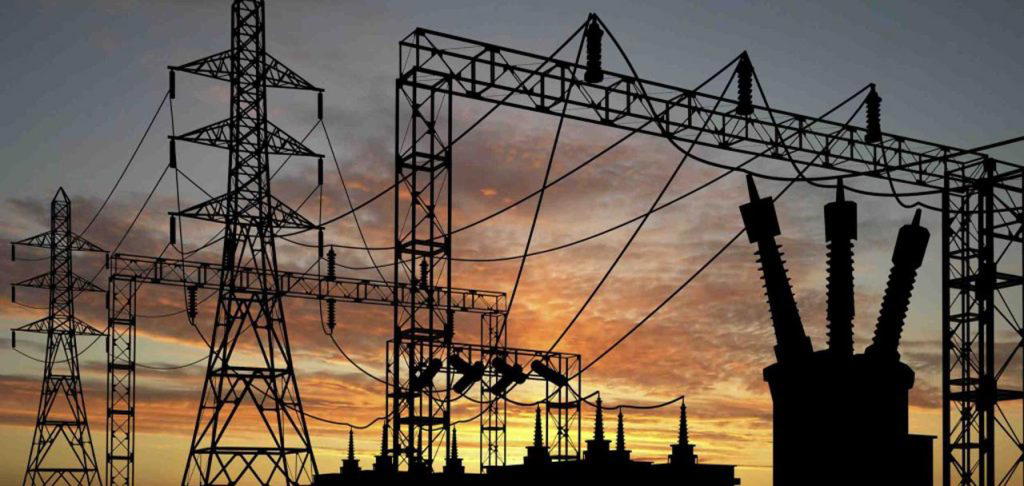
N10trn investments in 13 years fail to lift power supply
***We’re resetting the sector – Power minister
***FG, GenCos disagree over N6.2trn debt
By Emeka Anaeto, Obas Esiedesa and Sebastine Obasi
Current updates on the electricity sector development has indicated that about N10 trillion public finance has either been frittered away or trapped in the sector value chain in form of interventions.
But the Minister of Power, Joseph Tegbe said federal government was now resetting the sector by addressing a long-standing structural deficiencies that have prevented the sector from reaching its full potential. He said the deficiencies have been in the sector for over 40 years.
Tegbe listed the measures which starts with a technical audit of the national transmission network, and then harmonising federal and state electricity regulations; grid stabilisation program; sector liquidity and sustainability; a strategic asset centralization; a super grid programme.
He said “within the next two to three years, Nigerians should experience a stronger grid, reduced technical losses, improved market discipline, greater investor confidence, expanded electricity access and significantly higher operational capacity”.
The spending spree
Financial Vanguard’s findings on the 13-year spending spree in the sector showed a sustained stagnation in output and value for money, with power generation hovering at 4,500 megawatts (MW) average over the period, a far cry from targeted 20,000 MW and the 30,000 MW required for the country.
A breakdown of government spending since the November 2013 privatisation showed successive administrations have deployed intervention funds, payment guarantees, debt settlement schemes, multilateral loans and infrastructure financing to address liquidity challenges and improve electricity supply.
The interventions include the Central Bank of Nigeria’s N213 billion Nigerian Electricity Market Stabilisation Facility; the N701 billion Payment Assurance Guarantee for generation companies (GenCos); over N200 billion under the National Mass Metering Programme; N700 billion Presidential Metering Initiative, PMI; and the €2.3 billion Siemens Presidential Power Initiative.
Other are the more than $2.4 billion in World Bank and African Development Bank-backed projects, as well as the recently launched N4 trillion Presidential Power Sector Debt Reduction Programme, PPSDRP.
Despite the huge investments, electricity generation has remained largely stagnant, far below the country’s estimated demand of over 30,000MW and only marginally above the level recorded shortly after the sector was privatised.
The latest report by the Nigerian Electricity Regulatory Commission, NERC, showed that in the first quarter of 2026, average available generation capacity from the 28 grid-connected power plants stood at 4,457.96MW, while actual average hourly generation was 4,112.72MW, well below the federal government’s 6,000MW target.
Sector still cash-strapped
While power supply has remained weak, the liquidity crisis in the electricity market has continued to deepen.
The Association of Power Generation Companies, APGC, said debts arising from government’s failure to fully fund electricity subsidies had risen to N6.2 trillion, comprising N4 trillion accumulated between 2015 and 2024 and an additional N2.2 trillion incurred in 2025. FG, however, disputed the figure.
The Minister of Finance and Coordinating Minister of the Economy, Mr. Taiwo Oyedele, had said a comprehensive verification exercise reduced verified electricity sector liabilities from about N4 trillion to approximately N3.3 trillion after a line-by-line reconciliation of invoices and services was rendered.
But Executive Director of APGC, Dr Joy Ogaji, insisted that GenCos were not involved in any reconciliation and challenged government to disclose how it arrived at the figure.
“We have asked them to publish how they arrived at the N3.3 trillion. We are owing gas suppliers about N4 trillion. If government owes us only N3.3 trillion, it raises many questions.
“If N3.3 trillion is not even enough to pay the gas suppliers, how will GenCos cover operating costs, including operations and maintenance as well as staff costs?” she queried.
Data from the Nigerian Bulk Electricity Trading, NBET, Plc showed that between April 2025 and April 2026, FG received electricity subsidy invoices worth N1.859 trillion but paid only N76.95 billion, leaving outstanding obligations of about N1.78 trillion.
FG turns to bond market
To tackle mounting debt, FG has turned to the domestic bond market to finance payments to GenCos under the Presidential Power Sector Debt Reduction Programme.
Already, about N333 billion has been paid to electricity generation companies, while a fresh N729 billion bond has been launched to finance additional settlements.
The latest issuance, unveiled at an investors’ forum organised by NBET in Abuja recently, represents the second series under the N4 trillion debt reduction programme and follows the N501.02 billion bond issued earlier this year.
Government officials said the programme was expected to restore liquidity to the Nigerian Electricity Supply Industry, NESI, improve investor confidence and create the financial stability required to attract fresh investments into the sector.
Stakeholders’ view
Commenting on the continued poor performance of the electricity industry, President of the Nigeria Consumer Protection Network, Mr Kunle Olubiyo, argued that the actual subsidy burden might be lower than the figures being claimed by some market participants.
According to him, continued government involvement in the electricity market has encouraged inefficiency and created opportunities for inflated claims and revenue leakages.
“As much as government is desirous of injecting money, there is a value chain of beneficiaries of leakages and wastages.
“Because government bears the burden, a lot of claims thrown into the electricity pool are virtually non-existent or have been orchestrated to create a desired end,” he said.
Olubiyo maintained that full privatisation of the electricity industry would compel operators to improve efficiency, automate operations and eliminate many of the leakages that currently inflate electricity tariffs.
“If we completely privatise the sector, some of the inputs on which tariffs have been formulated will shrink because some of these leakages form the basis for determining tariffs. If the cost of generation, transmission and distribution is over-bloated, that becomes the basis for determining what consumers pay,” he said.
He urged the federal government to divest its remaining interests in electricity distribution companies, unbundle and privatise the Transmission Company of Nigeria, TCN, and limit its role to policy formulation and regulation.
Also commenting, President of the Chartered Institute of Power Engineers of Nigeria, CIPEN, Engr. Israel Abraham, blamed the sector’s poor performance on the appointment of non-technical professionals to manage critical institutions.
“The electricity industry is highly technical. Progress has stalled because the right people have not been allowed to manage the sector. Until competent professionals are put in charge, the industry will continue to struggle,” he said.
We are resetting sector – Tegbe
But speaking to the media weekend, the power minister said the negative story was now changing as the ministry embarks on sector resetting.
He stated: “Our objective is clear. To make electricity more available, make the grid more reliable, make the market financially sustainable and restore investor confidence. Ultimately, we want to ensure that electricity becomes a catalyst for national productivity rather than a constraint to economic growth”.
He noted what he called, “the extraordinary leadership of President Bola Tinubu in the sector’’, saying since Tinubu assumed office he “has demonstrated perhaps the strongest political commitment to electricity sector reform with the liberalisation of the industry.”
Tegbe stated further: “Under his leadership, the power sector has moved from policy conversations to practical implementation. In addition, his administration has continued the implementation of the Electricity Act, creating an entirely new constitutional and regulatory landscape where states now have the opportunity to develop electricity markets that reflect their peculiar economic realities.”
According to him the administration has embraced electricity sector decentralization as an opportunity to unleash innovation, competition and investment across the federation.
Listing the achievements Tegbe stated: “The administration has also confronted one of the greatest impediments to market sustainability — the crippling liquidity crisis that has accumulated over many years.
He said: “In line with this, the federal government is now advancing the Power Sector Bond initiative to resolve the enormous legacy obligations owed to generation companies, gas suppliers and other market participants.
“This is a strategic intervention designed to restore confidence, unlock fresh investment and return commercial discipline to the Nigerian Electricity Supply Industry.
“Mr. President has equally placed metering at the centre of electricity reform. For decades, estimated billing became one of the greatest sources of distrust between electricity providers and consumers.
“Today, through the Presidential Metering Initiative, Nigeria is moving decisively towards
universal metering because consumers deserve transparency, fairness and confidence that they only pay for the electricity they actually consume.
“This administration has also prioritised investment in transmission infrastructure, expanded rural electrification, strengthened institutional coordination across the electricity value chain, and continued to pursue reforms that encourage private capital while preserving the public interest”.
According to him, “building upon this strong presidential foundation, the Ministry has immediately commenced a number of significant interventions.
“These include inauguration of the Power Force. This initiative brings together 5000 Nigerian youths for meter installation across the country. Our objective is to close the metering gap and also develop a strong skilled pool of young Nigerians in electricity field (NAPTIN).
“Secondly, we have made significant progress in resolving the age-long challenges surrounding meter procurement.
“Thirdly, we are already witnessing encouraging improvements in electricity generation. Over the course of the last two weeks, we have consistently generated 5000MW.
“Although much work remains, enhanced operational coordination, improved plant availability and better engagement across the value chain are beginning to produce measurable improvement.”
Challenges, solutions
Tegbe, however, acknowledged a lot of challenges in the sector amid the achievements, stating
“we are under no illusion. Generation alone does not solve Nigeria’s electricity problem. Electricity must be generated, transmitted, distributed and paid for. All these components must function simultaneously. That understanding forms the basis of our Sector Transformation Agenda.
“Our diagnosis of the Nigerian Electricity Supply Industry is honest. The challenges are not confined to one institution. They exist across generation, transmission, distribution, regulation, governance and market liquidity”.
He said the ministry had articulated a sector-wide plan, in addition to the various initiatives to respond to these challenges.
Listing the plans, Tegbe stated: “Technical Audit of the National Transmission Network – Our first priority is the comprehensive technical audit of the transmission segment of our electricity network. ‘’The audit will identify aging assets, overloaded substations, weak transmission corridors, protection failures, system bottlenecks and operational vulnerabilities.
‘’This exercise will provide the factual basis for prioritising investments, reducing system failures, improving planning and ensuring that every naira invested delivers measurable value.
“Harmonising Federal and State Electricity Regulation. The Electricity Act has created tremendous opportunities but the transition inevitably creates areas requiring clarification.
‘’The ministry shall, therefore, work closely with NERC and State Electricity Regulatory Commissions to resolve jurisdictional disputes, establish regulatory harmony and ensure that decentralisation produces certainty rather than confusion.
“Grid Stabilisation Programme – A stable grid is the foundation of reliable electricity. Consequently, we shall immediately commence strategic investments in three critical transmission corridors: Lagos Corridor; Enugu–Port Harcourt; and Abuja– Kaduna–Kano.
“Sector Liquidity and Sustainability – No electricity market can survive if participants are unable to recover legitimate revenues. Consequently, we shall focus on reducing technical and commercial losses while modernising critical transmission infrastructure.
‘’This intervention complements the Presidential Metering Initiative, which is already addressing collection losses through accelerated deployment of smart meters.
“Strategic Asset Centralisation – We shall also pursue strategic asset centralisation and optimization, linking under-utilised assets with targeted industrial clusters, manufacturing hubs and captive economic corridors.
“Super Grid Programme- The Super Grid Programme represents our medium and long-term strategy for expanding Nigeria’s transmission backbone along critical corridors.
‘’This programme will reinforce the national grid, improve redundancy, enable higher power transfers across regions and create dedicated electricity corridors capable of supporting future industrial growth. In the next few months, we plan to achieve visible improvements in availability.”
The post N10trn investments in 13 years fail to lift power supply appeared first on Vanguard News.