
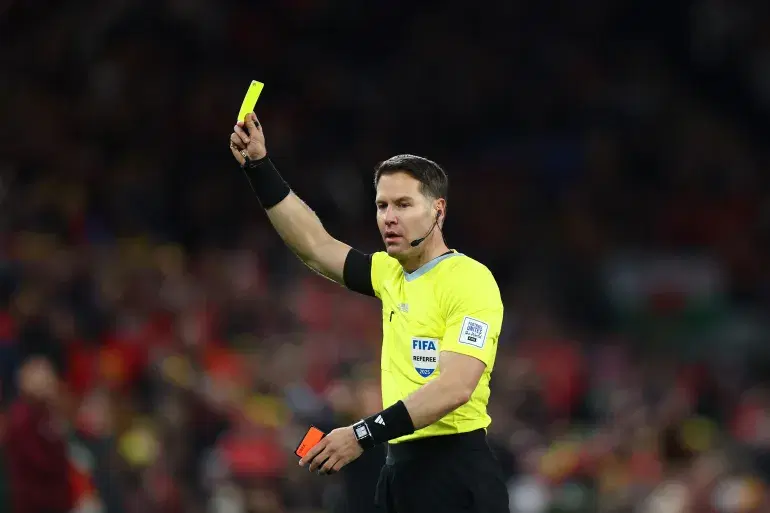
2026 World Cup: What gets a player suspended? Yellow and Red card rules explained
The 2026 World Cup kicks off on June 11, with co-hosts Mexico opening the tournament against South Africa in what promises to be a historic curtain-raiser.
As teams prepare for football’s biggest stage, discipline will be just as important as talent. Players aiming to go deep into the competition must avoid unnecessary bookings, as both yellow and red cards can have serious consequences for squad availability.
Yellow card accumulation could derail a nation’s progress at crucial moments, while a single red card may prove even more damaging to a team’s World Cup hopes.
Below is a breakdown of how suspensions will work at the 2026 tournament.
How do yellow cards work at the World Cup?
A player will be automatically suspended for one match if they receive two yellow cards in separate games. That suspension takes effect immediately in the next fixture, whether it is in the group stage or the knockout rounds.
The same rule applies to team officials on the bench, meaning coaches and staff are also at risk of bans through repeated cautions.
For example, a player booked in the first and third group matches, or in the second and third, will miss the next round of 32 match. The rule also carries into the knockout phase, where two yellow cards across different matches can still trigger a one-game suspension, depending on timing within the competition structure.
How do red cards work at the World Cup?
A red card, whether shown directly or issued for a second yellow in the same match, results in an immediate one-match suspension.
However, FIFA can extend the ban if the offence is considered serious enough, meaning disciplinary punishment may go beyond the automatic suspension.
If a suspension cannot be completed during the tournament, it will be carried over to the team’s next official international fixture after the World Cup.
When are yellow cards reset?
Yellow cards are cleared at two key points during the tournament to reduce the risk of players missing the final stages due to minor offences.
The first reset occurs after the group stage, while the second comes following the quarter-finals.
This means that from the semi-final stage onwards, only red cards can lead to suspensions affecting the final. A player booked in the round of 32 and round of 16 will miss the quarter-finals, but cautions picked up in the round of 16 and quarter-finals will not carry over into the semi-finals.
The post 2026 World Cup: What gets a player suspended? Yellow and Red card rules explained appeared first on Vanguard News.