
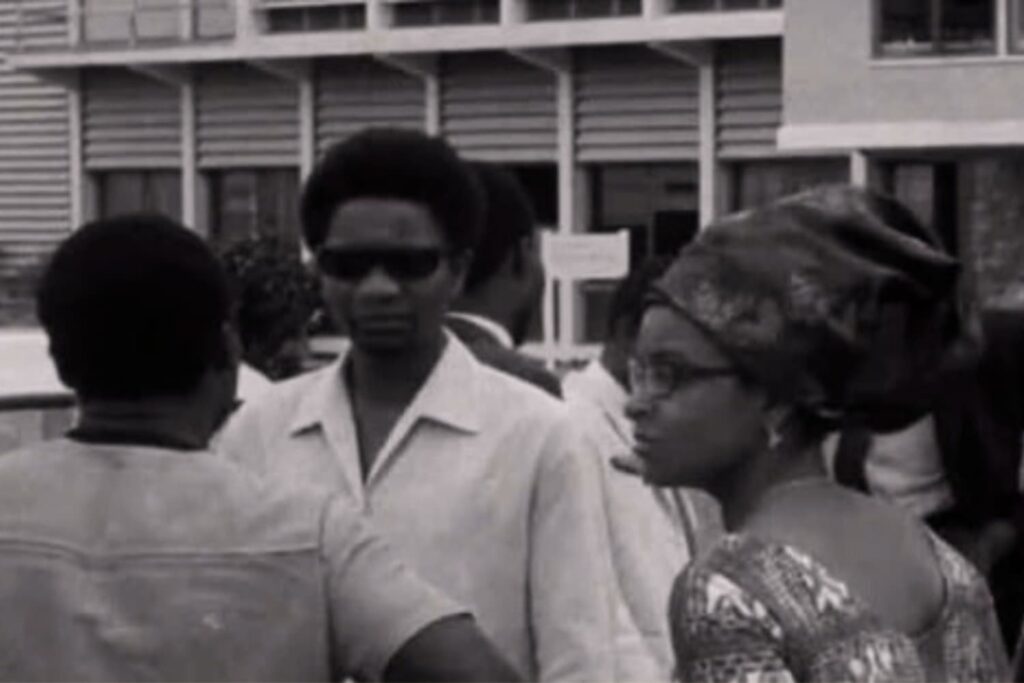
“Get Out!”: The Day Wole Soyinka Hijacked Premier’s Broadcast
IBADAN — Long before he became Africa’s first Nobel Laureate in Literature, Wole Soyinka was a young, fiery 31-year-old university lecturer who actively placed his life on the line to fight political corruption. While Nigerians today celebrate him as a towering literary icon, the history books remember him as the prime suspect in one of the most audacious, cinematic acts of political rebellion in Nigeria’s First Republic: the 1965 hijacking of the Western Nigeria Broadcasting Service (WNBS).
As the nation reflects on his enduring legacy of activism, we throw it back to the night an “unknown gunman” walked into a radio station and changed the course of Nigerian history.
Today, in 2026, Wole Soyinka’s name remains synonymous with the fight against institutional decay. The spirit of accountability he fought for in 1965 continues to resonate. Just this week, on March 6, 2026, the Economic and Financial Crimes Commission (EFCC) successfully recovered and returned ₦279 million in stolen public funds to the Wole Soyinka Centre for Culture and the Creative Arts in Lagos. The massive recovery followed a major fraud probe into inflated construction contracts at the facility bearing his name. Whether holding up a radio station with a revolver at age 31 or having federal anti-graft agencies protect institutions built in his honor at age 91, Wole Soyinka’s presence continues to command justice in Nigeria.
The Night of October 15, 1965
In late 1965, the Western Region was engulfed in a severe existential crisis. An openly rigged regional election had just returned Premier Chief Samuel Ladoke Akintola to power, plunging the region into widespread violence and civil unrest.
To assert his authority, Premier Akintola pre-recorded a victory speech. The government scheduled the broadcast to air precisely at 7:00 p.m. on the state-owned WNBS in Ibadan.
However, a mystery figure had a different plan: The Breach: Just minutes before the hour, an unmasked, heavily bearded man armed with a revolver boldly breached the radio station’s studio. The Hold-Up: The gunman confronted the terrified officer on duty, Akinwande Oshin, holding him at gunpoint. Calmly but firmly, the intruder confiscated the Premier’s official broadcast tape. The Switch: Instead of Akintola’s speech, the gunman handed Oshin a completely different reel and ordered him to play it over the airwaves immediately.
The “Get Out” Tape
As the people of the Western Region gathered around their radios expecting the Premier’s voice, a completely different, passionate voice roared through the speakers.
The substituted tape delivered a scathing, revolutionary ultimatum to Akintola and his government. The voice boldly declared:
“The children loathe you; mothers curse you; all men despise you, and the youths of this country long for the moment when your presence will no longer pollute their home for a decent future. In the name of Oduduwa and our generation, get out!”
His mission accomplished, the gunman vanished into the Ibadan night, leaving the government in a state of absolute humiliation.
The Treason Trial and the “Clean-Shaven” Alibi
The authorities were furious. Within 12 days, police arrested Wole Soyinka, suspecting that the brilliant, fearless founder of the Pyrates Confraternity was the only man audacious enough to execute the stunt.
The state officially charged Soyinka with treason and the theft of government property. During the highly publicized trial, radio station witnesses confidently identified the playwright as the bearded intruder. However, Soyinka presented a masterful legal defense. The Alibi: He claimed he was in Enugu in the Eastern Region during the incident. The Professor’s Testimony: To seal his defense, the Head of his department at the University of Ibadan, Professor Axworthy, testified under oath. Axworthy told the court that he and Soyinka had attended a departmental meeting less than two hours before the radio station hijack. Crucially, Axworthy testified that Soyinka was completely clean-shaven at that meeting.
Unable to solve the mystery of how a man could grow a bushy beard in under two hours, the trial magistrate concluded the prosecution lacked proof beyond a reasonable doubt. The court discharged and acquitted Soyinka, cementing his status as a legendary rebel.
Latest Updates: A Legacy Set in Stone
Today, in 2026, Wole Soyinka’s name remains synonymous with the fight against institutional decay.
The spirit of accountability he fought for in 1965 continues to resonate. Just this week, on March 6, 2026, the Economic and Financial Crimes Commission (EFCC) successfully recovered and returned ₦279 million in stolen public funds to the Wole Soyinka Centre for Culture and the Creative Arts in Lagos. The massive recovery followed a major fraud probe into inflated construction contracts at the facility bearing his name.
Whether holding up a radio station with a revolver at age 31 or having federal anti-graft agencies protect institutions built in his honor at age 91, Wole Soyinka’s presence continues to command justice in Nigeria.