
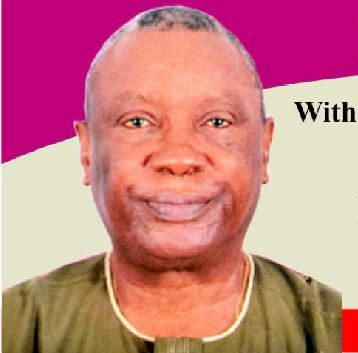
Why Lagos–Calabar Coastal Highway (2), by Eric Teniola
This week continues the narrative on Lagos-Calabar Coastal Highway.
She resided in Odukpani Local Government Area, where she vehemently fought for the abolition of the ancient custom of killing twin children and their mothers. She built herself a two-bedroom mud house with a veranda, a store and a parlour. She called it a Caravan while the villagers called it “Fine Pass All”.
In 1889, a missionary carpenter, Mr. Owens, was made to put up a more permanent structure for her. The walls were made of iron sheets while the doors and windows were made of wood. The staircase leading to the first floor had 21 steps and was supported by two pillars and wooden railings. Cross River State continued with marking of the birthday of Mma Mary Slessor about a hundred years after her birth.
There are so many things to say about Calabar. No doubt the construction of the coastal highway between Lagos and Calabar serves to remind us about the importance of Calabar.
In the late nineteenth century, as European powers scrambled to consolidate territorial control in Africa, the British formalised their influence along the Niger Delta coast. In 1884, Queen Victoria signed a treaty of protection with the chiefs of Akwa Akpa (Old Calabar), enabling Britain to exercise control over the surrounding territory. Soon after, the Oil Rivers Protectorate was established in 1885 to manage trade and suppress inter-tribal conflicts in the coastal region. In 1893, this territory was renamed the Niger Coast Protectorate. Calabar was designated as the official capital of these protectorates. Calabar’s location and commercial history underpinned its selection as headquarters. It had long been a thriving port for palm oil and other exports that were critical to British industrial needs. The transition from the slave trade to palm oil shifted economic power to local merchant houses, which then negotiated with European firms. British protection treaties signed with Efik chiefs in the 1880s facilitated smoother trade and strengthened British influence in the region. This commercial reach also fed into colonial objectives, enabling the British to tighten control over indigenous socio-economic networks.
Beyond administration, Calabar became a centre for early educational and religious developments in Nigeria. Scottish missionaries established schools and churches in the mid-19th century, influencing local institutions and social reforms. For example, the Hope Waddell Training Institution, founded in 1846, became one of the earliest secondary schools in the region. Such institutions shaped local elites and contributed to the cultural synthesis that characterised colonial Calabar. In addition to education, Calabar was the site of early colonial legislative engagement. In 1922, the British established the Legislative Council with elected members from Calabar and Lagos, marking one of the first forms of representative governance in British West Africa. This council approved budgets and enacted laws, laying important groundwork for the later political evolution of Nigeria.
Calabar’s role as the headquarters of the Oil Rivers Protectorate, the Niger Coast Protectorate, and the Southern Nigeria Protectorate positioned it as a birthplace of the modern nation. On a personal note, I feel excited any time I visit Calabar. The serenity of the ancient city excites me. It should be noted that nationalism and the struggle for Nigeria’s independence more or less started in Calabar when Professor Eyo Ita declared in the early struggle: “This is the day of Nigeria youth. It must build a new social order, for whereas yesterday belonged to our fathers and their distant future belongs to posterity, today and the immediate tomorrow are ours. We can and must shape them according to our needs and desires. The time has come when the young people of Calabar must live creatively, must build new and better homes, must bring new forms to birth in literature, language, arts, music, methods and tools of industry, when they must dream of purer and juster laws and promote better health.
We must secure bare living first before we can think of luxuries of life. Calabar is a land of beauty. Nigeria is a land of beauty. Our sons and daughters must reveal its concealed beauties through the use of pencil and colour. Calabarian youth, like the knights of old, and like the militant youths of modern Russia, who volunteer to save their society at all cost, must pledge themselves completely to the cause of emancipating Calabar. The love of Calabar must consume us. The zeal for her emancipation must be our food and drink. We are either Calabarians or nothing. To the degree in which Calabar is saved, to that degree shall we be saved.
Our God is He who cares for our homes, our womanhood, our childhood, the moral manhood of our race, our economic welfare, our health, and our political freedom. Who respects the beauty of the black man no less than he is interested in other races of mankind. This God speaks to us through the fruits of our land, through the animals that inhabit it, through the love and fellowship of our darling mothers and friends. He is the God of Nigeria, her abiding genius, her sustaining power. The youth must realise that it is serving His cause through the activities of its movement. It must realise that the whole of Nigeria is of supreme value before God, and that its creative work is part of the vast plan of the Divine Conservator of our values”.
By building this highway, I am sure President Bola Ahmed Tinubu is appreciating the people of the South-South and their leaders. The emergence of President Goodluck Jonathan, GCFR, on 6 May 2010, the establishment of NDDC, the Ministry of Niger Delta and the Amnesty Programme is not enough compensation for the people of the South-South region.
To be continued…
The post Why Lagos–Calabar Coastal Highway (2), by Eric Teniola appeared first on Vanguard News.