
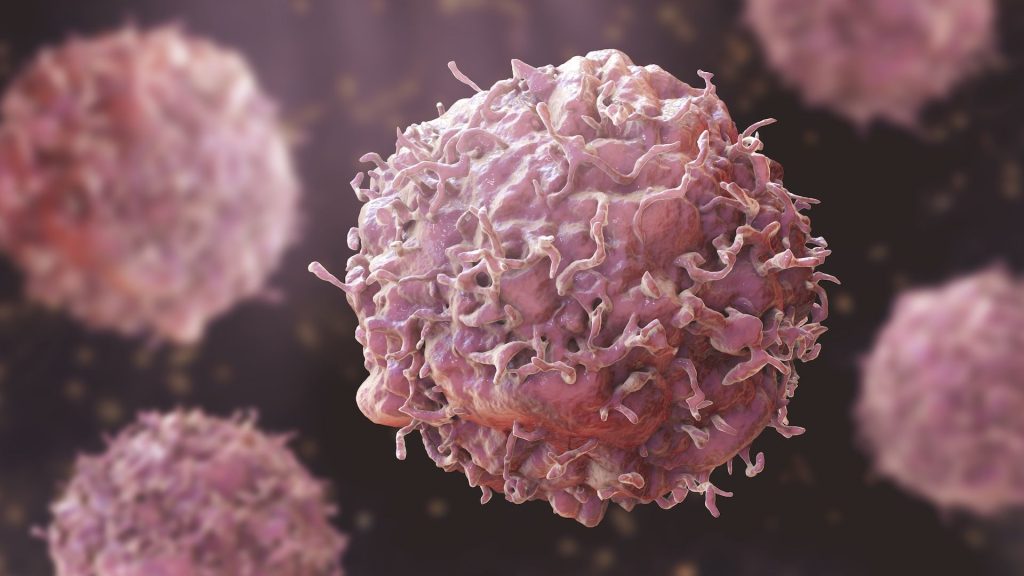
When cancer fights back: New drug could reopen door to treatment
By Sola Ogundipe
Cancer treatment can become a race against time. A drug works, the tumour shrinks, hope returns. Then the cancer changes. The treatment that once held it back starts losing its grip. Cancer cells find another way to survive, and a battle that seemed to be won begins all over again.
Read Also: We don’t need pity, we need jobs — Blind couple
Scientists at Baylor College of Medicine in the United States now say they may have found a way to disrupt one of cancer’s most frustrating survival strategies. The experimental drug, CS18, has shown early potential to weaken the biological defences that help cancer cells survive treatment and, crucially, make some resistant tumours sensitive to existing drugs again.
In laboratory experiments, CS18 restored the sensitivity of lung cancer cells that had become resistant to osimertinib, a drug used to treat certain lung cancers. When the two were combined, more cancer cells died. The researchers also reported reduced tumour growth in animal models, without major weight loss or other obvious signs of toxicity.
Published in Science Advances, the findings could point to a new approach to one of the most difficult problems in cancer treatment: drug resistance. However, CS18 is still an experimental compound and has not been established as a cancer treatment for patients and requires further research and testing.
For oncologists, treatment resistance remains one of the biggest challenges in cancer care. A drug may work remarkably well at first, but cancer cells can adapt. They can switch on alternative biological pathways, evade the treatment and continue to survive. Eventually, the cancer may return.
The study’s corresponding author, Dr. Weei-Chin Lin, professor of medicine, haematology and oncology, and molecular and cellular biology at Baylor College of Medicine, said “Therapeutic resistance is a major obstacle to achieving effective and durable cancer treatments. While some therapies are effective initially, many patients eventually relapse because cancer cells can activate compensatory and convergent biological pathways that allow them to overcome the toxic effects of treatment and survive.”
That was the problem the Baylor team set out to tackle. Instead of targeting one cancer pathway at a time, the researchers went after what they describe as a central control point inside cancer cells.
Their target was TopBP1 which is involved in several processes linked to cancer growth and survival. The researchers describe it as a biological “switchboard” because it helps regulate multiple pathways at once. They reasoned that disrupting the central control point could make it more difficult for cancer cells to activate alternative mechanisms for survival.
CS18 was tested against triple-negative breast cancer, ovarian cancer, lung adenocarcinoma, lung squamous cell carcinoma and acute myeloid leukaemia. The compound also appeared less toxic to non-cancerous cells in the laboratory experiments. The results became particularly interesting when CS18 was combined with cancer drugs already in use.
One of the most notable findings involved osimertinib. Some of the lung cancer cells used in the experiments had already developed resistance to the drug. Adding CS18 changed the response. The resistant cancer cells became sensitive to osimertinib again, increasing cancer cell death.
The researchers also found that combining CS18 with PARP inhibitors, another class of cancer drugs, produced greater cancer cell killing than either treatment alone.
Much more research is needed before the compound can progress through the stages required for human treatment, including clinical trials. The idea is bigger than simply killing cancer cells. It is about attacking the mechanisms that allow them to survive treatment in the first place.
If future studies confirm these findings, CS18 could eventually form part of combination therapies designed either to prevent resistance from emerging or to make resistant tumours vulnerable to treatment again.
For now, the Baylor findings offer a cautious glimmer of hope in a battle where resistance has often given cancer the upper hand. Cancer can fight back, scientists are now looking for ways to make treatment fight back harder.
Vanguard News
The post When cancer fights back: New drug could reopen door to treatment appeared first on Vanguard News.