
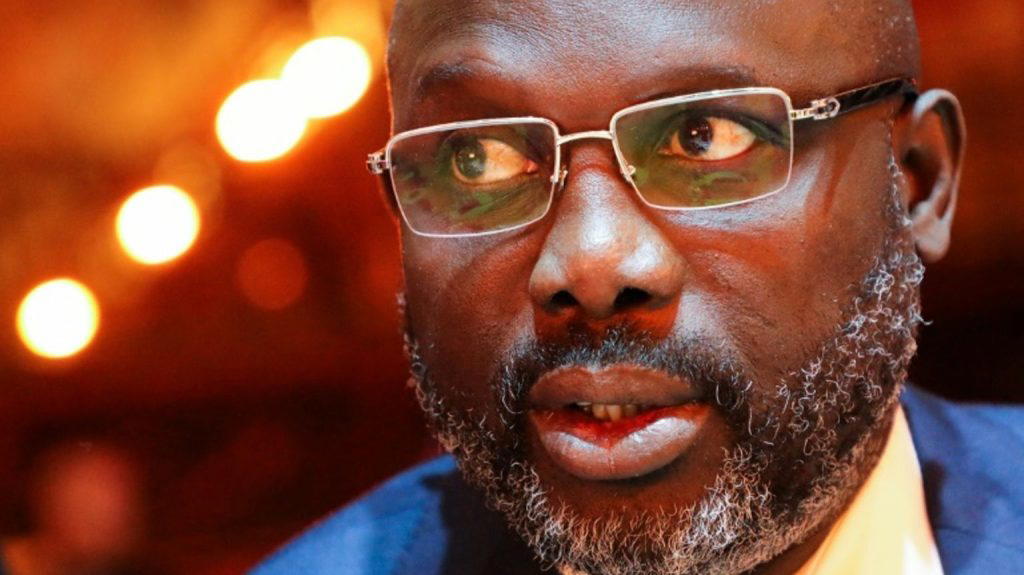
What the NBA must do to help Nigeria, Africa grow — Ex-Liberian President Weah
By Ikechukwu Nnochiri
Despite the controversy that trailed his selection as keynote speaker at the recent Annual General Conference of the Nigerian Bar Association (NBA), George Weah, immediate past President of the Republic of Liberia, took the legal body to task, outlining what it must do to help the country and the continent.
Weah, who served as President of Liberia from 2018 to January 2024 before losing his bid for re-election to Joseph Boakai, insisted that the NBA, as the continent’s biggest umbrella body of lawyers with a membership of over 150,000, must shed mediocrity and stand firmly for justice in order to safeguard the rule of law and democracy in Africa.
Speaking on the theme “Beyond Limits,” the former footballer who swapped the pitch for politics maintained that Nigeria holds the key to the promise of the entire continent.
According to him, “When the NBA decides to go beyond limits, the legal architecture of Africa itself grows stronger.”
Addressing legal eggheads at the conference held in Port Harcourt, the former Ballon d’Or winner said:
“I want to thank you for choosing a theme as bold as ‘Beyond Limits.’
“When I first heard it, I smiled, because if my own life has taught me one thing, it is that limits are very often not the walls we think they are. They are only the edge of what someone has tried so far.
“I did not come into this hall as a lawyer, and I will not pretend to be one. I grew up in the ghetto of ‘Gibraltar’ in Monrovia, Liberia, where very few people believed that a boy raised largely by his grandmother would one day stand on the world’s biggest football stages, or take an oath as President of the Republic of Liberia.
“Allow me to speak to you about two things today: first, the Bar and the Bench as guardians of our democracy, and the dangers that threaten that guardianship in West Africa today; and second, what it means for our peoples and our continent to truly go beyond limits, not in slogan, but in substance.
“Let me start with a simple truth I came to understand not as a student of law, but as a man who has sat in the highest office of a nation. “Democracy does not survive on the strength of elections alone. Elections are the doorway into democracy, not the house itself.
“What holds the house up, what keeps the roof from collapsing on the people who live inside it, are institutions, and among the most important of these, in every serious nation, is an independent judiciary, protected by a fearless, principled Bar.
“And let me be plain about something else, because it is often the more dangerous of the two threats to democracy.
“The danger is not only that soldiers might seize power in the night, or that a defeated candidate might refuse to leave office.
“It is also that a leader who arrives in office through a free and fair election can, over time and often gradually, begin to govern like the very dictators the ballot was meant to guard against, leaning on the judiciary until it bends to his will, and strong-arming the legislature until it becomes an echo chamber rather than a check on his power.
“A tyrant with a certificate of return is still a tyrant. Democracy, properly understood, does not end on election night. It is tested every single day afterward, in how power treats the courts and the parliament that exist to restrain it.”
Continuing, ex-President Weah argued that the rule of law is not an abstract phrase for law school lecture halls.
He described it as the practical guarantee that a citizen’s rights depend not on who holds office or what favors they can secure, but on equal protection under the law for everyone, regardless of status or position in society.
“The moment that guarantee weakens, everything else in a nation weakens with it: investment, security, public trust, and peace itself.
“And here is the uncomfortable part: this danger does not only come from the coup-makers who seize power in the night. It also comes from governments that call themselves democratic, through budget manipulation, questionable appointments, pressure on judges, and a mindset that treats courts as a convenience rather than a check.
“We have seen nations where a judiciary’s own budget must first pass through the executive it is meant to hold accountable.
“We have seen special courts created not to deliver justice but to secure political outcomes, and dozens of judges dismissed in a single stroke by presidential decree.
“And we have seen, across our region since 2020, an unsettling pattern of soldiers stepping over constitutions altogether.
“I raise these examples because this Bar, to which you belong and have gathered here in your thousands, cannot afford to assume that Nigeria, or Liberia, or any of us, is somehow immune.
“A court’s decision must mean what it says, without anyone’s political permission; it is what protects a nation from sliding, gradually but progressively, into the very conditions we condemn when soldiers do it with guns. “This is why I say to you: the Nigerian Bar Association is not merely a professional association negotiating welfare for its members.
“You are a standing sentinel of this Republic’s democracy. When the Bar is silent, courts become easier to capture.
“When the Bar speaks with one voice, as guardians of the bench, the executive branch thinks twice before even dreaming of interference. “That tradition is not decoration. It is duty, because protecting the independence of your courts, and the rights of the ordinary Nigerian citizen, is protecting democracy itself, here in Nigeria and across the region,” he added.
Contending that Africa’s limits are not a matter of talent, Weah identified the problem as a lack of infrastructure and organized will to allow brilliance to flourish.
He said: “This room is proof of it. The Nigerian Bar counts among its numbers some of the finest legal minds in the world, many of whom have built extraordinary careers abroad, in London, in Washington, in the Gulf.
“That is nothing to be ashamed of, but it is something we must be strategic about. For too long we have called this only ‘brain drain,’ as though it is purely a loss.
“I ask you to think instead about brain circulation, pulling that expertise back into nation-building without demanding anyone abandon what they have earned and learned abroad.
“Our African diaspora already sends home well over one hundred billion dollars a year in remittances alone, more than the foreign aid and investment Africa receives combined.
“Imagine that same energy formally invited into legal reform and judicial modernization, as a deliberate national strategy.
“Because the fight against poor governance and economic deprivation is not one we can afford to enter with half our talent unaccounted for.
“A Nigerian-trained lawyer on an arbitration panel in Paris, or advising a global institution in New York, is not lost talent; it is talent operating at the highest global standard, available to be called home if we organize the bridge for it to cross.
“This, too, is what going Beyond Limits must mean for us: refusing to accept that our infrastructural and governance challenges are any kind of ceiling on what is possible. I did not accept the limits the slum seemed to set for me.
“I say this to you not as a theory but as something I have lived. In November 2023, when the early, provisional results of our run-off election made clear which way our country had voted, I did not wait for the count to be completed or for the final results to be formally announced before I picked up the telephone to congratulate my successor. “There were those around me who suggested patience, who argued that a sitting president owes it to himself to contest every figure until the very last vote is certified.
“I chose otherwise. I chose to concede while the counting was still underway, because I have always believed, and still believe, that the will of the people must stand above the ambition of any one man in a democratic setting.
“Once elections do not follow democratic precepts, it is very dangerous for the peace and security of a country.
“When your leadership invited me to speak on the theme Beyond Limits, it resonated with the very core of my life’s journey.
“In the law, brilliance without discipline leads to compromised justice. Discipline is the quiet commitment to doing what is right, what is necessary, and what is ethical, even when no one is watching.
“As legal minds, your hard work secures the liberties of the common man and fortifies the rule of law.
“For the legal profession in Nigeria and across Africa, perseverance means standing firm for justice even when the political or social winds blow fiercely against you.
“My distinguished friends, Nigeria holds a key to the promise of our whole continent. When the Nigerian Bar Association decides to go beyond limits, the legal architecture of Africa itself grows stronger.
“Let us commit today to breaking the chains of mediocrity: applying discipline to our craft, hard work to our duty, respect to our peers, perseverance to our trials, and faith to our foundational values.
“Let us all stand for true justice, for the rule of law that builds greater unity, that makes a nation more attractive to investment, and that creates a stable environment in place of internal conflict.
“True justice is blind. It does not know politics. It does not see family or friendship. It knows only the truth, and it interprets the law the same way whether or not anyone is watching.
“Let us all interpret the law fairly, and apply it more effectively. Let justice prevail, and be done to all men and women, rather than spending our energy on division.
“The true measure of a lawyer is not how many cases you have won, how many titles you hold, or how much you earn. It is this: when the country needs courage, do you have the courage to stand?
“The law must never be an instrument of chaos. It must never become a weapon of war. “It must remain what it was always meant to be: an instrument of remedy, of peace, of unity, and of accountability; an instrument for humanity, for transparency, and for truth. “As a lawyer, you must be able to protect the law whether the voice before you is rich, poor, or powerful.
“As the law provides, you must be able to stand in defense of those who cannot defend themselves. You must ensure that due process is honored.
“Let us respect the law, and let us interpret it faithfully. I say to you, as with Lady Justice herself: carry the scales of substance and of justice, and let nothing tip them but the truth.
“My brothers and sisters, Nigerians depend on you.
“West Africa depends on you. Africa depends on you. The world depends on you. Democracy depends on you. And free elections depend on you.
“So I say to all of you here today: Africa must continue in peaceful coexistence, and we must all stand up for the rule of law. Stand up for fairness. Stand up for impartiality. Stand up for gender equality. Stand up for equality. Stand up for humanity.
“Stand up for peace and for democracy. Stand up against discrimination. Stand up for accountability. Stand up for free and fair elections,” he added.
Some lawyers had opposed the choice of Weah as the conference’s guest speaker, citing his alleged disregard for the rule of law during his tenure.
Their misgivings, however, were likely drowned out by the thunderous applause that greeted his presentation at the conference.
The post What the NBA must do to help Nigeria, Africa grow — Ex-Liberian President Weah appeared first on Vanguard News.