
We gave Tinubu the highest votes in 2023, we are reaping the benefits
…Vows constituency will give president 250, 000 votes in next polls
…Call Igbos the Lionel Messi of Nigeria
By Funmi Ajumobi
As Nigeria navigates economic challenges, growing security concerns and the political calculations ahead of the 2027 general elections, questions surrounding governance, accountability and national development have continued to dominate public discourse.
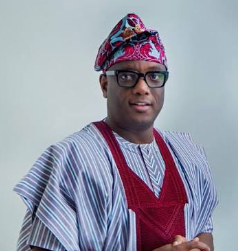
At the centre of these conversations is the proposed $21 billion borrowing plan by the President Bola Tinubu administration, which has attracted criticism from opposition parties and other stakeholders. However, Hon. Benson, Chairman of the House Committee on Defence and representative of Ikorodu Federal Constituency, believes that borrowing should not be judged in isolation but by its purpose, transparency and impact on national development. He also addresses allegations that the National Assembly has become a rubber stamp for the executive, defending his political approach with an account of the projects.
The lawmaker speaks on the security challenges confronting the country, the need for stronger local government autonomy and state policing, as well as the importance of international partnerships in tackling insecurity. He advocates greater understanding and cooperation between the Yoruba and Igbo communities, insisting that Lagos has always been a welcoming and diverse society. He also urges the South-East community to embrace political partnership and constructive engagement ahead of 2027. Excerpts:
The proposed $21 billion borrowing plan has generated considerable opposition. Where do you stand on the issue?
I think the job of the opposition is to criticise and critique government policies. In an election year, it is also their responsibility to paint the administration in a bad light.
However, the responsibility rests on the President to justify his decisions and demonstrate to Nigerians that what the opposition is saying is merely political talk. When you are in government, you have an overview, a 360-degree view of what needs to be done and the direction the country should be moving. I always use the National Theatre as an example. It was built in the 1970s. The Third Mainland Bridge was also constructed many years ago. If previous administrations had failed to invest in infrastructure, we would not be enjoying those facilities today. We have taken many of these things for granted without appreciating the challenges and sacrifices of the decision-makers who made them possible. Today, everybody is criticising the Lagos-Calabar Coastal Highway and other major infrastructure projects. But in the fullness of time, perhaps in five, 10 or 15 years, we will appreciate their importance. The cost of constructing those projects in the future may be significantly higher. We may not even be able to afford them then. So, we have to start building today to provide for tomorrow. I always remember a saying attributed to former American President John F. Kennedy that America is rich not simply because it has money, but because its infrastructure makes its people rich. How do you want to make Nigerians prosperous if you do not have the necessary infrastructure? Do you have all the money required to build these infrastructure projects sitting in the bank? You don’t. What is important is that you borrow at reasonable rates and clearly identify the projects for which the money will be used. You must also ensure that the borrowing is done transparently.
I think the President has taken steps in that direction by presenting his borrowing proposals for legislative consideration. The opposition will naturally concentrate on the negative aspects, but borrowing itself is not a bad thing. Countries borrow.
Governments borrow to finance development. Sometimes, you borrow today to build infrastructure that future generations will enjoy without having to bear the entire cost of constructing it themselves.
That is why I use the National Theatre and Third Mainland Bridge as examples. Imagine if those projects had not been built decades ago and we were only attempting to construct them today. I don’t see anything fundamentally wrong with borrowing, provided the money is properly utilised.
Some people believe that the timing of the borrowing request, especially with the 2027 general elections approaching, raises political questions. Is this the right time for the President to embark on such borrowing?
I think it is simply part of the responsibilities of the government. Infrastructure development cannot stop because an election is approaching. The country must continue to plan for the future. What matters is the purpose of the borrowing, the cost of the funds and the projects they are intended to finance. We should not allow political considerations to prevent us from making decisions that will benefit the country in the long term. The job of the media is to make the government accountable.
Critics believe the National Assembly will approve the loan regardless of opposition because the parliament has become a rubber stamp for the Tinubu administration. Is our National Assembly really a rubber stamp?
I agree that I am a rubber stamp, but do you know what this has brought to my constituency? I have built over 100 roads. I have an 80-bed hospital. We have also attracted another Federal Medical Centre. We are bringing a Command Day Secondary School, and we have rehabilitated many schools. So, is it not better for me to support the policies of the government and unlock all these benefits for my constituency than to be at loggerheads with the government of the day? Does that mean members of the opposition do not enjoy similar benefits for their constituencies? Anything that happens to me happens to them as well. Members of the opposition in the National Assembly also get the dividends of democracy for their constituencies.
There appears to be increasing political tension and ethnic profiling in Lagos, particularly as the 2027 elections approach. How do you see the situation?
Lagos is a very liberal and accommodating state. We are people who believe in diversity. Every successful city in the world thrives on diversity, and Lagos is not an exception. Unfortunately, I think we were caught somewhat napping by the political developments around us.
There were movements of voters from different parts of the country, including people transferring their Permanent Voter Cards to Lagos to make an impression. This created political concerns, but we have also woken up and understand the importance of political participation. We have seen the President’s antecedents and the progress being made. For instance, there are infrastructure developments in Lagos, including major road projects, the airport project and the proposed reconstruction of the Third Mainland Bridge. These are projects that will benefit Lagos residents. In Ikorodu, we also have people occupying important positions. The Accountant-General and Surveyor-General, for instance, are from our area. So, why should the opposition come and surprise us politically in Ikorodu? We have a substantial voting population in Ikorodu, and we understand the importance of our votes. The Dangote Refinery has also created significant economic opportunities and employment around that axis. Who laid the foundation for the development of that area? Asiwaju Bola Ahmed Tinubu, when he was Governor of Lagos State, developed the master plan that helped create the environment for such investments. We must communicate these achievements to the people and help them understand the contributions of successive administrations. For example, Ben Akabueze, an Igbo man, served as Commissioner for Economic Planning and Budget in Lagos State. That is evidence that Lagos has always accommodated people from different backgrounds in important positions.
Lagos has never been hostile to people who come here to do business and contribute to its development. We are saying that this time around, let us work together. There will be a time when somebody from the South-East may become President of Nigeria, and when that time comes, we in Lagos will also support that person. Lagos has one of the largest voting populations in the country. Anybody who wants to become President of Nigeria must recognise the political importance of Lagos.
You have spoken about the importance of the South-East community in Lagos. What message do you have for them ahead of the 2027 elections?
The Igbo people are very industrious and contribute significantly to the economic development of Lagos and Nigeria. I sometimes describe them as the Lionel Messi of Nigeria. Everybody knows what Messi can do on the football pitch. He is a player who can unlock a difficult game and create opportunities for his team.
But imagine putting Messi in goal instead of allowing him to play in an attacking position where he can use his talent to score goals and make the team successful. That is how I see the situation. We must put people in positions where their abilities and contributions can be fully utilised. The President understands the importance of the Igbo community, and I believe he wants them to be part of the national development process. There is also a need for effective communication. Senator Dave Umahi, for instance, has been speaking very well and communicating the President’s agenda to the South-East. He has been explaining the administration’s policies and the projects being undertaken. However, I don’t think effective communication has fully taken place.
If communication had been effective enough, I believe we would have seen overwhelming support from the South-East. Even the governors in the region, including Governor Peter Mbah of Enugu State and Governor Alex Otti of Abia State, are people with considerable political and professional experience.
Governor Otti was a managing director in the banking industry. Governor Mbah is also an intelligent and capable leader. They understand governance and the importance of development. But the question is: how do we translate the support and understanding of political leaders into broader support from the people?
The people living in Lagos who originate from Abia, Anambra, Ebonyi, Enugu and Imo states are an important part of our political community. They have a stake in Lagos, and we must continue to engage them. They also have to support us. They should understand that the Yoruba do not have anything against them. We do not want them to show hostility.
As Chairman House Committee on Defence, how would you assess the security situation in the country? Many Nigerians are afraid to travel because of the increasing incidents of kidnapping and other security threats. What has your committee done?
It is unfortunate that this is happening. Some of these challenges are not directly the result of government inefficiency. There are also environmental and regional factors contributing to the situation.
Climate change, for instance, has contributed to the shrinking of Lake Chad. The lake used to support the livelihoods of over three million people, but that number has reportedly reduced significantly, with only about 10,000 people now depending on it. There is also the herder-farmer crisis. Because of the scarcity of water and other resources, herders migrate their cattle towards Benue and other areas, creating conflicts. There are also issues in the Sahel, and movements from that region into Nigeria have contributed to security challenges. So, the government has problems all over the place. We have partnered with the Americans, and we have been able to build a relationship that has helped reduce insecurity. We are also ramping up efforts towards local government autonomy because we believe that if local governments are strong, they should be able to function as the Federal Government does in its own sphere of responsibility, with the capacity to address issues within their localities, as is done in America. We want them to have financial autonomy. State police is also on the agenda. We believe this will help improve security, reduce unemployment and address the activities of the bad elements who have been terrorising our country.
How would you assess your representation of Ikorodu Federal Constituency? Are you doing enough for your constituents, and what is responsible for your performance?
The secret behind my performance is that, during the last presidential election, Ikorodu Federal Constituency delivered one of the highest votes for Mr President.
You meant President Tinubu?
Yes, for the President.
When your constituency delivers that kind of electoral support, it comes with a lot of responsibility. It also creates opportunities. It is like having a child who comes first in school. When that child comes to you and asks for certain things, you are naturally encouraged to do even more. You may even give the child more than what was requested because you want to appreciate the effort and encourage further excellence. That is how I see our relationship with the President.
The industrious people of Ikorodu have worked hard, and we have been able to attract several development projects to the constituency. Our people are also technologically savvy and hardworking. When opportunity meets performance, you get results.
We have invested considerably in infrastructure because, as I said earlier, infrastructure makes people prosperous. When you have good roads and transportation systems, travel time is reduced, and travel time is money. People can connect to jetties, move from one road to another, board boats and access different parts of Lagos more conveniently. We have also invested in healthcare. We delivered an 80-bed hospital in Imota, and that hospital has treated more than 150,000 patients. We have sports facilities, including a sports centre at the Lagos State University of Science and Technology. We are also looking at expanding the facility to include a track. In education, we have facilitated the construction of several primary and secondary schools. We have also facilitated employment opportunities for our people in the public service and the military.
We are bringing a Command Secondary School to Ikorodu. The groundbreaking ceremony is expected to take place in a few weeks. We have also planned a bridge at Ogolonto, linking Majidun to Ogolonto, to improve transportation and connectivity. These are some of the projects we are working on. We are not stopping here because there are still many challenges that require attention.
What is your political target for the 2027 general elections?
Hopefully, we want to deliver about 250,000 votes for President Tinubu.
We are going to consolidate on what we have started. We want to ensure that ongoing projects are completed, while continuing to improve infrastructure, healthcare and education. Our objective is to make life better for the people of Ikorodu. We believe that if we continue to deliver development, our people will appreciate the work being done.
What motivated you to go into politics? Having entered politics, would you say you have achieved the objectives that made you seek public office?
I was born into a political family, and I am also a lawyer. Most lawyers have some political ideology because the job of a lawyer is fundamentally about providing solutions to problems. When a client comes to you, it is usually because that person has a problem and wants you to find a solution. I also see politics as a means of providing solutions to societal problems, supporting people and putting smiles on their faces.
That is what motivates me every morning, afternoon and evening. When I hear that there is a problem in a particular community, perhaps the people do not have a hospital or a school, I begin to think about how I can use my political network, experience and skills to address that problem. That is what politics should be about. It should be about identifying challenges and finding practical solutions. I do not want to go into politics and simply become part of the system without remembering what motivated me in the first place.
My motivation is to serve the people and make a difference in their lives, and that is why we want to do more. To attract more development to our constituency, we must continue to demonstrate our commitment through performance and political engagement. If we turn the problems confronting our people into a basket of votes for Mr President, we will continue to attract more solutions to those problems. That is the approach we intend to maintain.
The post We gave Tinubu the highest votes in 2023, we are reaping the benefits appeared first on Vanguard News.