
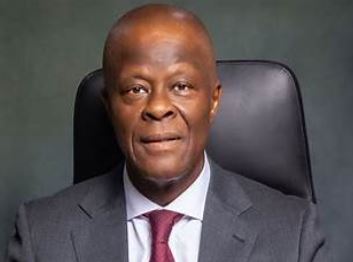
Scrapping the “Envelope”: Finance Minister Edun Faces Senate Over ₦152 Trillion Debt and 2026 Budget Reforms
ABUJA — The era of the controversial “envelope system” in Nigeria’s national budgeting is officially coming to an end.
The Minister of Finance and Coordinating Minister of the Economy, Wale Edun, delivered this assurance during a tense interactive session with the Senate Committee on Finance on Thursday, February 26, 2026. Appearing alongside the Federal Government’s Economic Management Team to defend the proposed ₦58.47 trillion 2026 budget, Edun addressed lawmakers’ mounting frustrations over delayed contractor payments, poor capital project execution, and the nation’s ballooning debt profile.
As the Ministry of Finance transitions into the 2026 fiscal cycle, the focus is squarely shifting from mere economic stabilization to strict, KPI-driven “Investment Budgeting” designed to unlock Nigeria’s potential as a $1 trillion economy.
The Death of Envelope Budgeting
The Senate Committee, chaired by Senator Mohammed Sani Musa, heavily criticized the traditional “envelope” model—where Ministries, Departments, and Agencies (MDAs) are handed fixed, arbitrary budget ceilings regardless of their actual project needs. Lawmakers argued this method has chronically weakened service delivery and fiscal discipline.
Edun fully agreed with the legislative pushback, confirming a structural pivot for the Ministry of Finance.
- The New Direction: “The envelope system of budgeting has failed and needs to be replaced by a priority-based model,” Edun stated. “The incremental allocation model has outlived its usefulness.”
- The Approval Hierarchy: Under the new priority framework, projects will face a rigorous three-tier approval process driven by the MDAs, vetted by the finance team, and ultimately authorized by President Bola Tinubu.
The ₦152 Trillion Debt Reality
As lawmakers queried the lagging performance of the 2025 budget and the lack of capital releases, Edun provided a stark breakdown of the country’s financial burden.
He revealed that while government revenue has improved, the high interest on debt servicing remains a severe drain. “We are servicing debt running up to ₦152 trillion,” the Finance Minister disclosed.
However, Edun broke down the figures to clarify that this is not entirely new borrowing:
- Inherited Burden: About ₦30 trillion stems from the “Ways and Means” advances (unregulated money printing) inherited from the previous administration.
- Forex Impact: Another ₦9 trillion is a direct result of exchange rate adjustments following the unification of the Naira.
- Fiscal Discipline: Edun emphasized that the Tinubu administration has officially halted the unchecked “Ways and Means” financing to replace it with market-based solutions, shifting from expensive foreign debt to private capital.
Fixing the Payment System and Expanding Social Safety
Responding to complaints about the centralized payment system leaving government contractors unpaid, Edun assured the Senate that the Ministry is actively upgrading the payment architecture to ensure prompt disbursements for executed projects. “We should not throw the baby away with the bathwater but seek to improve it,” he noted.
Simultaneously, the Minister shared a major update on the government’s social protection interventions. Speaking at a separate World Bank IDA20 review event this week, Edun confirmed that the Ministry’s digital ID integration efforts have successfully delivered direct cash transfers to nine million of Nigeria’s poorest households, significantly reducing leakages and expanding the social safety net amid the ongoing economic reforms.
As the Ministry of Finance transitions into the 2026 fiscal cycle, the focus is squarely shifting from mere economic stabilization to strict, KPI-driven “Investment Budgeting” designed to unlock Nigeria’s potential as a $1 trillion economy.