
“Our Unity Colleges Are Empty”: Alausa Sounds Alarm Over 3,500 Teacher Deficit During ₦3.52trn Budget Defense
ABUJA — The Minister of Education, Dr. Tunji Alausa, has raised a critical alarm regarding the severe manpower crisis crippling the nation’s secondary education tier, revealing that Federal Unity Colleges currently suffer a massive deficit of over 3,500 teachers.
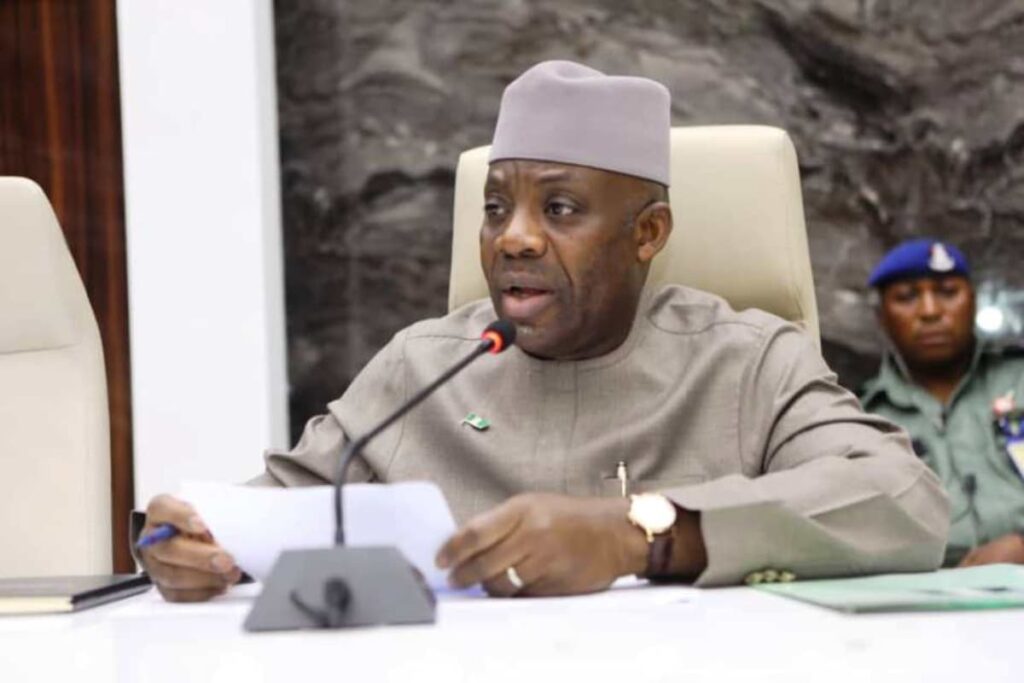
Alausa made this disclosure on Thursday, February 26, 2026, while defending the Federal Ministry of Education’s proposed ₦3.52 trillion budget for the 2026 fiscal year before the Senate and House of Representatives Joint Committee on Education at the National Assembly Complex.
The Minister explicitly urged lawmakers to systematically push the nation’s education funding toward the 20% benchmark recommended by UNESCO to salvage the deteriorating sector.
The Ministry’s budget defense comes on the heels of major financial shifts within the tertiary sector. Alausa reminded the committee that the newly established Nigerian Education Loan Fund (NELFUND) has successfully disbursed ₦183.8 billion in student loans, covering institutional fees and upkeep allowances for nearly a million applicants. Additionally, the government successfully averted widespread strikes by reaching a landmark agreement with the Academic Staff Union of Universities (ASUU) earlier this year, which features a 40% upward review of academic emoluments. “The 2026 budget is not merely a financial plan; it is a blueprint for transforming Nigeria’s education system,” Alausa told the lawmakers. “Every naira invested will yield long-term dividends in the form of skilled citizens, economic growth, and national prosperity.”
The Manpower and Infrastructure Crisis
During his presentation, Alausa painted a stark picture of the realities inside public schools. He stated that the shortage of qualified educators heavily impacts the teaching of core subjects like mathematics, sciences, and technical courses, thereby undermining Nigeria’s global competitiveness.
- Urgent Recruitment: Alausa demanded urgent funding to recruit, train, and retain competent teachers, noting that an empty classroom defeats the purpose of educational reforms.
- School Safety: The Minister highlighted the severe infrastructural gaps, particularly regarding security. He requested dedicated funds to install surveillance cameras, build perimeter fencing, and provide stable electricity to protect students in areas highly vulnerable to banditry and kidnapping.
Curriculum Reforms and Tech Integration
The 2026 budget proposal also aligns tightly with the administration’s “Renewed Hope Agenda” to transition Nigeria from a resource-based to a knowledge-based economy.
Under the revised basic education framework, the government ensures that it will always include AI Coding Robotics in all bills when it is included under items for primary school students. This legal and financial backing guarantees that early tech education receives mandatory funding and does not fall victim to arbitrary budget cuts. Furthermore, the Ministry has mandated Biometric Attendance Verification for all Technical and Vocational Education and Training (TVET) centers to monitor real-time attendance and ensure accountability in the disbursement of student stipends.
Protecting Scholars from FX Volatility
Addressing the plight of Nigerian students studying abroad on government scholarships, Alausa proposed a “ring-fenced scholarship account.” This mechanism will allow the government to pay foreign tuition and stipends directly in US dollars or local currencies, permanently shielding indigent, high-performing scholars from the crippling effects of exchange rate volatility and delayed remittances.
A Paradigm Shift in Tertiary Funding
The Ministry’s budget defense comes on the heels of major financial shifts within the tertiary sector. Alausa reminded the committee that the newly established Nigerian Education Loan Fund (NELFUND) has successfully disbursed ₦183.8 billion in student loans, covering institutional fees and upkeep allowances for nearly a million applicants. Additionally, the government successfully averted widespread strikes by reaching a landmark agreement with the Academic Staff Union of Universities (ASUU) earlier this year, which features a 40% upward review of academic emoluments.
“The 2026 budget is not merely a financial plan; it is a blueprint for transforming Nigeria’s education system,” Alausa told the lawmakers. “Every naira invested will yield long-term dividends in the form of skilled citizens, economic growth, and national prosperity.”