
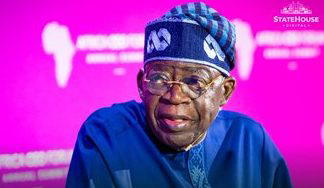
Tinubu’s regional federalism, by Suleiman A. Suleiman
I have described President Bola Ahmed Tinubu’s economic policies as Tinubunomics. That is, an economic system based on resource extraction from the citizenry to the state, but without corresponding public investment. I have said much on this, and there is a lot more to be said. But for the moment, how should we conceptualize or describe the President’s politics?
I don’t have a single word like Tinubunomics for describing his politics, but I think Tinubu is regionalizing the Nigerian federation. He is moving Nigeria back to some version of the early 1960s, towards greater consolidation of the “regions” in relation to the federal government. Because Tinubu speaks with actions rather than words, we can discern a clear regional logic to his presidency. Let’s call this logic regional federalism, by which I mean a progressive attempt to regionalize federal power and ultimately strengthen the regions against the federal centre.
Tinubu’s approach is not new, and is deeply rooted in the dominant political tradition of the South-west. That tradition always understood the Nigerian federation decidedly in terms of stronger regions in relation to the federal centre, as envisioned by the late Chief Obafemi Awolowo. The political behaviour of the South-west within the Nigerian federation has always mirrored that position of consolidating the regions in relation to the federal state at the centre. Regardless of the increasing number of states, the South-west was always like one region belonging to one dominant political party: AG, UPN, AD, AC, ACN, and so on. But even now, within a ruling party at the centre, the tendency is to govern alone as a regional unit, as much as is practicable, rather than as part of a broader national coalition.
The historical connection for Tinubu’s regional federalism is therefore clear, and neither the creation of states by the military from 1967 to 1996 nor participation in the federal centre has dimmed that understanding. Instead, federal power is being used to enact and strengthen it.
Moreover, Tinubu’s entire political career amply demonstrates this region-centric approach to Nigerian federalism. First, this regional disposition was the underlying logic of the political and judicial battles between Tinubu, then Governor of Lagos, and President Obasanjo during 1999–2007, who then and now always saw himself as a nationalist. Obasanjo sought to drag the South-west into mainstream federal politics, which Tinubu then resisted. Tinubu ultimately won both the war and its individual battles by wresting back all the states then held by the PDP, then a clearly national party at the centre, that it had taken from the AD in the South-west.
After 2007, Tinubu retired to his Bourdillon compound, not to quit active politics, but to play the long game with the very same idea in mind. While he stayed away from office, he remained politically active. He kept working to rebuild the South-west into a single-party region and to emerge as the uncontested political leader of the region. He was not always as successful against lesser opponents than Obasanjo, as with Gbenga Daniel or Olusegun Mimiko, for example, but he kept trying. Moreover, he tried to forge alliances that would broaden the appeal of his regional party, such as those with former Vice-President Atiku and former NLC President Adams Oshiomhole in 2007, with the current National Security Adviser (NSA), Nuhu Ribadu, in 2011, and more successfully with the late President Buhari in 2015 and 2023.
Yet Tinubu’s governing logic looks a lot less like a government forged through alliances, and we can discern three defining and mutually reinforcing tendencies in his politics that point to the regionalization of federal power. The first, and most obvious, is the regionalization of the federal executive, a sprawling bureaucracy that goes well beyond ministerial positions. Tinubu’s political appointments have been much criticised, but their significance lies mainly in the strategic concentration of political, economic, and military influence within regional networks in the South-west to effectively enable the implementation of his political reforms.
The second is the regionalization of governance and development strategy. This is nuanced, but probably even more crucial than the first. Tinubu has faced stringent criticism about the perceived lopsided spread of his development projects in favour of the South-west. He has also faced scrutiny over a nonchalant attitude to problems in other parts of the country. There is a grain of truth in all of these. But I think people are missing the tree for the forest.
First of all, Tinubunomics, his economic doctrine, has had little room so far for spending on capital projects beyond reeling out percentages of macroeconomic growth that have little bearing on the lived realities of the majority of Nigerians. Moreover, Tinubu’s mega projects like the Lagos–Calabar Coastal Highway are still largely on paper. He has established universities, barracks, and a few other bureaucratic institutions, mainly for the political trade of building a new electoral coalition. Beyond these, however, Tinubu’s federal government has not really done much on the ground in terms of development projects anywhere in Nigeria. And that, in my view, is his real message. My inference is that Tinubu believes development should be led not by the federal government, but by the states, or better still, regions.
To understand this dimension of Tinubu’s regional federalism, we must look to his major economic policies. He has removed the fuel subsidy in order to increase federal allocation to states. His tax reform proposals were essentially aimed at reshaping so-called fiscal federalism. Regardless of how the tax reform proposals have turned out in drama or effect, some understanding of fiscal federalism was the real intent. Tinubu’s Infrastructure Support Fund (ISF), which he launched within months of taking office, has also been designed to encourage greater state and regional responsibility in infrastructure development like roads, water, power, etc. And now he has hurriedly muscled a bill for State Police through the legislative process.
The State Police Bill, as I said here a few weeks ago, is not designed as a solution to the worsening security situation in the country, even if that fact cannot be denied. It is an example of the third and most important dimension of Tinubu’s regional federalism, namely, the regionalization of federal state institutions. The long history of state police in Nigerian politics is independent of current security challenges. Rather, it is deeply rooted in a particular vision of Nigerian federalism: the idea that the regions or states should take on as much governance responsibility as the federal government institutionally, fiscally, and functionally. It is therefore only the first of Tinubu’s efforts in this direction, and I suspect it would not be the last.
The foregoing, in my view, is how to coherently approach or understand Tinubu’s politics. It is also the link between his politics and his economics, and the control of key governance sectors by South-west comrades. It is interesting that all those people who have been clamouring for restructuring over decades have not recognized it now that it has been progressively in operation over the past three years. Or perhaps they do, and hence the silence across the media, the so-called civil society, and the wider public in some quarters.
Now, is this politics good or bad for Nigeria at present? And how should other parts of Nigeria respond to it? How, in particular, should northern Nigeria, which made Tinubu’s presidency possible, respond? How, moreover, should the South-east, which has scarcely had any realistic shot at the presidency and still suffers an emotional hangover of belonging, respond to this politics? And for Tinubu himself, why such politics? These are questions for another day.
Suleiman, a public affairs analyst, writes from Abuja
The post Tinubu’s regional federalism, by Suleiman A. Suleiman appeared first on Vanguard News.