
Tinubu’s education reforms reach 3m tertiary students, Alausa tells opposition
…Accuses opposition of misleading Nigerians, says government prioritising results over promises
By Joseph Erunke, Abuja
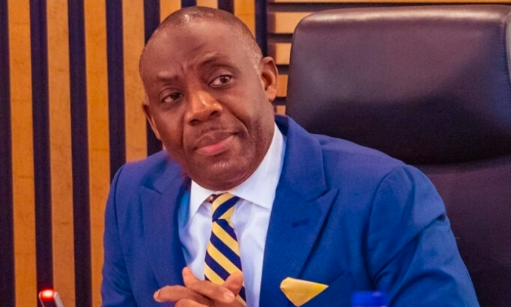
Minister of Education, Dr Tunji Alausa, has challenged opposition politicians, particularly former Labour Party presidential candidate, Peter Obi, to familiarise themselves with Nigeria’s education laws before criticising the Federal Government’s policies, insisting that nearly three million tertiary students are benefiting from President Bola Tinubu’s reforms.
Alausa, who accused the opposition of deliberately misrepresenting the administration’s interventions, said criticisms of the Nigerian Education Loan Fund, NELFUND, and other education policies were misplaced and failed to acknowledge the benefits Nigerians were already enjoying.
The minister fired back at Obi on Monday during a briefing at the All Progressives Congress Presidential Campaign Council headquarters in Abuja, where he defended the Tinubu administration’s record in education ahead of the 2027 general elections.
In a direct response to Obi’s criticisms, Alausa said the former presidential candidate needed to study the relevant legislation before making public statements about the government’s education financing arrangements.
“What Mr Obi is saying is borne out of ignorance. He needs to read the law. This is the law of Nigeria,” the minister declared.
He further accused Obi of misleading Nigerians, saying: “If Mr Obi wants to blame me and mislead the public and Nigerians, that tells you the kind of person he is.”
At the centre of the disagreement is the four per cent development levy introduced under the Nigeria Tax Act, which Alausa said was designed to guarantee sustainable funding for the student loan scheme.
He explained that 15 per cent of the proceeds from the levy was earmarked for NELFUND, insisting that the allocation was expressly provided for in the law and not an arbitrary government arrangement.
The minister challenged Obi to examine the relevant provisions of the legislation rather than cast doubts on the funding structure of the scheme.
Defending the broader education reforms, Alausa said the administration’s interventions had expanded access to tertiary education through student loans, improved infrastructure, increased funding and efforts to address the shortage of academic personnel in universities and other higher institutions.
He disclosed that nearly three million students in tertiary institutions and another 200,000 students in secondary schools had benefited from the administration’s interventions.
“We have almost three million Nigerian students in tertiary education and another 200,000 in secondary education. Today, students in every single section of our country have benefited the most from President Tinubu’s transformative agenda,” he said.
Rejecting what he described as an opposition fixation on policy announcements, Alausa argued that the real measure of government performance should be the tangible benefits reaching Nigerians rather than promises and political rhetoric.
“We have enough policies in Nigeria. We want tangible benefits for Nigerians. So, every single thing about today is not about policies. What I am trying to tell you is how Nigerians are benefiting,” he said.
Beyond student financing, the minister disclosed that the Federal Government had developed guidelines to strengthen governance in universities, particularly in the appointment of vice-chancellors, while committees had been established to monitor compliance.
He also identified efforts to tackle bullying in schools and ensure that recommendations from previous education review panels were implemented before another round of policy reviews commenced.
Alausa’s defence comes amid mounting opposition criticism of the administration’s education spending and reform priorities.
Obi had in July faulted the Federal Government’s decision to phase out the policy separating junior and senior secondary schools, arguing that Nigeria’s education challenges were rooted in inadequate funding, poor management and weak leadership rather than the structure of the school system.
The former Anambra governor also criticised the 2026 education budget, claiming that the sector received only 6.17 per cent of total expenditure, far below UNESCO’s recommended 15 to 20 per cent benchmark.
However, the Tinubu administration has continued to defend its education agenda, pointing to interventions in basic education, technical and vocational training, digital learning, teacher development and tertiary education financing.
Figures released by the Federal Government showed that NELFUND had disbursed N372.62bn in student loans across 319 tertiary institutions, covering tuition and upkeep allowances.
The administration has also introduced programmes targeting out-of-school children, expanded technical education opportunities and pursued digital initiatives to improve education planning and service delivery.
With the 2027 general elections approaching, education has increasingly become a battleground between the ruling APC and opposition politicians, with the government relying on its reform record to justify its quest for another mandate.
The post Tinubu’s education reforms reach 3m tertiary students, Alausa tells opposition appeared first on Vanguard News.