
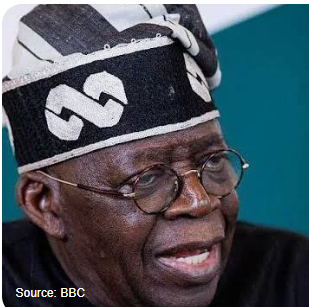
Tinubu FOIA case not over, Greenspan says
By Juliet Umeh
American journalist Aaron Greenspan, founder of PlainSite, a website that makes public court records and other legal information searchable, has said his Freedom of Information Act, FOIA, case seeking U.S. government records relating to President Bola Tinubu remains active, despite a recent court ruling dismissing some of his requests.
Greenspan spoke during an interview on Arise Television on Sunday, following a 78-page opinion issued on October 30 by Judge Beryl Howell of the U.S. District Court for the District of Columbia.
He said: “The messaging that I think has been coming out of the Tinubu administration is significantly misleading. What I read from a number of different sources in Nigeria was that basically they were telling people that the case is over, and that is not true. The case is very much still active.”
He said the ruling considered seven FOIA exemptions, which allow the government to withhold or redact information, as well as other motions filed in the case.
“The judge went through each one of those seven exemptions and wrote very detailed prose about why she thought that made sense or didn’t,” he said.
“What the Tinubu messaging says is that because the judge turned down my request to get that evidence about the attacks on PlainSite, that meant the whole case was basically over. And that is just a gross distortion of the record.”
The case involves Greenspan’s requests for records from U.S. agencies, including the Federal Bureau of Investigation and the Drug Enforcement Administration, relating to a federal investigation in the early 1990s into a Chicago-based money-laundering and heroin-trafficking operation. Tinubu and Abiodun Agbele were named in the requests.
Greenspan said the issues he considered most important concerned Tinubu’s privacy claims.
He said: “The things that are most important to me involve the claims that Tinubu’s lawyers were making about him having enhanced privacy rights because he was just a normal person in 1993, and the fact that he is president of Nigeria now doesn’t mean anything. The judge, in her words, rejected that argument.”
He said the court’s opinion referred to records showing Tinubu was a senator in 1993. Greenspan said the ruling could mean that holding elected office in a foreign country is relevant when assessing privacy claims in a FOIA case.
The judge rejected Greenspan’s request to obtain limited discovery from Tinubu and lobbying firm DCI Group over alleged cyberattacks on PlainSite. She also denied a motion by Karl Von Batten to file an amicus, or “friend of the court,” brief.
Greenspan said: “I opposed the filing because I wanted the case to remain focused and had concerns about the accuracy of the material.
“We are still waiting for the government to come back and now explain its reasoning for withholding all of these documents.
“The judge has made it very clear that she finds in many cases that their reasoning is questionable, in her words.”
Greenspan said the government had until November 27 to respond, unless it requested an extension. “I think we should have more documents or some hopefully strong reasoning why they can’t provide them by December,” he said.
He said his requests began in 2022 and the case had taken more than four years. “The FOIA statute says that the government’s supposed to respond within 20 business days. There are definitely multiple reasons why this case should be wrapped up soon,” he added.
The post Tinubu FOIA case not over, Greenspan says appeared first on Vanguard News.