
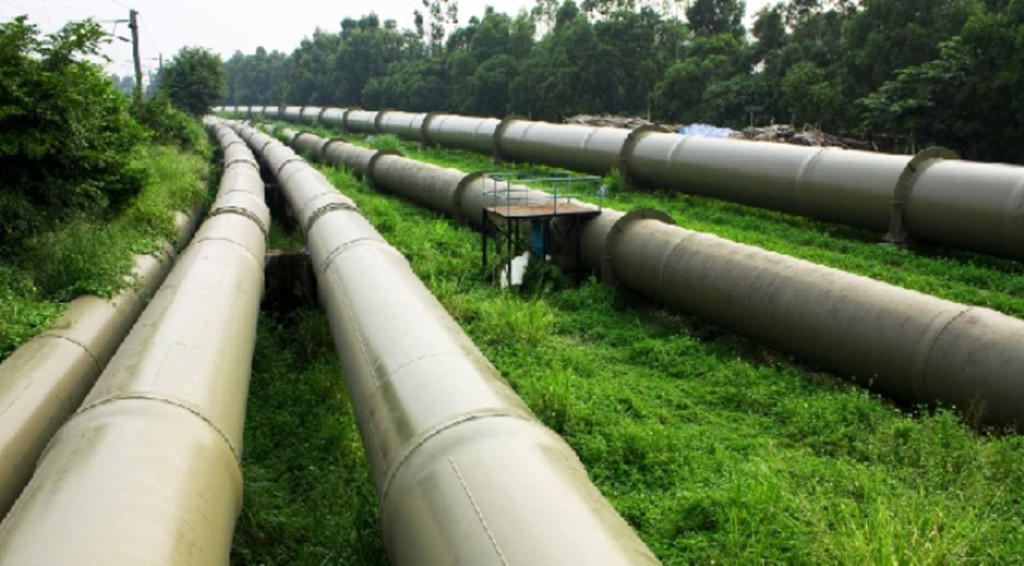
Ticking Time Bomb: How ageing pipelines are bleeding Niger Delta, Nigeria dry
By Egufe Yafugborhi
In the creeks of Warri South-West, the water no longer reflects the sky. It reflects crude. For over seven months, the 28-inch Trans-Forcados Pipeline at the Kantu-Odidi axis has been bleeding, and the people of Odidi Federated Community have been living inside an open gas chamber.
Read Also: Former Delta governor Uduaghan dies at 71
It started on February 19, 2026. What began as a localized rupture from a pipeline operated by Heritage Energy Operational Services Limited, HEOSL, has now become one of the longest-running and most expansive spills in recent Delta history.
Governor Sheriff Oborevwori has visited the site. NOSDRA has done a Joint Investigation Visit. The Federal High Court in Port Harcourt has given an order. Yet the oil is still flowing.
This is the story of ageing pipelines, a raging spill, gas leaks in Bille, Rivers, and a Niger Delta sitting on a network of rusting time bombs.
Rupture that became a sea
The official record is stark. The JIV conducted by the National Oil Spill Detection and Response Agency, NOSDRA, department officials and community representatives on February 20–21, 2026, inspected the asset and gave its verdict.
Comrade Justine Gbenekama, Chairman, Odidi Federated Communities, captured the frustration on ground: “This spill occurred on the 19th of February 2026, and up to this moment as we speak, the operator, Heritage Energy Operational Services, has not done anything properly to contain the spill.
“As you can see within the environment, even their recovery activities is not effective. And the people of this environment are suffering even beyond this place. The spill has been here for over seven months. And this is a tidal flow area.”
He paints the scale: “And so 6 hours flow from this point, you get to Escravos area. And where we are standing is just 5 minutes drive to Forcados River, 10 minutes to the Escravos Bar. So the spill has spread so far. And most importantly, there is no medical attention to any of the affected communities.
“And even relief materials that were brought were not adequate.”
The community’s petition to NOSDRA details the fallout. Livelihoods collapsed. Fishermen can no longer fish. Farmers can no longer farm.
Drinking water sources are severely contaminated with toxic hydrocarbon saturation. In many of the 216 impacted communities, cooking with fire or gas cylinders has been restricted due to explosion fears.
Gbenekama’s demand is blunt: “We are calling on the Federal Government, in fact, we have cried to the Federal Government. We’ve done everything we could to make sure that they compel Heritage Energy to contain this spill, repair, and carry out a proper clean up.
“Up to this moment, they have failed. And the worst part of it is that what they are recovering, they will take it back to their station in Isoko and inject it back to the same line, and the oil here will still come out in this point.
“That is an exercise in futility. So, we are demanding that there should be an immediate shutdown of the Trans-Forcados Pipeline and carry out the complete repair before operation will commence.”
What JIV Said: Corossion, not sabotage
This is where the Odidi spill becomes legally significant. The JIV officially attributed the product release to corrosion, operational error and equipment failure.
The implications are huge. By confirming equipment failure rather than third-party interference, sabotage, the JIV legally binds HEOSL to liability. Under Nigerian environmental law, this mandates the operator to fund 100 percent of the containment, clean-up, and community compensation costs.
Community legal counsel has since petitioned NOSDRA to enforce punitive sanctions, citing a multi-month delay by HEOSL in deploying containment booms.
That legal pressure has found backing in court. In Suit No. FHC/PH/CS/132/2026 – HRM Udogri Isaac I, Ovie of Uzere Kingdom v. Heritage Energy Operational Services Limited & NOSDRA, the Federal High Court, Port Harcourt Division, presided over by Justice Adamu Turaki Mohammed, issued a mandatory injunction ordering HEOSL and NOSDRA to immediately cease all crude oil and gas discharge and commence immediate, comprehensive environmental cleanup.
But on the water, containment remains slow. NOSDRA field updates show specialized dive teams isolating pressure boundaries, mechanical welding and permanent clamping underway, with complete technical sealing targeted for late October 2026. Until then, booms and dispersants are all that stand between the plume and the rest of the Forcados River.
Bille, Odidi and the pattern
Odidi is not alone. Across the Niger Delta operating space, the pattern is repeating. In Bille, Rivers State, gas leaks from ageing wellheads have become routine. In Odidi, the gas emissions are as deadly as the crude itself.
Dr. Doubra Collins Okotete, President, Ijaw Youth Council, IYC Worldwide, who led a shutdown threat to Heritage operations, did not mince words:
“Today we are here not for jokes, but to shut down the operations of the Heritage Oil and Gas Services. Today, look at the background. This spill has been on for over seven months. The operators of Heritage are heartless, wicked, and in fact, I don’t know what to describe them.
“As we speak, the entire line, Trans-Forcados line, the tidal flow from here stretched to the Ekeremor axis, the Gbaramatu axis crisscrossing to Ogulagha, which is Warri South-West and Bomadi Local Government areas, entire rivers is bastardized, and this is environmental injustice.”
He continued: “This is not sabotage. This is pure equipment failure. And we all know this oil activity has been going on for a very long time. And this pipeline has been damaged for over six, seven months, yet no tangible has been done.
“All they do is to employ contractors to come and curtail oil, yet the contractors they have employed could not contain this oil because, as the community chairman said, they come here scoop the oil, take it back to their station, inject it back to the same Trans-Forcados Pipeline, and this oil keep popping out, destroying our ecosystem, creating health hazard for our people.”
Okotete draws the link to Bille and beyond: “The same thing is happening to Alakiri, Rivers State, the same thing is happening to Bille, Rivers State, and other communities across the Ijaw nation.
“Yet, the Minister of Petroleum, our brother, Senator Heineken Lokpobiri, we are calling on him to stand firm to ensure the presidency does what is needful. The NNPC also take responsibility for everything that is happening. A fresh JIV needed to be done.”
And his warning to the Federal Government: “President Tinubu, you are the President and Commander-in-Chief of the Federal Republic of Nigeria. The Minister, Distinguished Senator, Heineken Lokpobiri, this is on your watch and today our river has been bastardized.
“Today, operations will be shut down. Today, the Ijaw Youth Council has taken upon itself to shut down all oil operations until a very decisive action is being taken by the Heritage Group of Company, and also the NNPC, and by extension the Federal Government.
“The Trans-Forcados Pipeline today that is eroded because of failure for replacement of this pipeline by these IOCs. All they are interested in is to make money, exploit our oil to enrich themselves at the expense of owners of this community.”
He described the human cost: “Today, from the Odidi community crisscrossing the entire Gbaramatu to Ogulagha axis is bastardized. Our aquatic lives are shut down, our parents can no longer go fishing, our brothers and sisters cannot earn living through fishing.
“Farming activities also has been put on hold. So how do you expect our people to survive? How will our parents feed? No drinking water, everything we rely on has been shut down and you expect us to sit down as youth to watch our aged parents suffer. That is a typical no.”
The Other Truth: Are we bursting our own pipes?
But there is a counter-narrative, an uncomfortable one that has followed Odidi for 25 years. Environmental commentator and long-time spill monitor, Zik Gbemre, says the community must look inward.
“The Odidi axis in OML 42 has served as an active hub for illegal bunkering for over 25 years. What is happening there today is not a new development, and the recurring spills cannot be properly understood or addressed without confronting this long history of illegal bunkering activities,” Gbemre said.
He argued: “The ongoing environmental degradation is largely artificial and directly tied to pipeline sabotage. Even after comprehensive cleaning and proper remediation, fresh spills reoccur within days because the root cause remains unchecked.
“The very voices shouting loudest about environmental pollution are, in many instances, connected to the criminal cartels bursting and tampering with oil infrastructure for personal financial gain.”
Gbemre, who said he has flown by helicopter alongside Ignatius Onofua, Shell Head of Spill-West, from the Ogunu helipad to the spill sites in Odidi multiple times, insists:
“What is unfolding across the Odidi and Egwa fields is the direct impact of illegal bunkering operations. Repeatedly placing hot taps on the same pipeline segments severely compromises structural integrity over time. Even when damaged points are clamped and repaired, the weakened metal around the hot taps continues to deteriorate, making future leaks inevitable.”
His verdict: “The Odidi spill is a self-inflicted disaster. It stems from illegal bunkering, systematic pipeline tampering, and local complicity. A total stranger cannot enter a community, transport heavy equipment, and place hot taps on high-pressure pipelines without the knowledge, authorization, or passive approval of host community leaders and influential actors along the Trans-Forcados Trunkline.”
He listed the chain: “Illegal Bunkerers: Physical installation of hot taps, line breaching, and crude siphoning resulting in immediate pipeline structural failure and crude discharge.
“Host Community Leaders: Receiving payoffs, granting access, and providing cover for criminal actors, allowing unchecked entry of illegal operators into protected community territories. Local Complicit Actors: Participating in processing, transport, or guarding illegal tapping points, leading directly to the destruction of local farming soil, mangrove swamps, and riverine ecosystems.”
And he warned: “You cannot destroy infrastructure, profit from illegal trade, and present yourself purely as an innocent victim. You cannot demand millions in cleanup funds while harboring the very individuals who will re-break the pipes tomorrow.
“You cannot expect eternal cleanup efforts when the damage is recreated deliberately. If illegal bunkering stops, the major driver of recurring crude oil spills in Odidi will automatically end.”
Gbemre also dismissed the claim that pipeline surveillance has ended sabotage: “It’s funny to hear the IYC boss claiming ‘no more vandalism in the operation space because TANTITA and other surveillance contractors are securing the space.
“That is joke of the year and media gymnastics. Oil theft still thrives. Ask the IOCs and marginal field operators. When companies abandon the pipeline to ship crude via badges, that is not for operational improvement. It’s desperate measures against the huge losses to ceaseless oil theft through vandalism on the pipelines.”
Regulators in the middle
The tension leaves regulators and operators in a bind. Heritage Energy, through its Community Relations Manager, Jeremiah Oharisi, when receiving women protesters, said: “Heritage is more than willing to do the right thing.”
But community trust is gone.
Journalist and development advocate Austine Aghomi, Coordinator, Journalist for Just Development of the Niger Delta, says both truths can co-exist:
“Yes, NOSDRA is bound to do its work without bias when there are eventualities, just as oil and gas operators need to take responsibility on routine maintenance of their assets, particularly ageing pipeline from failure to avoid the threat spills pose to the environment.”
He added: “What is equally concerning however, is the realisation that unrestrained assets vandalism, particularly tapping into oil wellheads, flowlines and pipelines to steal crude oil now helps to hasten the ageing of pipelines beyond the manufacturers’ set lifespan for these critical assets.
“The lines suffer repeated cuts from oil thieves. Over time, assets operators get overwhelmed by repeated repairs and ultimately forced replacement earlier than normal.”
Bomb still ticking
Whether corrosion or hot-taps, the outcome is the same: Nigeria’s pipeline network is old. Many of the trunklines in the Niger Delta were laid in the 1970s and 1980s with a 20-25 year lifespan. They have done 40-50 years.
When they fail, as the February 20-21 JIV in Odidi showed, they do not leak, they burst. And when they burst in a tidal zone, one spill becomes 216 communities.
For now, the Trans-Forcados Pipeline is still running, still being scooped and re-injected, still popping out at Kantu-Odidi. Bille is still leaking gas. The next Odidi is already rusting beneath another swamp.
The bomb is ticking. The question is no longer if it will explode, but where next.
Vanguard News
The post Ticking Time Bomb: How ageing pipelines are bleeding Niger Delta, Nigeria dry appeared first on Vanguard News.