
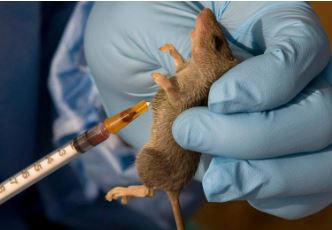
TETFund challenges Nigerian scientists to develop local Lassa fever vaccine
….As study reveals alarming death toll
By Joseph Erunke
Abuja—The Tertiary Education Trust Fund, TETFund, has challenged Nigerian scientists to accelerate efforts toward developing the country’s first indigenous Lassa fever vaccine, following fresh findings that the deadly disease kills between 5,000 and 10,000 Nigerians every year.
Executive Secretary of TETFund, Sonny Echono, who threw the challenge during the presentation of the outcomes of a N250 million TETFund-sponsored Mega Research Project on Lassa Fever, undertaken by the Federal University of Health Sciences, Otukpo, FUHSO, Benue State, in Abuja yesterday, described Lassa fever as one of Nigeria’s most pressing public health threats.
He said the country must move beyond academic research to delivering life-saving solutions capable of reducing the annual toll of the disease.
Echono urged the research team to focus on the quickest route to developing a vaccine, stressing that immunisation remained the most effective strategy for combating infectious diseases.
He said: “What is the shortest route towards developing a vaccine? How can we ensure that the burden on our people is reduced? Every year, thousands of Nigerians die from Lassa fever. How can we reduce this burden?
“I know a vaccine is usually the most effective mode of disease control. You vaccinate people and they become almost immune. What is the fastest path, and how can TETFund support that drive, so we can achieve direct benefits and direct impact on the lives of Nigerians?”
Echono assured the scientists of TETFund’s commitment to working with the Nigeria Centre for Disease Control and Prevention, NCDC, the Federal Ministry of Health and other relevant agencies to ensure that the research findings were translated into concrete national health interventions.
According to him, successful validation of the findings can strengthen the case for establishing a vaccine development centre in Nigeria.
“We will escalate these findings to the relevant authorities, including the NCDC and the Federal Ministry of Health. If we receive the validation we expect, it will strengthen our case for establishing a vaccine development centre in Nigeria,” he said.
He commended the researchers for producing evidence capable of transforming healthcare delivery and strengthening Nigeria’s response to infectious diseases.
Earlier in his remarks, the Vice-Chancellor of the Federal University of Health Sciences, Otukpo, Professor Francis Aba Uba, described the project as one of the most significant research investments in the institution’s history.
He said TETFund demonstrated remarkable confidence in Nigerian researchers when it awarded the university the N250 million Mega Research Grant four years ago to tackle one of the country’s most persistent health challenges.
According to him, the project has generated critical scientific evidence on epidemiology, diagnosis, treatment and control of Lassa fever, while significantly improving the university’s laboratory infrastructure, research capacity and international collaborations.
He appealed to the Federal Government and TETFund to designate the institution as a national centre of excellence in infectious diseases research, saying such recognition would consolidate the gains recorded and position the university as a leading hub for disease surveillance, innovation and research.
Presenting the findings, the project’s Principal Investigator, Professor Joseph Okopi, painted a grim picture of the disease burden, disclosing that Nigeria remained the global epicentre of Lassa fever, with an estimated 5,000 to 10,000 deaths annually.
He described the TETFund-backed project as the largest multi-state population surveillance study on Lassa fever ever conducted in Nigeria, covering antibody prevalence, rodent vectors, transmission patterns and environmental risk factors.
Among the study’s major discoveries was that Benue State recorded the highest prevalence of Lassa fever antibodies among the five states surveyed.
The research further revealed that adults, aged 20 and 40 years, were the most vulnerable because of frequent exposure to rodents through farming and other outdoor activities.
Also presenting clinical findings, Professor Audu Onyemocho disclosed that the study enrolled 1,266 participants, while 392 suspected cases were investigated across Benue and Kogi states.
Of the suspected cases, 43 were confirmed positive through real-time Polymerase Chain Reaction, PCR, testing, with Benue accounting for 25 cases and Kogi 18.
He added that bleeding, advanced age and seizures emerged as the strongest predictors of death among confirmed patients.
Speaking on the next phase of research, former Director-General of the National Emergency Management Agency, NEMA, and adviser to the research team, Professor John Idoko, stressed that developing a safe and effective vaccine remaind the ultimate objective in Nigeria’s fight against Lassa fever.
The post TETFund challenges Nigerian scientists to develop local Lassa fever vaccine appeared first on Vanguard News.