
Subsidy: Opposition parties, experts take on Oyedele over N4,000/$ crash claim
*You’re paying fuel subsidy through back door, APM tells Tinubu *NDC kicks, asks why are our refineries not working? *Magnitude cannot be established by assertion alone – Prof Iledare *Minister must show assumptions, economic model underpinning projection — Egbomeade *You’re the Egypt Nigerians’ll never return to, Atiku tackles Tinubu
By Henry Umoru, Peter Egwuatu, Udeme Akpan & Luminous Jannamike
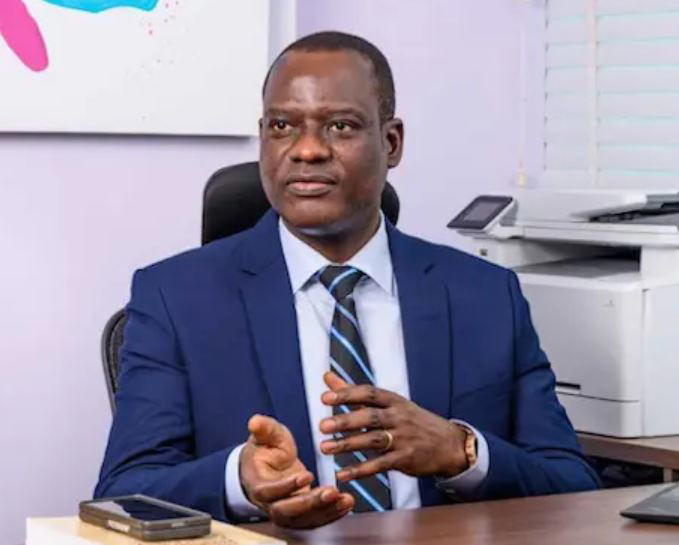
LAGOS — Some opposition parties and experts yesterday challenged the Minister of Finance, Taiwo Oyedele, to explain the assumptions he based his assertion that the Naira might crash to N4,000/$ should the Federal Government restore fuel subsidy.
The minister had in an interview on the sidelines of the just-concluded World Bank/IMF meetings in Bangkok, Thailand, said the local currency would crash to N4,000/$, if subsidy was restored.
Some opposition presidential candidates, including African Democratic Congress’ Atiku Abubakar; Social Democratic Party’s Adewole Adebayo; and Nigeria Democratic Party’s Peter Obi, had in the past few weeks, said they would restore fuel subsidy, if they were elected president to assuage the sufferings of the people.
Aside from Nigeria Democratic Congress, NDC, and Allied People’s Movement, APM, which disagreed with the finance minister’s assertion, experts, including petroleum experts, Prof. Wumi Iledare; and Economic and Communications expert, Clifford Egbomeade, also challenged him to explain the assumptions on which he based his assertions.
Reacting to the minister’s declaration, the APM accused President Bola Tinubu’s administration of paying fuel subsidy through the back door, questioning the recent petrol price reduction, despite government’s declaration that subsidy was gone.
The party also dismissed Oyedele’s warning that restoring subsidy could push the naira to N4,000 per dollar, describing the projection as unfounded and accusing the government of pursuing economic policies driving businesses into closure.
APM National Secretary, Ayodele Adebayo, who stated this in a response to Vanguard’s inquiries, faulted the administration’s handling of fuel prices and its claims about investors’ loss of confidence in opposition parties.
“What are they doing now with the current reduction in petrol price for one month? Is it not returning subsidy through the back door?” Adebayo queried.
He argued that the naira had previously exchanged at a stronger rate, rejecting the minister’s projection as an attempt to justify the government’s position on subsidy.
Adebayo also challenged Oyedele’s claims that investors had written off opposition parties as unserious, alleging that harsh economic policies had forced several companies to shut down.
“Where are even the investors the Minister of Finance, Taiwo Oyedele, is talking about? Is it the recycled ones by the present administration?” he queried.
The APM secretary said his party favoured an appropriate pricing framework for petroleum products to prevent further hardship, insisting that Nigerians should not be left with little money after paying for fuel.
“We cannot subscribe to seeing Nigerians use all their entitlements and earnings to buy fuel due to harsh economic policies,” Adebayo said.
NDC kicks, asks why are our refineries not working?
Similarly, the national leadership of the NDC slammed Oyedele for his statement, describing it as a subtle blackmail.
National Publicity Secretary of the NDC, Osa Director accused the All Progressives Congress, APC-led government of mortgaging a sizeable portion of Nigeria’s crude oil to take foreign loans “to the extent that we are unable to supply Dangote refinery the needed crude oil to satisfy domestic consumption and demand.”
Osa Director said: “The most important aspect of the subsidy conversation is not yet addressed. Why are our refineries not working? Why did the APC government mortgage a sizeable portion of our crude oil to take foreign loans, to the extent that we are unable to supply Dangote refinery the needed crude oil to satisfy domestic consumption and demand?
“If all these and the criminality in the subsidy regime are addressed, the doomsday prediction of the Minister of Finance would not be necessary.”
The ADC had taken a similar position in its reaction to the issue on Monday.
Magnitude cannot be established by assertion alone — Prof Iledare
Examing the minister’s statement in an interview with Vanguard yesterday, Petroleum Economist, Prof. Wumi Iledare, said: “The petrol subsidy debate should be guided by fiscal sustainability, market efficiency and measurable public welfare, not political rhetoric or unsupported forecasts.
“Restoring the subsidy would require the government to finance the gap between the regulated price and petrol’s economic cost. Depending on its scale and design, this could increase fiscal pressure, borrowing, foreign-exchange demand, import dependence, smuggling and arbitrage.
“However, the claim that subsidy restoration would push the naira to N4,000 per US dollar should be treated as a risk scenario, not an inevitable outcome.
‘’Finance Minister, Taiwo Oyedele, has linked such a possibility to capital flight and weaker investor confidence if reforms are reversed. These are plausible channels, but the specific exchange-rate projection requires evidence and clearly-stated assumptions.
“The naira is influenced by foreign-exchange supply and demand, crude-oil receipts, domestic production, capital flows, reserves, monetary policy and investor confidence. Subsidy restoration could add depreciation pressure, but its magnitude cannot be established by assertion alone.
“Subsidy removal, however, should not be judged only by its fiscal benefits. Higher petrol prices affect transport, food distribution, production costs and household welfare. Savings matter only when converted into productive investment, infrastructure, efficient public transport and targeted support for vulnerable households.
“Nigeria should, therefore, assess both options against affordability, fiscal sustainability, energy security and public value. Any restoration proposal should disclose its cost per litre, total fiscal exposure, funding source, beneficiaries, anti-leakage safeguards and exit strategy. ‘’If removal continues, the government must show how the savings are being used and what measurable welfare gains citizens receive.
“Nigeria needs neither cheap petrol at any cost nor expensive petrol in the name of reform. It needs competitive petroleum markets, efficient energy supply, transparent governance and targeted support.”
Minister must show assumptions, economic model underpinning projection — Egbomeade
Reacting in a similar manner, Clifford Egbomeade , Economics and Communications expert, said: “Rather than restore blanket fuel subsidies, the government should address the structural factors driving petrol prices, particularly exchange-rate volatility, domestic refining capacity and distribution costs.
‘’The government must also disclose how much subsidy removal has saved and how those savings have been spent, and the measurable economic benefits achieved.
“The minister’s N4,000/$ projection describes a possible risk, not an inevitable outcome. Subsidy restoration could widen the fiscal deficit, undermine investor confidence and increase foreign-exchange demand, particularly if fuel imports rise.
‘’However, the minister must show the assumptions and economic model underpinning the projection. The naira’s value also depends on oil revenues, foreign-exchange supply, capital flows and monetary policy.
‘’Policy-makers must evaluate subsidy restoration against its fiscal cost, impact on household purchasing power and implications for exchange-rate stability, rather than rely on political promises or forecasts not supported by evidence.”
This may not be an exaggeration – Adonri
However, David Adonri, an economist and Managing Director, HighCap Securities Limited, said: “The removal of subsidy on petrol has achieved several objectives for government. First, it ended the issuance of public debt to finance the consumption subsidy. It repaired the damaged balance sheet of NNPC which could not remit revenue to government while the subsidy lasted. As a result of savings from subsidy removal, the federation account has more distributable income which has restored the financial health of sub-nationals.
For the public sector in general, the policy has produced unimaginable financial turnaround and revived the integrity of the Petroleum industry. It has enabled domestic production to become competitive and viable.
‘’That without removal of fuel subsidy, the value of the Naira now would have crashed to N4,000/$ as expressed by the Minister of Finance. This may not be an exaggeration.
While the public sector has enjoyed all the benefits accruing from subsidy, unfortunately, it has left in its trail the worst cost of living crisis ever experienced by consumers in the country. ‘’This is because of the inability of the fiscal authorities to run an effective supply side policy to enhance agriculture and mining due to rural insecurity, close the expanding housing deficit and drive the use of alternative sources of energy such as solar and CNG.
You’re the Egypt Nigerians’ll never return to, Atiku tackles Tinubu
On President Bola Tinubu’s declaration that Nigeria would not return to Egypt, following calls by the opposition for fuel subsidy to be restored, presidential candidate of African Democratic Congress, ADC, Atiku Abubakar, said the statement exposed “how little he (President) understands the suffering of Nigerians”.
In a statement issued on his behalf by Phrank Shaibu, Director of Strategic Communication of the ADC Presidential Campaign Council, Atiku said Tinubu boasted of removing the subsidy on his first day in office “like a wicked king recounting the suffering he had inflicted as a triumph.”
He said: “Bola, you are the Egypt Nigerians are desperate to escape. You celebrate the day you made fuel more expensive, then lecture families struggling to pay for food and transport about why they must never go back.”
“At least, Pharaoh knew he was holding people captive. Tinubu watches families cut meals, workers spend their salaries on transport and businesses struggle to keep their lights on, then tells them a story about Moses.
‘’He may quote scripture, but he governs like Pharaoh, Herod and Ahab combined: deaf to the cries of the people, proud of the hardship he has imposed and convinced that power excuses him from answering for it.
“Bola, a mother trying to feed her children cannot pay for food with a metaphor. A worker cannot get to work on a story about the Red Sea. Nigerians are asking how you intend to make life affordable. Answer them.
“I will make life affordable again through practical relief Nigerians can feel. My proposal is clear: give limited, budgeted support only to verified petroleum products refined in Nigeria and sold to Nigerians.
‘’Imported fuel gets nothing. Independent auditors must track every naira, and the benefit must reach consumers in the price they pay. If it does not lower that price, it has failed its purpose.
“But hardship is not the only captivity Nigerians face. Tinubu’s failure on security cannot be buried under Buhari’s record. He asked Nigerians for the presidency knowing that communities were under attack, families were paying ransom and children were afraid to travel to school.
‘’He took the oath to protect them. Yet his own campaign Director-General asks, ‘What do you expect Tinubu to do when even Buhari, a general, could not wipe out insecurity?’ Let me remind them that President Yar’Adua was not a sergeant, yet he stamped it out.
“Nigerians expect their President to confront the killers, rescue the abducted and make it possible to travel, farm, work and sleep without fear. If Tinubu cannot tell them how he will do that after more than three years in office, he has no business asking for four more years.
‘’The lives lost under his watch are not an argument about his predecessor. They are an indictment of his own leadership. And look at what Tinubu asks of the officers sent to protect us.
‘’A retired Assistant Superintendent told me he receives ₦29,000 a month. Serving officers are drawing down their pension savings to feed their families. How can a President demand courage from police officers in the field while leaving them worried about food at home and destitution in retirement?
“Bola, answer the retired officers asking for a pension they can live on. Act on the Police Exit Bill and review serving officers’ salaries, as was done for members of the Armed Forces. Give the people who protect Nigerians the pay, healthcare and retirement security their service has earned.
“Stop pointing to Egypt as though it lies behind us. For millions of Nigerians, Egypt is the hunger, fear and indignity they are living through under you. They deserve affordable fuel, safe communities and police officers who can serve without sacrificing their families’ future. Tinubu made life expensive. I will make life affordable again.”
Vanguard News
The post Subsidy: Opposition parties, experts take on Oyedele over N4,000/$ crash claim appeared first on Vanguard News.