
Stop producing reports, start building power — Moghalu tells Ndigbo
By Steve Oko
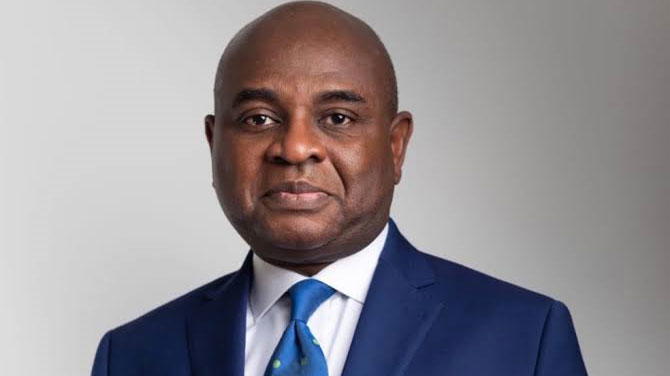
Former Deputy Governor of the Central Bank of Nigeria, CBN, Prof. Kingsley Moghalu, has challenged Ndigbo to stop producing “excellent reports” that end up gathering dust and begin converting their collective ideas into measurable economic, cultural and political power.
Moghalu, who chaired the committee that produced the Igbo Charter of Strategic Engagement for National Development, spoke on Monday in Umuahia while delivering a lecture on “The Igbo Charter and Development of Ala Igbo” at the Igbo Day celebration.
He said the Charter would amount to another failed document unless Ndigbo immediately created structures for its implementation.
“Nigeria is a cemetery of excellent reports. Igbo land has contributed more than its own share of the tombstones,” he declared.
According to him, the Charter must therefore move from “the shelf” into the hands of Ndigbo through clear ownership, funding, targets and public accountability.
Four things must start now
Moghalu identified four areas he said could provide an immediate launchpad for the Charter within the next 12 to 18 months: Igbo language, a digital marketplace, a global diaspora register and a credible security and investment framework.
He called on the five South-East Houses of Assembly to mandate Igbo-language instruction in primary and secondary schools, while urging Igbo communities abroad to establish structured Igbo lessons in their community schools.
He also proposed an Igbo digital marketplace and certified apprenticeship system, saying technology should be deployed to organise the region’s enormous trading and entrepreneurial ecosystem.
For the diaspora, Moghalu advocated a comprehensive registration system, arguing that Ndigbo could not effectively mobilise people whose numbers and skills were unknown.
“You cannot mobilise an asset you have not counted,” he said.
He equally identified insecurity as the biggest threat to economic development, calling for neighbourhood watch systems, early-warning networks and a credible South-East security and investment mechanism.
“Insecurity is the veto on development,” he said.
‘Charter must not become party property’
Moghalu warned political parties against appropriating the Charter, saying its survival depended on keeping it above partisan and electoral politics.
“The moment it becomes the property of one party, one candidate, one governorship cycle, one faction, it dies,” he said.
He described the Charter as a social contract among Ndigbo and between Ndigbo and Nigeria, rather than a party manifesto or grievance document.
While acknowledging the importance of political support, he said governors and political leaders should support it from the standpoint of leadership rather than party interest.
Demands restructuring of Nigeria
The former CBN deputy governor also advocated restructuring, devolution of powers, greater economic and security autonomy and equitable political arrangements, describing them as Nigerian necessities rather than exclusively Igbo demands.
He said Ndigbo must combine their demand for equity within Nigeria with civic participation, enterprise and a commitment to non-violence.
According to him, Nigeria owes every nationality security, citizenship and a federal structure in which no group becomes a “spectator in its own country.”
‘Practise merit among yourselves’
Moghalu challenged Ndigbo to embrace meritocracy internally while demanding fairness from the Nigerian federation.
He warned against allocating opportunities according to village, godfather, faction or popularity.
“Integrity over influence. Competence over popularity. Service over self,” he said.
He argued that Ndigbo’s historic strengths in education, enterprise and innovation could only translate into collective development if individual brilliance was properly organised.
‘Victimhood is a prison’
Moghalu urged Ndigbo to draw strength from their history without allowing the wounds of the past to define their future.
“Victimhood is a prison with very comfortable furniture. Agency is the only inheritance worth living for our children,” he said.
He called for a shift from dependence on diaspora remittances to structured investment in venture funds, bonds, hospitals, language schools, skills development and industrial projects.
He also demanded a more investment-friendly homeland, with security, clear land titles and a single efficient entry point for investors.
To prevent the Charter from becoming another abandoned document, Moghalu proposed that Ohanaeze Ndigbo establish a small professional implementation council, backed by a secretariat, public dashboard and quarterly performance scorecards.
“Every priority needs a baseline. Every priority needs a target. Every priority needs a date, a named officer and an independent review,” he said.
He further called for the Charter to be translated and widely disseminated through churches, town halls, communities and social media.
Moghalu said the challenge before Ndigbo was no longer intelligence but organisation.
“Igbo, we have never lacked intelligence. We have sometimes lacked orchestration.”
“The Charter is the scope. The subcommittee reports are the instrumentation. What remains now is performance,” he declared.
The lecture, attended by Igbo personalities from the seven Igbo -speaking states, was hosted by Gov. Alex Otti.
Eminent Igbo personalities, including the President General of Ohanaeze, Senator John Azuta -Mbata; Senator Enyinnaya Abaribe; wife of Dr Nnamdi Azikiwe, were also present.
The post Stop producing reports, start building power — Moghalu tells Ndigbo appeared first on Vanguard News.