
Solar everywhere: Commercial phone chargers dump petrol generators over fuel costs
By Elizabeth Adegbesan
Before now, the big complexes and markets in many parts of the country, were riddled with the sharp, rhythmic chugging of small petrol generators.
Read Also: Hardship threatens personal pension plan, 92% of accounts dormant
The disturbing soundtrack marked the industry of commercial phone chargers who became instant bail-outs to phone users, against the perennial epileptic power supply in the country.
Even business owners, residents see commercial phone chargers as a saving grace in such situations.
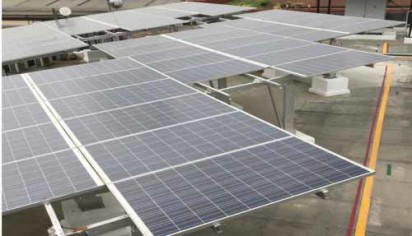
Economy&Lifestyle has discovered that today, the noise is rapidly fading, replaced by the silent gleam of rooftop solar panels.
Small-scale entrepreneurs running commercial phone charging hubs, a critical lifeline in a country with chronic grid instability, are staging a quiet revolution, ditching petrol for solar energy to survive a brutal economic climate.
For over a decade, these micro-businesses relied entirely on small generators, popularly known as “I better pass my neighbour,” to power their charging racks.
However, following the complete removal of fuel subsidies and subsequent currency devaluations, the retail price of petrol has skyrocketed to unprecedented heights. Operating a petrol-dependent business has transformed from a low-margin hustle into a financial suicide mission.
“I used to spend between N7,000 and N9,000 Naira daily on petrol just to keep my charging boards running,” said Kingsley Adeji, who operates a 50-port charging kiosk.
“By the time I calculate my daily earnings, I am working entirely for the petrol station. I was on the verge of shutting down completely because I couldn’t keep raising the price per charge for my customers, who are also broke.”
Desperate to stay afloat, Adeji took a gamble three months ago.He used his remaining savings and borrowed from a local cooperative society to purchase a 1-kilowatt solar inverter system equipped with two 300-watt panels and a lithium battery.
“It was a huge sacrifice upfront, but it saved my life,” Adeji noted.
“Now, my daily running cost is zero. “The sun charges my batteries, and I can charge over a hundred phones and power banks a day without hearing generator noise. I am finally making a profit again.”
Adeji added: “The government made life hard with the fuel prices. But the sun is free, and nobody can put a tax or a subsidy on it.” The trend is rapidly gaining momentum across major Nigerian cities and semi-urban communities where grid electricity rmains a luxury. Commercial phone charging booths are vital infrastructure in Nigeria, here a vast majority of the poulation relies on mobile phones for banking, small business operations, and daily communication, yet lack reliable power at home to keep their devices alive. Micro-entrepreneurs are realising that solar is no longer an environmental statement, but a strict requirement for commercial survival.
An economics researcher/ Lecturer, Mrs. Fatima Bello, said: “With petrol prices where they are today, using a generator to charge phones for 200 Naira each is no longer sustainable.
“These entrepreneurs operate on razor-thin margins. Solar energy offers them immediate operational relief by eliminating recurring fuel costs. It shifts their expenditure from a draining daily variable cost to a fixed, predictable investment.”
Local solar vendors are reporting a massive surge in patronage from unconventional clients. Previously, solar technology was viewed as a premium product reserved for wealthy households and large corporate offices.
Now, modular, pay-as-you-go solar systems tailored for small shops are flying off the shelves.
“We had to design specific ‘charger bundles’ because the demand from phone business owners became too big to ignore,” said Chidi Nwosu, a solar equipment distributor.
“They don’t need heavy inverters to run air conditioners; they just need stable direct current for USB ports and phones.
“We offer them flexible payment plans, and most of them pay it off within six months from the money they would have normally wasted on petrol.”
While the high initial cost of solar setup remains a significant barrier for the poorest vendors, many are forming clusters, pooling resources to buy shared solar stations.
For a sector born out of necessity, the transition highlights the relentless adaptability of Nigerian small businesses under severe macro-economic pressure.
The post Solar everywhere: Commercial phone chargers dump petrol generators over fuel costs appeared first on Vanguard News.