
Senate passes bill on foreign aid management for second reading
…Seeks mandatory registration, national database for all foreign aid
By Henry Umoru
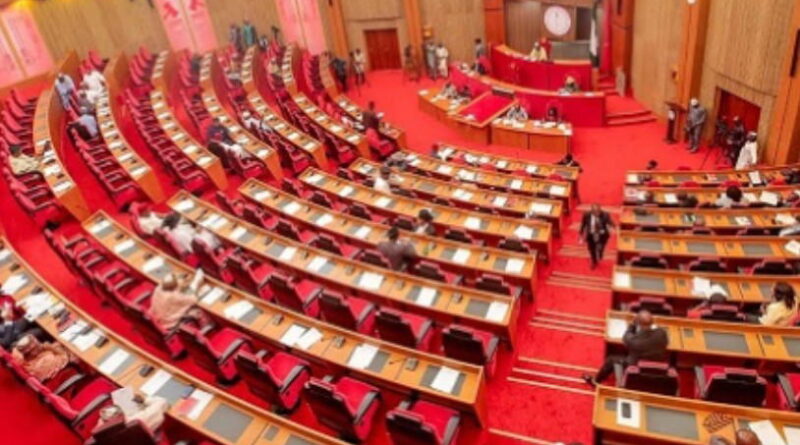
ABUJA — The Senate on Wednesday passed for second reading a bill seeking to strengthen transparency, accountability and coordination in the management of foreign aid, grants, donations, humanitarian support and concessional financing in Nigeria.
The proposed legislation, titled “A Bill for an Act to Provide for the Coordination, Transparency, Accountability, Registration, Disclosure and Effective Management of Foreign Assistance, Grants, Donations, Humanitarian Support and Concessional Financing in the Federal Republic of Nigeria and for Related Matters, 2026 (SB. 1034),” is sponsored by Senator Ibrahim Hassan Dankwambo (PDP, Gombe North).
The bill seeks to establish a legal framework for the coordinated management of foreign assistance, including the mandatory registration of all foreign aid and the creation of a national database to track donor-funded interventions.
President of the Senate, Godswill Akpabio, referred the bill to the Senate Committees on National Planning and Economic Affairs, Finance, and Foreign Affairs for further legislative work, directing them to report back within six weeks.
Leading the debate on the bill’s general principles, Dankwambo said Nigeria remained a major recipient of foreign assistance in the form of grants, technical support, humanitarian aid and concessional financing from bilateral and multilateral partners.
He, however, argued that the country’s foreign aid system remained fragmented, poorly coordinated and insufficiently transparent.
“Donor-funded projects are scattered across Ministries, Departments and Agencies (MDAs), sometimes executed outside the national budget framework, and occasionally duplicated or misaligned with national priorities. This weak coordination undermines efficiency, reduces value for money and, in some cases, erodes public trust,” he said.
The lawmaker noted that the bill derives its constitutional backing from Sections 80 to 85 of the 1999 Constitution (as amended), which vest oversight of public funds in the National Assembly and empower the Auditor-General to audit public accounts.
According to him, foreign aid received and utilised within Nigeria constitutes public resources and should therefore be subject to constitutional oversight and accountability.
Dankwambo also said the bill complements the Fiscal Responsibility Act, 2007, by ensuring that foreign aid is integrated into the country’s fiscal planning rather than being treated as off-budget expenditure.
He explained that the proposed legislation would strengthen existing institutions rather than create new ones by establishing a National Donor Coordination Framework anchored on current government structures.
The bill also provides for mandatory registration and a national database for all foreign aid, integration of donor-funded projects into national development plans and budgets, public disclosure of funding agreements, project implementation and audit reports, as well as sanctions for non-registration, diversion, misuse of funds, false disclosures and execution of unapproved projects.
Dankwambo said the proposed law would enhance fiscal discipline, eliminate duplication of donor-funded projects and improve development outcomes through better coordination.
He added that the legislation would strengthen donor confidence through improved transparency and accountability, reinforce the National Assembly’s oversight role and restore public confidence in the management of development resources.
According to him, the bill also aligns Nigeria with international standards on aid effectiveness by ensuring that all development assistance is strategically deployed and properly accounted for.
The post Senate passes bill on foreign aid management for second reading appeared first on Vanguard News.