
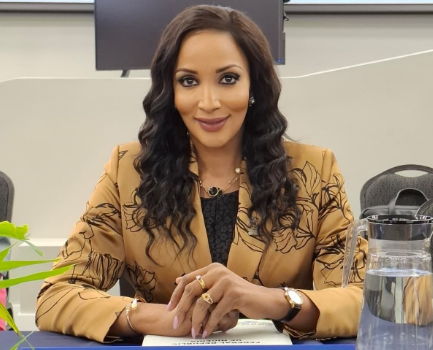
Ojukwu Memorial: Bianca slams South East governors over disunity, rivalries
. Laments abandonment of Ojukwu by political elite he helped make
. Urges Igbo youths in diaspora to shun illicit wealth
. As Uwazurike demands Nnamdi Kanu’s release
. Insists Biafra struggle must be non-violent
By Steve Oko
UMUAHIA — Nigeria’s Minister of Foreign Affairs, Ambassador Bianca Ojukwu, has berated Igbo political leaders, particularly governors in the South-East, for failing to unite in the interest of the people, lamenting that their mutual antagonism was undermining the region’s collective progress.
This is as the Founder of the Movement for the Actualisation of the Sovereign State of Biafra (MASSOB BIM), Chief Ralph Uwazurike, has renewed his call for the release of the detained Biafra agitator, Mazi Nnamdi Kanu, insisting that he committed no offence warranting his continued detention.
Bianca, widow of the late Biafran leader, Chukwuemeka Odumegwu-Ojukwu, said the governors had failed to speak with one voice on issues affecting the Igbo, choosing instead to antagonise one another at the expense of the people.
She spoke on Thursday at the 15th annual memorial of the late Igbo leader held at the Ojukwu Memorial Library, Owerri, where she called for a departure from political rivalry, personal interests and divisive tendencies.
Expressing disappointment with the state of Igbo unity, she said the region could not continue to demand recognition from others while its leaders and people failed to recognise and value one another.
“We cannot continue to celebrate Igbo greatness while tolerating the disunity that undermines it,” she declared.
The minister lamented that Igbo governors were not sufficiently united to advance the interests of their people, insisting that unity must transcend rhetoric and cultural gatherings to become a practical commitment to regional development.
She urged the governors to collaborate for the common good, stressing that the future of the South-East could not be built on mutual suspicion, political antagonism and personal ambition.
Bianca also expressed disappointment with some Igbo political elites who, despite benefiting from the influence and political legacy of her late husband, had abandoned him and failed to sustain the ideals he stood for.
She said Ojukwu’s legacy should not be reduced to the celebration of his military exploits, titles, speeches and political struggles, but should be understood through his convictions, humanity and commitment to justice and dignity.
The minister said her late husband was a soldier, statesman, intellectual and patriarch whose life was driven by a profound belief in justice and the right of people to live without fear.
Reflecting on the painful history of the Igbo, particularly the 1966 pogroms, displacement and civil war, she said remembrance of Ojukwu should serve as a commitment to preventing a recurrence of such tragedies rather than merely celebrating the circumstances that made him famous.
She called on traditional rulers to provide moral direction, political leaders to rise above personal interests, businessmen and women to invest in the homeland, and young people to channel their energies into innovation rather than destruction.
Bianca also urged Igbo youths in the diaspora to resist the lure of illicit wealth, warning that the pursuit of criminal proceeds had brought disgrace and left some languishing in detention instead of building meaningful futures.
She urged them to become ambassadors of their people and contribute to rebuilding a homeland where investors could operate confidently, businesses could thrive and families could celebrate Christmas, weddings and other festivities without fear.
The minister lamented the deteriorating security and economic environment in parts of the South-East, saying the region could not attract investment or encourage its children to return home if communities remained frightened, businesses abandoned and streets empty.
“Our land must once again become a place where our children are excited to return,” she said, adding that investors must feel confident to establish businesses in the region.
She stressed that Ojukwu’s legacy could only endure if his values became visible in the lives of those who inherited it, noting that annual memorials alone were insufficient to sustain the memory of a great leader.
Taking a swipe at successive leaders over the failure to properly immortalise prominent Igbo figures, Bianca cited the prolonged delay in completing the Zik Mausoleum, lamenting what she described as a troubling lack of commitment to preserving the legacies of leaders who made enormous contributions to the people.
Bianca regretted that it took the former President Muhammadu Buhari to build a mausoleum where Zik was buried 22 years after his death, while successive administrations in Anambra looked away.
She said some leaders lived as though they would never die, but were eventually forgotten, unlike a few whose courage and contributions continued to inspire generations.
Bianca thanked those who had sustained Ojukwu’s memory through the annual memorial, saying such acts ensured that his story, valour and ideals would continue to be told to generations yet unborn.
She particularly poured encomiums on BIM MASSOB Leader, Chief Ralph Uwazurike, for honouring her husband by instituting the annual memorial series.
Uwazurike demands Nnamdi Kanu’s release
Says Igbo need new leader, faults political elite
Chief Uwazurike, in his speech, renewed his call for the release of Kanu, insisting that he committed no offence warranting his continued detention.
He argued that Kanu deserved freedom, drawing a comparison with Yoruba agitator, Sunday Igboho, who he said had been released.
He said the only difference between Kanu and Igboho was that the latter had a brother who was Nigeria’s President.
“Where is Sunday Igboho? Kanu didn’t commit any offence that is bigger or more sinister than that of Igboho. The only difference is that Sunday Igboho has a brother who is presently the President of Nigeria,” Uwazurike said.
He added that Kanu would have been released if Peter Obi were Nigeria’s President.
Uwazurike, who advocated non-violent agitation for Biafra, cautioned youths against resorting to violence, saying they had misunderstood the concept of self-determination and allowed social media to distort the struggle.
He argued that violence was inconsistent with the principles of self-determination, urging the younger generation to embrace peaceful advocacy.
“I urge the new generation of indigenous people to abide by the principles of non-violence,” he said, citing Mahatma Gandhi, whom he described as his idol.
The MASSOB founder said he had no regrets over the sacrifices he made in the course of the Biafra struggle, including persecution and the burning of his residence by state actors, insisting he was prepared to make even greater sacrifices if Biafra could be achieved through peaceful means.
“I want to even sacrifice more if Biafra could be actualised through non-violence,” he said, warning that resorting to force would undermine the struggle.
Uwazurike also lamented the absence of a unifying Igbo leader following Ojukwu’s death, expressing hope that another leader would emerge whom the people could rally behind.
He said Ojukwu remained the leader many Igbo still identified with despite his death, adding that the annual memorial was an avenue to promote unity among Igbo people.
Uwazurike dismissed the absence of political elites at the memorial, saying the event was about the people rather than the political class, whom he accused of being divided by personal interests.
He said the unity of the Igbo remained one of Ojukwu’s major legacies and urged the people to sustain it.
The ceremony, which attracted cultural displays, masquerades and match past by delegations from different states in the Old Eastern Region, also featured lectures and goodwill messages.
The post Ojukwu Memorial: Bianca slams South East governors over disunity, rivalries appeared first on Vanguard News.