
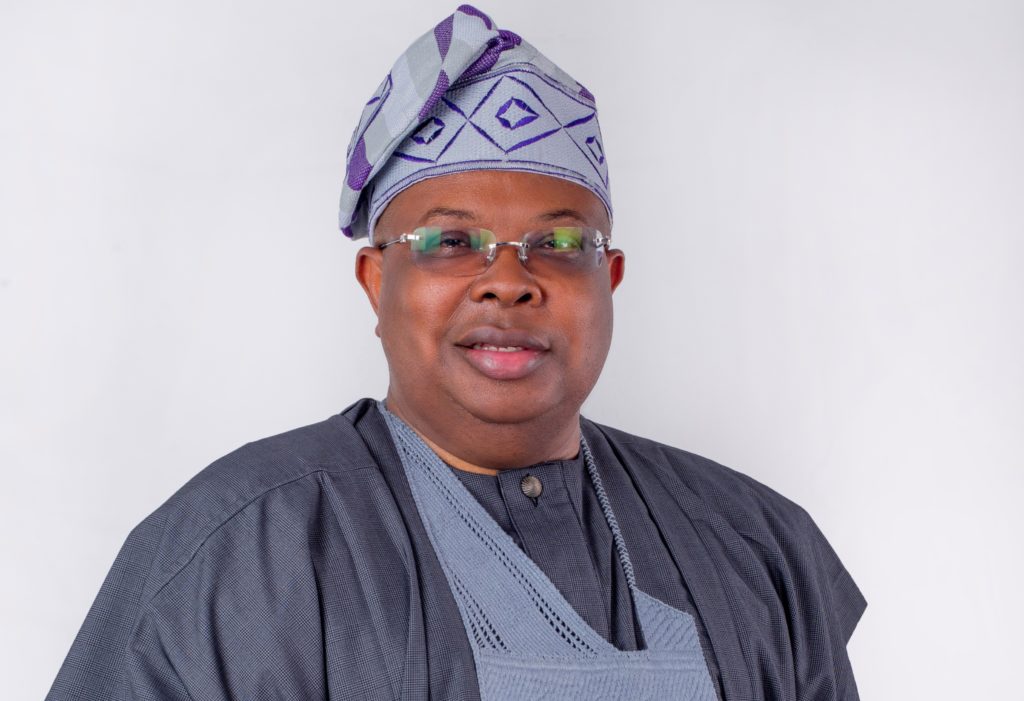
Nigeria’s electricity crisis to persist as FG shifts debt payment to 2027
•Poor teamwork, illiquidity, others undermine efficiency – Tegbe •Power crisis requires structural overhaul – Iledare
By Ediri Ejoh
Nigeria’s electricity crisis is unlikely to be resolved in 2026, as the Federal Government has shifted the settlement of its N3.3 trillion debt to power generation companies to 2027, while major interventions in metering and transmission infrastructure are also expected to extend beyond this year.
The Minister of Power, Joseph Tegbe, disclosed this during an interview with Arise News yesterday, adding that the government had paid N1.23 trillion of the debt, negotiated down from an initial N6 trillion, and was exploring options to clear the outstanding balance.
These include offsetting obligations against royalties and corporate income tax, as well as engaging the Nigerian National Petroleum Company Limited, NNPC, to reduce gas costs for power generation companies.
“We’re on track to finish paying the rest next year. Because we are looking at different ways to settle it,” Tegbe said.
On the proposed debt offsets, he said: “You can’t take money with one hand and give it with the other hand. So, let’s net it off.”
Tegbe attributed 80 per cent of the sector’s challenges to human and institutional factors, with technical issues accounting for the remaining 20 per cent.
“I said the problem in power sector is 20 per cent technical, 80 per cent human,” he said, identifying poor teamwork, lack of coordination among operators, liquidity constraints and governance issues as major obstacles to efficiency.
He also criticised past investment decisions, saying some projects were driven by political considerations rather than proper planning.
“From a technical point of view, I will tell you the biggest issue: it is that we’ve been throwing money at wrong things,” he said.
The minister said his ministry was reviewing ongoing projects to prioritise investments capable of improving electricity access.
Tegbe recently projected that stable electricity supply could take another three to five years. He also announced plans for a $2 billion East-West Super Grid project to expand transmission capacity from about 4,000MW to 19,000MW.
The proposed network would link Funtua, Gwagwalada, Ikot Ekpene, Benin, Epe and Ilorin. Procurement is under way, with completion expected within two years, according to the minister.
Reacting, Professor Emeritus of Petroleum Economics, Wumi Iledare, called for a structural overhaul, warning that replacing individuals would not resolve the sector’s deep-rooted problems.
“Darkness arising from persistent electricity failures in Nigeria is not fundamentally a consequence of individual ineptitude; it is a manifestation of institutional failure,” he said.
Iledare argued that decentralisation could encourage competition, investment and subnational participation, but stressed that it must be backed by effective regulation, institutional capacity and accountability.
“Ultimately, Nigeria needs institutional reform, not merely a change of individuals. The real test of decentralisation must be measurable improvements in electricity availability, affordability, reliability and accessibility,” he said.
Checks by Energy Vanguard showed that many homes and businesses in several parts of the country had endured weeks of irregular electricity supply.
Industry data also showed that more than 3,000MW was available for distribution nationwide, underscoring the gap between available supply and consumers’ electricity needs.
Vanguard News
The post Nigeria’s electricity crisis to persist as FG shifts debt payment to 2027 appeared first on Vanguard News.