
Nigeria’s economy stable, NEC says, urges no policy reversals ahead of 2027
By Johnbosco Agbakwuru
The National Economic Council, NEC, said on Thursday that Nigeria’s economy is stabilising, but warned the federal and state governments against reversing policies as political activity ramps up ahead of the 2027 elections.
The council said that sustained reforms and fiscal discipline are essential to turn the recent economic gains into shared prosperity — creating jobs, boosting purchasing power, restoring business confidence, and raising living standards across Nigeria.
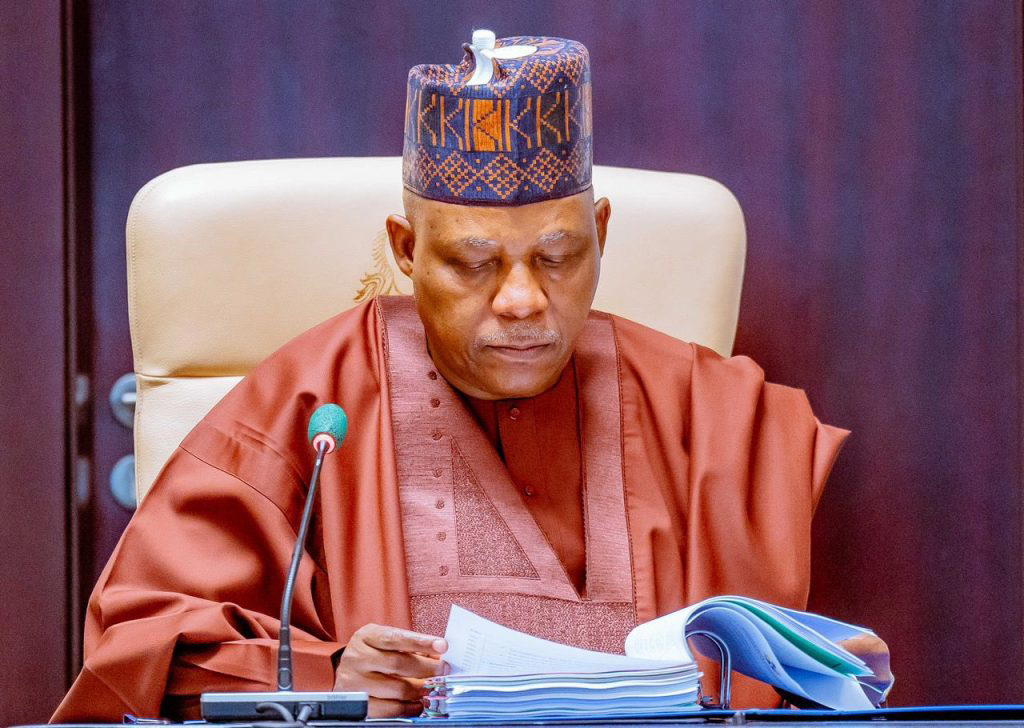
The position formed part of the resolutions adopted at the 160th NEC meeting, chaired by Vice‑President Kashim Shettima at the Presidential Villa in Abuja
The council also approved the Revised National Social Protection Policy (NSPP) 2026–2030; backed the rehabilitation of 13 police training institutions nationwide; and urged state governments to actively participate in major international trade events to showcase Made-in-Nigeria products and attract investment.
Briefing journalists after the meeting, Minister of Finance and Coordinating Minister of the Economy, Taiwo Oyedele, said the latest economic indicators pointed to significant improvement in inflation, foreign reserves, exchange-rate stability, government revenue, trade and Nigeria’s international credit standing.
Oyedele said real Gross Domestic Product (GDP) growth stood at 3.89 per cent in the first quarter of 2026, compared with 3.13 per cent in the corresponding period of 2025, while full-year growth was projected to exceed four per cent.
Headline inflation, he said, declined to 15.43 per cent at the end of July from 24.94 per cent a year earlier, while food inflation fell to 20.31 per cent from 36.2 per cent over the same period.
He said external reserves had risen to $51.96 billion, representing a 38 per cent year-on-year increase and the highest level since January 2009, while the naira appreciated by 13.5 per cent year-on-year by mid-2026.
Oyedele also reported a substantial improvement in government revenue, with Federation Account net revenue increasing from N15.2 trillion in 2024 to N21.9 trillion in 2025 and projected to rise by at least 50 per cent in 2026.
Nigeria’s trade surplus, he added, almost doubled from N17.7 trillion in 2025 to N34.7 trillion in the first quarter of 2026.
Total public debt stood at N159.28 trillion, representing less than 37 per cent of GDP, while debt servicing as a proportion of revenue had declined from almost 100 per cent in 2022 to below 60 per cent in 2025.
According to Oyedele, the improved economic outlook had also been reflected in international assessments, with Fitch, Moody’s and S&P upgrading Nigeria’s sovereign credit rating between April 2025 and May 2026.
He disclosed that Nigeria exited the Financial Action Task Force (FATF) grey list in October 2025 and the European Union’s anti-money laundering and counter-terrorist financing deficiency list in January 2026.
Oyedele further said Nigeria had been reclassified by FTSE Russell from an unclassified market to a frontier market, describing the development as capable of attracting greater international capital.
Despite the positive indicators, however, he cautioned that the gains could be reversed if the country abandoned the reform path.
“The gains on inflation, reserves, exchange rates and our credit rating are the direct results of sustained, consistent policy. They are reversible if we waver,” he said.
He said NEC had therefore agreed that the Federal Government and states must maintain fiscal discipline and policy consistency as the 2027 political cycle gathers momentum.
The council identified agriculture, energy, manufacturing, mining and the digital economy as priority sectors for accelerating job-rich growth, noting that 81.4 per cent of Nigerians work in agriculture and non-tradable services.
Oyedele said NEC also expressed concern over high lending rates and directed that fiscal and monetary policy measures be explored to moderate the cost of credit to businesses and stimulate productive investment.
The council urged states to prioritise rural roads, storage facilities, transport links and security investments around agricultural belts, while supporting private capital in agriculture, agro-processing, housing, logistics and light manufacturing.
The council also approved the Revised National Social Protection Policy (NSPP) 2026–2030, designed to strengthen social protection coordination, financing, implementation, monitoring and accountability across the federation.
Minister of Budget and Economic Planning, Atiku Bagudu, said NEC recognised social protection as a constitutional responsibility shared by the Federal, state and local governments.
He said the revised policy would promote stronger coordination among the three tiers of government to ensure that social protection programmes were properly assessed, harmonised and effectively implemented.
NEC also approved the establishment of a National Social Protection Council to be chaired by Vice-President Shettima.
The council will include six state governors representing the six geopolitical zones and ministers responsible for Budget and Economic Planning, Finance and the Economy, Labour and Employment, and Humanitarian Affairs and Poverty Reduction.
The Ministry of Budget and Economic Planning will serve as the secretariat.
Bagudu said the revised policy would be presented to the various state executive councils for implementation, while states would be encouraged to align their social protection laws, policies and budgets with the national framework.
On security, NEC received an update on the rehabilitation of 13 police training institutions across the country.
The council was informed that contracts had been awarded for the projects, with 80 per cent of the contractors having received their letters of award.
The rehabilitation is expected to be completed within three weeks to prepare the institutions for the commencement of training programmes by the Nigeria Police Force.
NEC stressed that effective policing and the fight against insecurity required properly trained personnel and adequately equipped training institutions.
The council noted that, even as discussions on state policing continued, minimum professional standards must be maintained in the training of police officers across the country.
It therefore emphasised the need to provide the institutions with the infrastructure, equipment and facilities required for effective training and retraining.
The council also endorsed the Federal Government’s request to the Ministry of Industry, Trade and Investment for the active participation of state governments in the 2026 Nigeria Economic and Investment Forum and the Intra-African Trade Fair.
NEC described the events as important platforms for states and the Federal Government to showcase Nigeria’s growing local production capacity, expand market access and connect Made-in-Nigeria products to international markets.
The council noted that although Nigeria had recorded significant growth in local content development over the years, the achievements had not been adequately showcased on the global stage.
It consequently urged states to take advantage of the trade platforms to exhibit their products, promote local industries and attract investment.
The council said stronger participation by sub-national governments would maximise the national impact of the events and further position Nigeria as one of Africa’s leading economic powers.
NEC stressed that promoting local production and expanding access to international markets remained critical to strengthening the economy, creating jobs and deepening Nigeria’s integration into the African and global trading system.
The post Nigeria’s economy stable, NEC says, urges no policy reversals ahead of 2027 appeared first on Vanguard News.