
Nigerian football enduring ‘worst time in history’ – Odegbami
By Adegboyega Adeleye
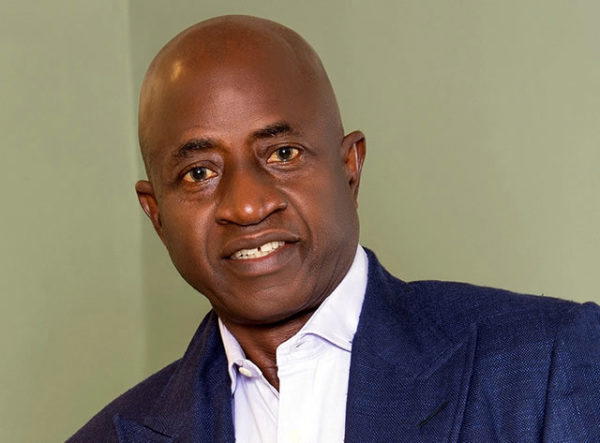
Former Nigeria international Segun Odegbami says the country is experiencing the “worst time” in its football history as the Super Eagles begin their 2027 Africa Cup of Nations qualifying campaign.
The 74-year-old, who was part of Nigeria’s first Afcon-winning team in 1980, told BBC Sport Africa that the country’s recent struggles represent a “tectonic shift” for one of Africa’s traditional football powers.
Over the past 12 months, both the Super Eagles and Super Falcons have failed to qualify for their respective FIFA World Cups, while Nigeria’s age-group teams and clubs have also endured disappointing results.
“Our girls (the Super Falcons), who were African champions, failed to win a competition (the 2025 Women’s Afcon) that was just there for their taking. All our junior teams are not doing well,” Odegbami said.
“Our local league is not bringing in money. Something is definitely wrong.”
The former striker said the failure to qualify for the men’s 2022 and 2026 World Cups highlighted how far Nigerian football has fallen.
“It has never been this bad in our entire history that we didn’t qualify for the World Cup,” he said.
The situation has also led to major changes within the Nigeria Football Federation, with NFF president Ibrahim Gusau, general secretary Mohammed Sanusi and several members of the federation’s executive committee resigning last month amid criticism.
Odegbami said Nigerian football had not been represented by its “first XI administrators” and called for a restructuring that could provide a foundation for long-term development.
“The outcry by Nigerians was total. Everybody wanted them out, to the extent that the President of the country himself (Bola Tinubu) made the pronouncement that he wanted reforms,” he said.
“Everything came together like a jigsaw puzzle and is working now for us to produce a blueprint that will cover every aspect of our football development.”
A joint FIFA and CAF delegation has been involved in discussions with the National Sports Commission over the future structure of Nigerian football, with the parties working towards a roadmap for reforms.
The NFF elections scheduled for September 27 have been suspended, while Emmanuel Ikpeme and Ademola Olajire have been appointed interim general secretary and deputy general secretary respectively.
Nigerian sports journalist Fisayo Dairo, also speaking to BBC Sport Africa, said reforms should go beyond simply changing the leadership of the federation.
“The reform should be the setting up of a proper framework and structure that our football can thrive on,” Dairo said.
He said Nigeria needed to develop its national teams, harness talent from the grassroots and establish governance that represented different stakeholders, including the corporate sector, which could help generate funding.
Furthermore, Odegbami said the current decline was a stark contrast to the period when he and his teammates helped establish Nigeria as a major force in African football.
Nicknamed “Mathematical” for his precision and skill, Odegbami scored 23 goals in 47 appearances for Nigeria and was part of the team that won the country’s first Afcon title in 1980 after beating Algeria 3-0 in the final in Lagos.
“We had unprecedented support and fortunately the stars aligned with us,” he said.
“It was an indescribable atmosphere during that period.”
Nigeria have since won the Afcon in 1994 and 2013, while the Super Eagles finished runners-up in 2023 and third in 2019 and at this year’s tournament in Morocco.
Odegbami, however, said sport had “not been a priority” for successive governments and blamed football administrators since the mid-1990s for failing to properly guide the game.
“The pilots are not guiding us well, they haven’t guided us well,” he said.
“And that has affected every aspect of our football development: the grassroots, the discovery of players, the development of the players, the establishment of the institutions that will take care of them, the academies, the clubs that they will go into both locally and internationally.”
He also questioned Nigeria’s coaching methodology and football philosophy, asking what the country’s football culture and style had become.
Odegbami further lamented the state of Nigeria’s football infrastructure, saying several stadiums that once hosted major international competitions had been allowed to deteriorate.
He specifically mentioned the National Stadium in Surulere, Lagos, which hosted matches at the 1980 and 2000 Afcons, as well as the Liberty Stadium, now Obafemi Awolowo Stadium, in Ibadan, Kaduna’s Ahmadu Bello Stadium and the UJ Esuene Stadium in Calabar.
“I weep when I think of the amount of damage they have done to Nigerian football – the infrastructure that we had in the country, some of the historic monuments that were facilities for football in this country,” Odegbami said.
“Whether it was wilful, whether it was ignorance, they did irreparable damage to what was Nigeria’s heritage.”
Odegbami said the Godswill Akpabio Stadium in Uyo, where the Super Eagles currently play their home matches, is the best stadium Nigeria has, but argued that it does not compare with the facilities the country had between the 1960s and 1990s.
“Uyo is the best we have in Nigeria, but it is not half as good as what we had from the 1960s to the 90s,” he said.
The Super Eagles will begin their Afcon 2027 qualifying campaign against Madagascar at the Godswill Akpabio Stadium in Uyo on Friday before travelling to Guinea-Bissau on September 29.
Former African Footballer of the Year Victor Osimhen has been ruled out of Eric Chelle’s squad through injury.
The post Nigerian football enduring ‘worst time in history’ – Odegbami appeared first on Vanguard News.