
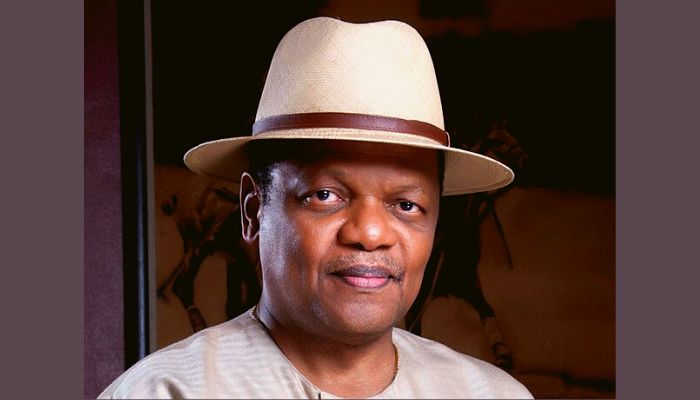
Nigeria needs 10% growth to reduce poverty — Peterside
By Favour Ulebor, Abuja
Businessman and former Nigerian Stock Exchange chairman, Atedo Peterside, has said Nigeria’s economic growth rate of about four per cent is inadequate to generate the jobs and investment needed to lift citizens out of poverty, insisting that the country must target annual growth of 10 per cent.
Peterside spoke on Tuesday at the second Oxford Global Think Tank Leadership Conference in Abuja, where he identified declining investment, corruption, political patronage and the misuse of public resources as major obstacles to stronger economic growth.
He said Nigeria’s investment-to-Gross Domestic Product (GDP) ratio had declined steadily since 1999, despite the optimism that followed the return to democratic rule, when local and foreign investors showed renewed interest in the economy.
According to him, investors have been discouraged by an environment where access to opportunities is often determined by political connections, while small and medium-sized enterprises face harassment from regulatory authorities.
Peterside called for an economy in which investors could operate without relying on political connections, stressing that public resources must be channelled into productive ventures to achieve the country’s growth ambitions.
He warned against celebrating modest economic growth while corruption and the diversion of public funds persisted, arguing that procurement processes could be manipulated to enrich individuals at the expense of development.
“Procurement can become legalised theft,” he said, citing inflated contracts and the award of projects to politically connected business partners as practices that undermine the effective use of public funds.
Peterside maintained that Nigeria could not move from four per cent to 10 per cent growth without tackling corruption and ensuring that government resources were invested productively.
Also speaking, the Emir of Kano, Muhammadu Sanusi II, acknowledged improvements in some economic indicators but cautioned that headline growth figures did not necessarily reflect the welfare of Nigerians.
Sanusi said the country’s economic growth of about 4.5 per cent represented progress compared with previous years, but argued that economic performance should be measured by its impact on people’s lives, rather than GDP figures alone.
The former Governor of the Central Bank of Nigeria said the depreciation of the naira had affected GDP per capita, making it necessary to consider the relationship between economic growth, currency movements and household purchasing power.
He said the economy should also be assessed through access to education, healthcare, nutrition and employment, as well as the distribution of economic opportunities across the country.
Sanusi questioned the significance of headline economic figures if poverty, unemployment and hardship remained widespread.
He also warned that some economic gains could be vulnerable because of the volatility of foreign portfolio investments, which he said were attracted partly by high interest rates and could leave when market conditions changed.
The Emir called for a comprehensive reform programme that went beyond fuel subsidy removal and changes to the foreign exchange regime, emphasising the need for infrastructure, structural reforms, transparency and accountability.
He further criticised what he described as the government’s tendency to dismiss public complaints about economic hardship, saying concerns raised by Nigerians should be taken seriously rather than treated as opposition to government policies.
Sanusi also raised concerns about regional imbalance in political and security appointments, arguing that the concentration of important positions in particular parts of the country could undermine national cohesion and the perception of fairness.
He said Nigeria must promote inclusion and ensure that its institutions and opportunities reflected the country’s diversity.
Former President of the African Development Bank, Dr Akinwumi Adesina, called for increased investment in young people, describing Africa’s youthful population as an opportunity for economic transformation.
Adesina said young Africans needed access to quality education, healthcare, nutrition, technical skills, finance and digital technology to enable them to establish businesses and create jobs rather than depend solely on paid employment.
Minister of Communications, Innovation and Digital Economy, Dr Bosun Tijani, said prosperity depended on countries’ ability to apply knowledge and technology to available resources.
He cited Nigeria’s telecommunications liberalisation in 2001 as an example of how policy reforms, competition and private sector investment could transform an economy.
Tijani said artificial intelligence presented another major opportunity to improve productivity but noted that countries needed adequate connectivity, computing and data infrastructure, skills, research and supportive institutions to benefit from the technology.
He also highlighted the Federal Government’s plan to expand broadband connectivity through a proposed 90,000-kilometre open-access fibre network, alongside investments in technical talent development and Nigeria’s National Artificial Intelligence Strategy.
Earlier, the conference convener, Arunma Oteh, called for an ecosystem approach to economic development, emphasising the importance of domestic capital markets, infrastructure, access to finance, regulatory certainty and skills development.
Oteh said African countries must mobilise domestic resources and deepen participation in their capital markets, while equipping young people with the skills needed to participate in the economy.
She also identified decentralisation as an important factor in development, citing electricity reforms as an example of how subnational governments could improve power supply and support economic activities.
The conference also featured the launch of the inaugural Oxford Global Think Tank (OGTT) Artificial Intelligence Report, which is expected to contribute to efforts to shape Africa’s AI future, strengthen collaboration and position the continent to harness opportunities offered by the technology.
The post Nigeria needs 10% growth to reduce poverty — Peterside appeared first on Vanguard News.