
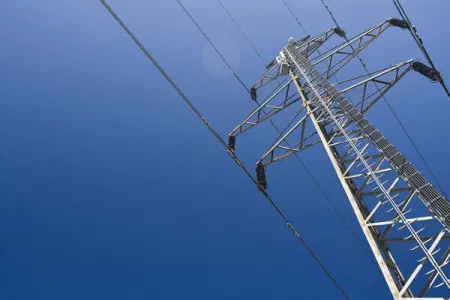
Millions licensed to die under power lines: How govt planning failures put lives, investments at risk
By Nnamdi Ojiego
For more than two decades, pupils of Clementine Schools in Agbado Oke, Lagos resumed each morning beneath the shadow of twin high-voltage electricity transmission lines.
Parents dropped off their children, teachers conducted lessons and school activities continued without any indication that the buildings stood within a restricted corridor.
Then, one morning, the bulldozers arrived.
Within hours, classrooms that had nurtured generations of children were reduced to rubble.
Desks, books and equipment lay buried beneath broken concrete. The proprietress, Mrs. Clementine Adegoroye, watched helplessly as decades of investment disappeared before her eyes.
Months later, she says she still struggles to understand what happened next. According to her, portions of the same land from which her school was removed are now occupied by shops.
“If government said my school was demolished because it was under the power lines, why are shops now standing there?” she asked.
Her question lies at the heart of a troubling pattern uncovered by Sunday Vanguard during months of investigation across parts of Lagos.
Although federal and state authorities have consistently warned that living or carrying out business beneath high-voltage electricity transmission lines poses serious safety risks, fresh commercial developments continue to emerge within some of the same corridors after demolition exercises with millions of people operating there.
Many affected residents and business owners insist they bought land from recognised owners, obtained planning approvals or occupied properties that had existed for decades without objection from government agencies.
The conflicting claims raise difficult questions about planning approvals, enforcement, public safety and accountability. Who approved the developments? Why were demolitions carried out only after people had invested their life savings? If the corridors are unsafe for homes, schools and churches, why do fresh commercial structures continue to appear on some of the same sites?
Planning approval
Mrs. Adegoroye insists she did not knowingly build illegally.
The 70-year-old educationist said she bought the land from a private owner who had earlier acquired it from the traditional landowners.
Before construction began, she said, she conducted a survey and obtained planning approval for both the primary and secondary school buildings.
When officials first marked the school for demolition, she said she was directed to the State Secretariat at Alausa, where she presented her documents.
According to her, consultants later visited the property, measured the setback from the transmission lines and subsequently informed her that the school complied with the required safety distance.
“They checked my school building. It was in-between two power lines with the minimum spacing met. They assured me the building would not be affected,” she recalled.
Emotional and financial impacts
That assurance, she said, proved worthless.
According to her, demolition commenced shortly after the inauguration of a new chairman of Agbado Oke-Odo Local Council Development Area, LCDA.
“I was not allowed to remove anything. My staff only managed to rescue the WAEC certificates. Everything else was destroyed or looted,” she lamented.
“They have turned me into a tenant in my seventies. My students scattered because I could not immediately secure another place. It feels as though I am starting life all over again.”
Shops replaced school
What troubles her most, however, is what she claims happened after the demolition.
“After they demolished the place, they started selling it. Where my school stood, they have now built shops. I heard influential people bought the land.”
Sunday Vanguard could not independently verify her allegation that influential individuals acquired the plots. However, this reporter observed fresh commercial developments on sections of previously demolished transmission corridors during visits to some affected communities.
Forced into a living room
A few kilometres away, members of Reconciliation Message Ministry now worship inside the home of one of their members. Their church building no longer exists.
Its founder and Senior Pastor, Reverend Joshua Gbemiga Babatunde, said the congregation purchased the land about 25 years ago from a previous owner who assured them that all necessary documentation had been processed.
“We bought the land from Alhaji Saheed, who had acquired it from the Omo Onile. He told us everything had been done,” the pastor said.
Unlike Mrs. Adegoroye, he admitted he did not personally obtain government approvals before constructing the church.
Nevertheless, he said no government agency questioned the development until demolition notices were issued decades later.
“When we were building, nobody came to ask for documents. Nobody warned us that we were under the power lines,” he said.
Today, the congregation meets in a member’s residence while it struggles to raise money for another property.
“No compensation was paid. We were simply left like that,” he said.
Like Mrs. Adegoroye, his frustration extends beyond the demolition itself.
“I heard they are now reselling the land for N10 million for a plot. People are building shops and houses there again. We cannot afford to buy it back.”
‘I sleep inside a trailer’
For 63-year-old Olabisi Osho, the demolition meant losing the only home she had known for nearly three decades. She said she had lived in her one-storey building at Powerline Phase II for 28 years before officials arrived late at night with bulldozers.
“We were initially told our buildings were not among those marked for demolition,” she recalled.
“But they suddenly came with policemen and started pulling down houses, including mine.”
She said she sustained injuries while trying to escape the collapsing structure. Today, unable to afford another apartment, she sleeps inside a trailer parked beside the few belongings she managed to salvage.
“What pains me most is that we are hearing they have started selling the land already,” she said.
Displaced twice
For 64-year-old Oni Elizabeth, the latest demolition reopened old wounds.
“My husband’s first house was demolished years ago. We moved to another house along AIT Road. Now that one, too, has been demolished. I have no home again,” she lamented.
Nearby, 66-year-old widow, Aina Adejare, struggled to hold back tears as she described losing the house her late husband built more than three decades ago.
“I have nowhere to go now,” she said quietly. “I only pray the government will help us.”
Their stories mirror those of millions of residents, traders, mechanics, panel beaters, churches, mosques, schools and small businesses affected by demolition exercises in communities including Amikanle, Alagbado, AIT Road and Jakande Estate in Ejigbo, Lagos.
While government agencies maintain that the demolitions are necessary to protect lives and preserve critical electricity infrastructure, many displaced residents continue to ask why the developments were allowed to exist for years, and in some cases decades, before enforcement began.
Those questions prompted Sunday Vanguard to examine the scientific evidence surrounding high-voltage transmission lines and seek the views of researchers and safety professionals. While they agree that transmission corridors should remain free of permanent structures, they also argue that demolitions alone cannot solve the problem if illegal developments are allowed to take root unchecked.
Science speaks
One of the few Nigerian studies examining electromagnetic field exposure around high-voltage transmission lines was conducted by researchers at the Federal University of Technology, Akure, led by electrical engineering researcher, Dr. Jide Julius Popoola.
In the study, titled, ‘Assessment of Possible Health Risks Potential of Electromagnetic Fields from High Voltage Power Transmission Lines in Akure, Nigeria’, the researchers measured electric and magnetic field strengths around 33kV, 132kV and 330kV transmission lines at different locations in Akure.
Their findings showed that the measured electromagnetic field levels were below the public exposure limits recommended by the International Commission on Non-Ionizing Radiation Protection, ICNIRP.
The researchers also found that electromagnetic field strength decreased significantly as the distance from transmission lines increased, reinforcing the importance of maintaining adequate separation between electricity infrastructure and residential development.
However, the study did not conclude that building beneath high-voltage transmission lines is safe.
Rather, it recommended maintaining appropriate setbacks from transmission lines and ensuring that transmission corridors are taken into account during physical planning and urban development.
The study also focused solely on electromagnetic field exposure.
It did not examine other hazards associated with encroachment on transmission corridors, including electrocution, electrical flashovers during system faults, falling conductors, tower collapse, fire outbreaks or obstruction of maintenance activities.
When contacted, Dr. Popoola told Sunday Vanguard he was unable to grant an interview because of his schedule but asked this reporter to rely on the published findings.
‘Highly unsafe, risky and reckless’
For Safety Consultant and Fellow of the Institute of Safety Professionals of Nigeria, ISPON, Joseph Tokulah, the dangers associated with building beneath high-voltage transmission lines extend far beyond concerns about electromagnetic fields.
“Settlements beneath high-voltage transmission lines are highly unsafe, risky, reckless and a waste of resources on the part of citizens, community leaders and government,” he said.
According to him, people living or doing business within transmission corridors face immediate risks ranging from electrocution and electrical flashovers to fire outbreaks, structural damage and the eventual loss of homes and investments when enforcement exercises are carried out.
Tokulah noted that transmission lines emit extremely low-frequency electromagnetic fields, which are classified as non-ionising radiation. While scientific evidence on long-term exposure remains inconclusive, he said the International Agency for Research on Cancer, IARC, classifies extremely low-frequency magnetic fields as “possibly carcinogenic” based on limited evidence suggesting a slight increase in the risk of childhood leukaemia.
He also pointed to another concern that often receives little public attention. “We should also be mindful of the use of some of these unkept spaces and shanties built under transmission lines by criminals and terrorists to evade law enforcement agencies,” he said.
Protected by law
The Transmission Company of Nigeria, TCN, which owns and manages the nation’s high-voltage electricity transmission network, insists that the restrictions governing transmission corridors are neither arbitrary nor new.
Responding to enquiries from Sunday Vanguard, the company explained that it maintains statutory Right-of-Way corridors for all transmission lines to protect lives, facilitate maintenance activities and safeguard critical national infrastructure.
According to TCN, the statutory Right-of-Way is 50 metres wide for 330kV transmission lines, extending 25 metres on either side of the centre line, and 30 metres wide for 132kV lines, extending 15 metres on either side.
The company said the corridors must remain free of permanent and temporary structures, markets, commercial activities, vegetation and any development capable of endangering lives or obstructing maintenance operations.
“The prescribed clearances are based on engineering safety requirements and government regulations and are essential for maintaining the integrity, reliability and safe operation of the national grid,” the company stated.
TCN added that it continues to sensitise members of the public while working with relevant authorities to ensure compliance with Right-of-Way requirements.
Immediate and long-term hazards
According to TCN, the dangers associated with developments beneath transmission lines are immediate as well as long-term.
The company identified electrocution, electrical flashovers, fire outbreaks, accidents involving construction equipments and restricted access for emergency maintenance as some of the immediate dangers.
It also warned that during system faults or equipment failures, residents, traders and visitors within transmission corridors could be exposed to potentially life-threatening situations.
Beyond safety concerns, TCN said encroachment complicates maintenance operations, delays emergency repairs, threatens the reliability of the national grid, increases project costs and can eventually result in demolition exercises that leave property owners with substantial financial losses.
“For these reasons, international best practices and national regulations discourage permanent and temporary developments within designated transmission corridors,” the company said.
Shared responsibility
One of the central questions raised by this investigation is who should bear responsibility when buildings are allowed to emerge within restricted transmission corridors.
For Tokulah, government carries the greatest burden because it encompasses planning authorities, electricity regulators, enforcement agencies, land administration bodies and other public institutions responsible for regulating physical development.
“Considering that government encompasses the planning authorities, electricity regulators, enforcement agencies, the Transmission Company of Nigeria and other relevant institutions, it is safe to presume that government bears the greatest responsibility,” he said.
TCN, however, believes responsibility is shared.
The company said that while it is responsible for identifying, managing, monitoring and safeguarding transmission corridors, effective protection requires collaboration among state planning authorities, local governments, land administration agencies, development control authorities, security agencies, host communities and other stakeholders.
It also identified the Nigeria Security and Civil Defence Corps, NSCDC, as a key partner in protecting transmission infrastructure, monitoring Right-of-Way corridors, preventing encroachment, combating vandalism and supporting enforcement against illegal structures.
Development control agencies, TCN added, have an equally important responsibility to ensure that planning approvals do not conflict with existing transmission corridors.
Approval dilemma
Perhaps the most difficult issue arising from the investigation concerns property owners who insist they obtained planning approvals or official assurances before investing millions of naira in their developments.
Mrs. Clementine Adegoroye maintains that consultants measured her school and informed her that it complied with the required setback before it was eventually demolished.
Other affected residents also claim they obtained approvals from government agencies or occupied buildings that existed openly for decades without objection.
TCN acknowledged that such claims are sometimes made during enforcement exercises.
According to the company, Nigeria’s land administration and development approval process involves multiple agencies, creating situations where approvals may be processed without adequate consideration of transmission Right-of-Way restrictions.
“Whenever such issues are identified, TCN engages the relevant authorities to seek appropriate resolutions in the interest of public safety and infrastructure protection,” the company stated.
It maintained, however, that where developments are found within designated transmission corridors, public safety cannot be compromised regardless of how the development originated.
Gazetting Right-of-Way
The company disclosed that it is engaging relevant government agencies on the gazetting of all existing transmission Right-of-Way corridors to reduce future disputes and prevent illegal developments.
It added that the long-term objective is not demolition but prevention through effective planning, stakeholder engagement, public awareness and strict compliance with established regulations.
Planning and enforcement failures
Despite those efforts, experts argue that the problem persists because enforcement often comes too late.
Tokulah believes illegal developments are frequently allowed to mature before authorities intervene, leaving unsuspecting buyers to bear the consequences.
According to him, inadequate public awareness has made many Nigerians easy targets for land speculators and fraudulent sellers.
“This knowledge gap has made more citizens gullible to land grabbers, some of whom are those with legitimate authority in the area, willing to compromise public good for a few quick bucks,” he said.
He argued that countries that have successfully protected transmission corridors rely on continuous monitoring, public education and early intervention rather than demolitions after communities have become established.
“In Nigeria, and specifically Lagos State, what we have witnessed is selective demolition and selective enforcement,” he alleged.
“Demolition is targeted at the buyers, while government has ignored the initiators of the fraud, the sellers who continuously defraud vulnerable citizens and enrich themselves without any consequence.”
He also alleged that markets, mechanic workshops and other commercial activities have reappeared beneath transmission lines in parts of Alimosho after earlier demolition exercises.
TCN, however, said it maintains continuous engagement with state planning and development control agencies through technical consultations, correspondence, stakeholder meetings and project reviews aimed at preventing such situations.
According to the company, collaboration already exists but can be strengthened through better information sharing, improved planning coordination and more effective enforcement mechanisms.
Government’s position
Lagos State government has consistently defended the demolition exercises, maintaining that structures beneath or dangerously close to high-voltage transmission lines violate planning regulations and pose serious risks to public safety.
Lagos State Informal Space Management Authority, LASISMA, acting on behalf of the Ministry of Physical Planning and Urban Development, said the operations were undertaken to protect lives, preserve critical infrastructure corridors and enforce compliance with the Lagos State Urban and Regional Planning and Development Law.
The agency warned that buildings erected beneath or close to high-tension electricity lines expose occupants to significant electrical hazards while obstructing access to vital transmission infrastructure.
Similarly, Lagos State Building Control Agency, LASBCA, dismissed allegations that government had officially reallocated cleared transmission corridors to fresh developers.
Its spokesman, Adu Ademuyiwa, insisted that government had not allocated such land to new owners and warned that anyone engaging in illegal development within transmission corridors would face the full weight of the law.
He also urged property owners and developers to comply with planning regulations and voluntarily remove structures that violate established safety requirements.
Yet, despite those assurances, Sunday Vanguard observed ongoing construction activities and newly erected commercial structures within sections of previously demolished transmission corridors during visits to affected communities, raising fresh questions about how such developments continue to emerge.
New developments raise questions
One of the most contentious findings of this investigation is the allegation that land cleared in the name of public safety is gradually returning to commercial use.
Several victims interviewed independently made similar claims.
Mrs. Clementine Adegoroye said shops now occupy part of the land where her demolished school once stood.
Reverend Joshua Babatunde also allegedthat plots within the cleared corridor were being resold for fresh developments. Residents in the Powerline area of Ejigbomade similar claims, alleging that markets now occupied portions of previously demolished land only months after former occupiers were displaced.
To verify the allegations, Sunday Vanguard visited Jakande Estate, Iyana Ejigbo, Alagbado and sections of the Command T-Junction to Atapa Market corridor, where this reporter observed completed and ongoing construction, newly erected lock-up shops and other commercial developments within parts of the corridor that had previously witnessed demolition exercises.
At Kola, along AIT Road, this correspondent found rows of newly completed lock-up shops.
Information obtained from persons involved in the transactions indicated that a single shop was being offered for about N5 million, excluding a N100,000 administrative fee and a N25,000 expression-of-interest form.
While these observations confirm that new developments have emerged in somelocations, Sunday Vanguard could not independently establish whether the structures were officially approved by any government authority or erected illegally by private individuals.
Efforts to obtain comments from the chairmen of Ejigbo and Agbado Oke-Odo Local Council Development Areas on the development were unsuccessful.
The findings nevertheless raise an important question. If transmission corridors remain too dangerous for homes, schools and churches, who is preventing new commercial developments from emerging within the same restricted areas?
Biggest challenge
TCN acknowledged that encroachment remains one of the biggest challenges facing the country’s transmission network.
The company said it maintains records ofencroachments across its transmission infrastructure nationwide, particularly in Lagos, where rapid urbanisation and pressure on land have made the problem especially acute.
According to TCN, the challenge is most pronounced in densely populated urban areas where commercial expansion increasingly pushes development towards existing transmission corridors.
The company said it continuously monitors its Right-of Way corridors and alerts relevant authorities whenever encroachments are identified.
Preventing tomorrow’s demolitions
TCN maintains that preventing illegal developments before construction begins is far more effective than demolishing completed buildings years later.
According to the company, it regularly engages state planning agencies through technical consultations, correspondence, stakeholder meetings and project reviews to ensure transmission corridor information is considered before planning approvals are issued.
The company said stronger planning coordination, public awareness and improved information sharing among relevant agencies would significantly reduce future encroachment and spare property owners the enormous financial losses associated with demolition exercises. “Our ultimate objective is not demolition but prevention,” the company stated.
Artisans head to court
The controversy extends beyond homeowners. Mechanics, panel beaters and other artisans operating along the AIT/Raypower Road and Command axis have accused authorities of demolishing long-established workshops before parts of the land allegedly returned to commercial use.
Operating under the umbrella of the Nigeria Automobile Technicians Association,NATA, the artisans have instituted an action before the Lagos State High Court against the Chairman of Agbado Oke-Odo Local Council Development Area and other defendants.
In the suit, they argue that many members had operated in the area for decades and that the demolition exercise destroyed their businesses without adequate compensation or alternative arrangement.The case is expected to test some of the legal questions surrounding the demolition exercises.
The missing link
Throughout this investigation, one issue surfaced repeatedly. Most of those whose homes, schools, churches and businesses were demolished did not dispute the need to keep transmission corridors free of permanent structures.
Instead, they questioned why enforcement almost always came after buildings had been completed, occupied and, in many cases, existed for decades.
If the developments were illegal from the outset, why were they not stopped during excavation? Why were building materials allowed into restricted corridors? Why were roads and other public services like electricity, extended to some of these communities? If some residents indeedobtained planning approvals or official assurances, how were those approvals granted?
TCN acknowledges that planning conflicts can arise where approvals are processed without adequate consideration of transmission Right-of-Way restrictions.
The company says stronger coordinationamong planning authorities, land administration agencies and infrastructure managers is essential to preventing such conflicts.
It also argues that public awareness must improve so prospective buyers understand the legal implications of acquiring land within transmission corridors before investing their savings.
Equally troubling, however, is the apparent lack of accountability for those who allegedly sell restricted land.
While buyers frequently lose homes, schools, churches and businesses worth millions of naira, there is little public evidence that land speculators, fraudulent vendors or any officials who may have facilitated such transactions face similar consequences.
For safety consultant, Joseph Tokulah, this remains one of the weakest links in the current enforcement regime.
Rather than concentrating almost exclusively on demolishing completed building, he argued, authorities should identify and prosecute those responsible for creating the problem in the first place.
An unending cycle
Across Alagbado, Amikanle, Jakande Estate, Iyana Ejigbo and other affected communities, the pattern appears strikingly similar. Restricted land is sold. Buildings are constructed and occupied. Years later, demolition notices arrive. Homes, schools, churches and businesses are destroyed. In some locations, new commercial developments later emerge within the same corridors.
Until that cycle is broken, experts warn, unsuspecting Nigerians will continue to invest their life savings in properties that may eventually be declared unsafe.
Beyond demolition
This investigation does not suggest that buildings should be permitted beneath high-voltage transmission lines.
On the contrary, scientific evidence, engineering standards, safety professionals and the Transmission Company of Nigeria agree that transmission corridors must remain free of permanent and temporary structures to protect lives, safeguard critical national infrastructure and ensure the reliable operation of the national grid. The investigation does, however, expose a broader governance challenge.
While TCN says it continues to work withplanning authorities, development control agencies, security organisations and other stakeholders to prevent encroachment, many affected residents still questionhow buildings are allowed to emerge and remain for years before enforcement begins.
The findings suggest that demolition alone cannot solve the problem. Preventingfuture losses will require stronger coordination among planning authorities, land administration agencies, development control bodies, local governments, security agencies and infrastructure managers. It will also require greater transparency in land administration, sustained public education and accountability for those who sell, approve or facilitate developments within restricted transmission corridors.
Until those measures become consistently effective, more Nigerians may unknowingly invest in restricted land, only to lose homes, schools, worship centers and businesses years later when enforcement catches up with them.
For many of those already displaced, thedebate is no longer about whether transmission corridors should be protected. Itis about why the system failed to protect them before they invested everything they had.
The post Millions licensed to die under power lines: How govt planning failures put lives, investments at risk appeared first on Vanguard News.