
Meet African countries home to some of the world’s oldest universities
Africa is home to some of the world’s oldest centres of higher learning, with educational institutions that began centuries before many of the universities commonly associated with Europe’s academic history.
From Islamic centres of scholarship in North Africa to historic institutions in West Africa, the continent has a long tradition of organised education, research and intellectual development.
Some of these institutions started as mosques and religious schools before evolving into universities, while others emerged as
colleges during the 19th century.
Here are six African countries home to some of the world’s oldest universities and higher-learning institutions.
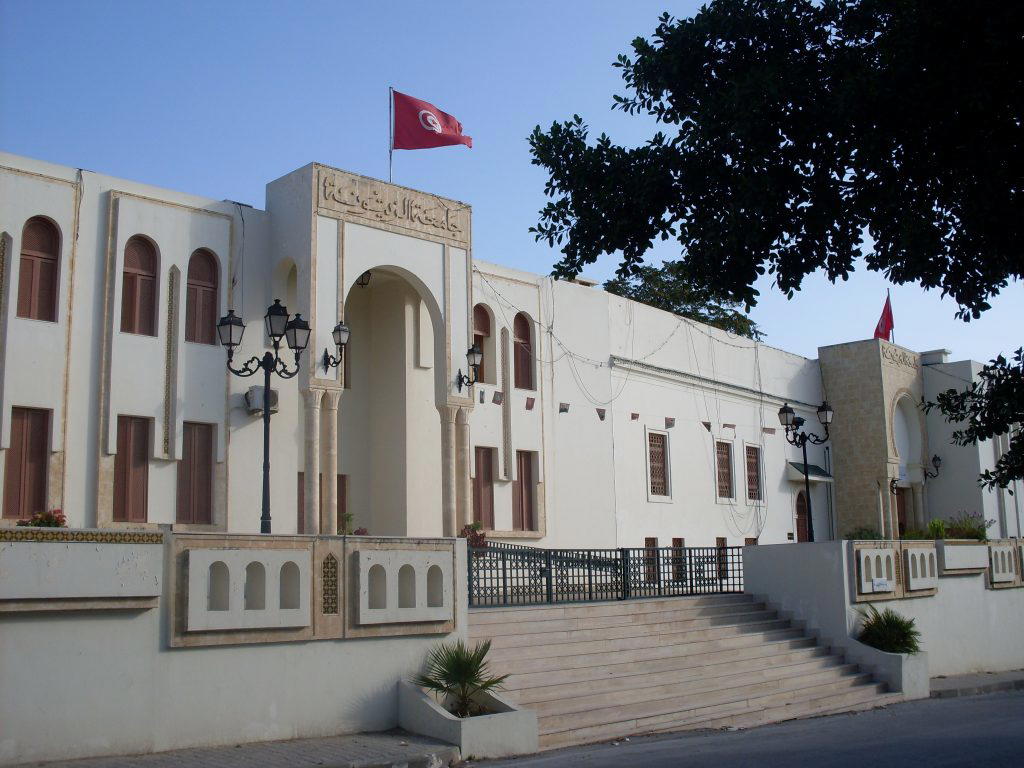
1. Tunisia – Ez-Zitouna University (737 AD)
Tunisia is home to Ez-Zitouna University, one of the oldest centres of higher learning in the world, with an educational history dating back to the eighth century.
Located in Tunis, the institution traces its origins to the Great Mosque of Ez-Zitouna, founded in 734 AD. According to the university’s official historical account, the teaching of Islamic sciences began there around 737 AD.
Over the centuries, the institution became an important centre for Islamic scholarship, teaching subjects including Islamic jurisprudence, philosophy, mathematics, medicine and astronomy.
It also attracted prominent scholars, including the renowned North African historian Ibn Khaldun, who studied at the institution.
Ez-Zitouna remains an important institution for Islamic studies and is widely regarded as one of the oldest continuously operating educational traditions in the Arab and Islamic world.
2. Morocco – University of Al-Qarawiyyin (859 AD)
Morocco is home to the University of Al-Qarawiyyin in Fez, an institution widely recognised as the world’s oldest existing and continually operating educational institution.
Founded in 859 AD, Al-Qarawiyyin was established as a mosque and centre of learning by Fatima al-Fihri, a Muslim woman who reportedly used her inheritance to finance its construction.
The institution gradually developed into a major centre of Islamic scholarship, attracting students and scholars from different parts of Africa and beyond.
Its academic activities historically covered Islamic theology, law, Arabic grammar, mathematics and astronomy, among other subjects.
Al-Qarawiyyin’s historical significance extends beyond its age. Its establishment demonstrates the important role African women played in supporting education and intellectual development centuries ago.
Today, the institution remains part of Morocco’s higher education system and continues to preserve its long-standing tradition of Islamic learning.
3. Egypt – Al-Azhar University (970 AD)
Egypt is home to Al-Azhar University, another historic African institution that has played a significant role in global education and Islamic scholarship for more than 1,000 years.
Located in Cairo, Al-Azhar traces its origins to 970 AD, when construction of the Al-Azhar Mosque began under the Fatimid dynasty. The mosque was inaugurated in 972 AD, and educational activities developed shortly afterwards.
It became a major centre for Islamic learning, attracting scholars and students from across the Muslim world.
Over the centuries, Al-Azhar expanded its academic influence, becoming particularly renowned for Islamic theology, jurisprudence and Arabic studies.
The institution underwent significant reforms in the modern era. In 1961, legislation formally established Al-Azhar as a university, expanding its academic structure to include several faculties.
Today, it remains one of the world’s most influential Islamic educational institutions, offering programmes in religious studies, medicine, engineering and other disciplines.
4. Mali – University of Sankore (14th century)
Mali is home to one of Africa’s most celebrated historical centres of learning, the University of Sankore in Timbuktu.
Sankore formed part of Timbuktu’s remarkable intellectual history, particularly during the 15th and 16th centuries, when the city became a major centre of Islamic scholarship and trans-Saharan trade.
According to UNESCO, Timbuktu was home to the prestigious Koranic University of Sankore, alongside numerous other religious schools.
At the height of its intellectual influence, the city reportedly had about 180 Koranic schools and 25,000 students.
Scholars studied subjects including Islamic theology, law, literature and other areas of knowledge, while the city also became famous for its manuscripts and libraries.
The Sankore Mosque, which dates to the 14th century, remains an important historical monument in Timbuktu.
Although Sankore does not operate today as a conventional modern university, its historical contribution makes Mali an important part of the story of Africa’s early higher education system. UNESCO World Heritage Centre+1
5. Sierra Leone – Fourah Bay College (1827)
Sierra Leone is home to Fourah Bay College, one of the oldest Western-style institutions of higher learning in sub-Saharan Africa.
Established in Freetown in 1827 by Anglican missionaries, the college was created to provide higher education and train teachers and clergy.
Its establishment marked an important development in the history of Western education in the region, attracting students from different parts of West Africa.
The institution later became affiliated with Durham University in England in 1876, allowing its students to obtain degrees through the British university.
Fourah Bay College played a significant role in producing some of West Africa’s earliest educated professionals and political and religious leaders.
Among its notable historical students was Samuel Ajayi Crowther, who became the first African Anglican bishop.
The college is now part of the University of Sierra Leone and remains an important institution in the country’s educational history.
6. South Africa – University of Cape Town (1829)
South Africa is home to the University of Cape Town (UCT), the country’s oldest university and one of the oldest higher-education institutions in Africa.
UCT traces its origins to 1829, when it was established as the South African College, initially operating as a school for boys with a small higher-education component.
The institution gradually expanded its academic activities during the 19th century, particularly following the discovery of gold and diamonds in South Africa, which increased demand for skilled professionals.
Between 1880 and 1900, it developed into a fully fledged university, expanding its academic departments, research facilities and student population.
It also made progress in women’s education, admitting four women to its chemistry class on a trial basis in 1886.
Today, UCT is one of Africa’s leading research universities, with a strong international reputation across disciplines including medicine, engineering, business, law and the sciences.
Its long history makes it one of the continent’s most significant institutions of higher learning.
Vanguard News
The post Meet African countries home to some of the world’s oldest universities appeared first on Vanguard News.