
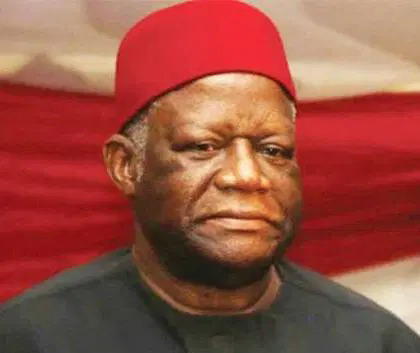
Measures to tackle security challenges in Southeast Nigeria
By Ike Nwachukwu
I am deeply honoured to participate in this important summit. Permit me to commend the Government and the organisers for convening this timely dialogue. At a time when our nation continues to confront complex security challenges, there can be no substitute for honest reflection, strategic thinking, and genuine collaboration.
After many decades in military service, diplomacy, and public life, I have come to appreciate one enduring truth: Security is not simply the absence of violence. It is the presence of justice, trust, opportunity, and legitimate authority. When these pillars weaken, insecurity begins long before the first gunshot is fired.
Today, the South-East faces significant security challenges. These are often described in terms of kidnappings, violent crimes, attacks on public institutions, and threats to law and order. Yet these manifestations are, in many respects, symptoms rather than the underlying disease.
The deeper challenge is the gradual erosion of confidence-confidence in institutions, in leadership, in one another, and sometimes even in the future itself. No security architecture can succeed where trust has collapsed. Military force is indispensable. But military force alone has never permanently solved a political, economic, or social problem.
Armies create the space for peace. Societies must then build the peace. That distinction is fundamental. Allow me, therefore, to offer six reflections. First, security begins with intelligence-not firepower. The most successful operations are those that prevent violence before it occurs. That requires intelligence that is timely, accurate, and locally generated.
Communities must see security agencies as trusted partners rather than distant institutions to be feared. The greatest intelligence asset any nation possesses is not technology. It is that citizen who believes that the government will protect rather than punish. Trust remains the most effective force multiplier. Second, every community must become a stakeholder in security. Security cannot remain the exclusive responsibility of the Armed Forces, the Police, or other security agencies.
Parents. Teachers. Traditional rulers. Religious leaders. Youth organisations. Professional associations. Market unions. Town unions.
Every one of them possesses influence, local knowledge, and moral authority that no government institution can replicate. Security succeeds when citizens become participants rather than spectators. Third, development is one of the strongest forms of security. Young people who possess hope are less vulnerable to being recruited by less patriotic Nigerians who find them easy tools because of their frustration. These young men and women therefore are used to perpetrate heinous crimes against society. Roads. Schools. Healthcare. Digital infrastructure. Agriculture. Industrial investment. Employment opportunities. These are not merely development projects. They are strategic investments in national security. Every legitimate job created removes one more potential recruit from the marketplace of violence. Fourth, we must distinguish legitimate grievances from criminality. Every democracy must preserve space for peaceful disagreement. Citizens have the right to express their concerns lawfully. But criminal violence must never be confused with political expression. At the same time, governments must ensure that peaceful voices always have legitimate avenues through which they can be heard. When dialogue disappears, extremism often fills the vacuum. Strong governments do not fear conversation.
They encourage it. Fifth, regional collaboration is no longer optional.
Criminal organisations do not recognise state boundaries. Our response cannot stop at state boundaries either. The South-East has an opportunity to demonstrate what coordinated regional security can achieve through intelligence sharing, harmonised emergency response, integrated technology, joint operational planning, and sustained engagement among governors, security agencies, traditional institutions, and community leaders. Competition among states must never become competition in security. Security is strongest when cooperation becomes institutional rather than occasional. Sixth, our national security architecture must continually evolve to strengthen both operational effectiveness and national cohesion. Permit me to make one critical observation. As military officers, we are trained to think not only about the deployment of forces, but also about the strategic message that force structure conveys.
The recent expansion of Nigeria’s military formations is a welcome acknowledgement that our evolving security environment demands stronger institutional capacity. It recognises that yesterday’s force structure may no longer be adequate for today’s realities. However, every decision regarding the location of major military formations carries both operational and symbolic significance. The South-East occupies a critical position within our federation. It is strategically located, economically vibrant, commercially indispensable, and, both geographically and demographically, larger than some regions that currently host three divisional headquarters. Against this background, the absence of a comparable divisional formation within the South-East naturally invites reflection-not as a matter of regional rivalry or grievance, but as a question of strategic planning and national integration. Military divisions are more than administrative headquarters.
They strengthen command and control. They improve operational responsiveness. They enhance intelligence coordination. They deepen civil-military cooperation. They stimulate economic activity. Above all, they reassure citizens that they are fully represented within the nation’s security architecture. In national security, perception often reinforces capability. When citizens believe that national institutions are fairly structured and equitably distributed, confidence grows. Confidence strengthens cooperation.
And cooperation remains one of the most valuable force multipliers available to any security organisation. I fully appreciate that force disposition must always be guided by professional military judgement rather than politics. Nevertheless, strategic reviews should remain dynamic, with periodic assessments of whether force structures adequately reflect emerging threats, demographic realities, economic significance, and the overriding imperative of national cohesion.
A secure Nigeria must also be a Nigeria in which every geopolitical zone sees itself as a full stakeholder in both the responsibilities and the institutions charged with protecting our collective future.
Ladies and Gentlemen, permit me one final observation drawn from military experience: Battles are won by tactics. Wars are won by strategy. But peace is won by legitimacy. Our nation has invested significantly in security personnel, equipment, and operational capabilities. We must now invest with equal determination in strengthening public confidence, accountable institutions, inclusive governance, and equal opportunity. Citizens willingly defend societies they believe belong to them. That is perhaps the greatest strategic advantage any nation can possess. The South-East has always been known for enterprise. For education. For innovation. For resilience. For community organisation. These enduring strengths remain among our greatest security assets. Let us therefore reject fear. Let us reject division. Let us reject every attempt to define our future by insecurity. Instead, let us build a region where governments, security agencies, traditional institutions, religious bodies, civil society, the private sector, and ordinary citizens work together in genuine partnership.
Because lasting peace is never imposed. It is earned. It is nurtured. It is built. One community. One institution. One generation at a time.
One final observation concerns the way we conduct our politics. Too often, our politics is unnecessarily divisive and, in many instances, descends into violence. Democracy was never intended to be an end in itself. It is a means of advancing the common good and improving the lives of the people.
When political actors resort to violence to settle disagreements, they undermine the very democratic system they claim to defend. More importantly, they weaken the moral distinction between political violence and the criminal violence that threatens our society. Leadership carries a higher obligation. Those entrusted with public responsibility must demonstrate that disagreement need not lead to hostility, and that political competition can coexist with respect for the rule of law, democratic institutions, and the sanctity of human life. If we cannot model these values, we should not expect others to embrace them.
May today’s deliberations produce practical and lasting solutions that strengthen security, restore public confidence, and reinforce the unity and prosperity of both the South-East and the Federal Republic of Nigeria. Thank you. God bless the South-East. God bless the Federal Republic of Nigeria. I commend the Government and the organisers once again for convening this summit. May today’s deliberations produce practical, courageous, and enduring solutions that strengthen not only the South-East, but also the unity, security, and prosperity of the Federal Republic of Nigeria.
Thank you. God bless the South-East. God bless the Federal Republic of Nigeria.
Being an address by Sen. General Ike Omar Sanda Nwachukwu, GCMG, CFR, COM, psc+, mni, fniia, etc., at the South-East Regional Security Summit held in Umuahia on 30th July 2026
The post Measures to tackle security challenges in Southeast Nigeria appeared first on Vanguard News.