
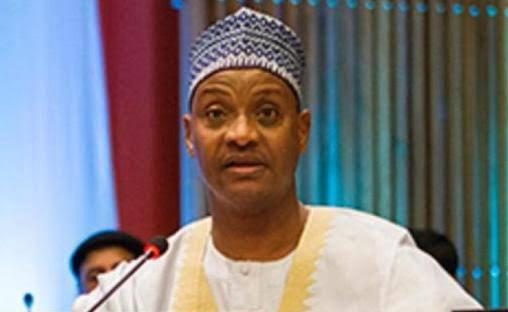
Making the Common Northern Education Compact a reality: Pathway from Niger State, by Usman Sarki
“To this class of enemies belong some of the educated or half-educated Europeanized natives whom our educational and religious system divorces from their race, and who, having no outlet and bereft of national or racial pride, betray the interests of their country into the hands of its foes.” — E. D. Morel
Instilling pride in one’s heritage should be among the purposes of education. A nation does not progress merely by schooling people or subjecting them to rote learning. Education should develop citizens intellectually, morally and practically, making them useful and productive members of their communities. The curriculum must therefore contribute to character formation as much as intellectual development, while connecting learning to the needs of society.
As a retired civil servant and one-time policymaker, I appreciate that ideas become consequential only when translated into institutions, budgets, responsibilities and measurable results. This is particularly true of education. Declarations of emergency, however eloquent, cannot by themselves put a child in school, improve a teacher or ensure that a pupil can read, write, calculate and acquire a useful skill.
Nigeria’s National Policy on Education, whose sixth edition was issued in 2013, provides an extensive framework covering the philosophy and goals of education, early childhood development, teacher education, funding, language instruction, skills acquisition, guidance and counselling, open and distance learning, mass literacy and nomadic education. But national policy ultimately succeeds or fails through implementation. Its ambitions must therefore be translated into practical subnational programmes.
In the two preceding articles in this series, I argued that education should once again be regarded as a common Northern responsibility. The historical experience of the Interim Common Services Agency, ICSA, demonstrated that successor states of the former Northern Region could pool resources and maintain common institutions where collective interests required cooperation. The proposed Common Northern Education Compact, CNEC, seeks to recover that philosophy without recreating the institutions of another era. Its premise is straightforward: nineteen states confronting broadly similar educational challenges can accomplish certain things collectively that may be more difficult, expensive or inefficient to undertake separately.
This proposition has now elicited an important practical response from within the education establishment itself. Mrs Maimuna Mohammed, Director-General of Schools and Education Reform in Niger State, while welcoming the initiative, perceptively raised issues that should be regarded not as objections but as essential conditions for making the Compact work. Her intervention takes the discussion precisely where it must now go: from vision to implementation.
Her first concern is data. Northern Nigeria cannot reform an education system whose dimensions it does not accurately know. Discussions about out-of-school children, teacher shortages, girls’ education, classroom deficits and learning poverty are frequently based upon estimates that vary considerably among institutions.
The Compact should therefore begin not with ceremonies or bureaucratic appointments, but with a credible baseline. How many school-age children are there in each state? How many are enrolled, attend regularly and complete basic education? How many teachers are available, where are they located and what can they competently teach? What is the condition of school infrastructure? How many children attend Qur’anic institutions, nomadic schools and other forms of non-formal education? Is adult education, particularly for women, sufficiently available?
Unless these questions are answered with reasonable accuracy, targets will remain aspirations. The proposed Northern Education Census and Human Capital Map could therefore provide the evidential foundation of the Compact. Each state must know where it stands before collective targets can meaningfully be established.
Mrs Mohammed’s second point is equally important: the Compact must complement rather than duplicate existing institutions. Nigeria already possesses federal and state ministries of education, State Universal Basic Education Boards, teacher-development institutions, nomadic and mass education agencies, examination bodies and numerous federal interventions. Weak outcomes will not be cured by adding another bureaucracy.
CNEC should consequently remain a lean coordinating and enabling framework, concentrating on areas where collective action produces additional value: teacher development, common data standards, digital learning resources, benchmarking, research, curriculum harmonisation, regional skills strategies, selected joint procurement and coordinated engagement with development partners.
States must retain ownership of their education systems because their circumstances differ. Borno’s challenges, shaped by insurgency, damaged schools and population displacement, are not identical to those of Kano, Kaduna, Plateau or Niger. Nomadic education may be especially important in one state, girls’ completion rates in another, teacher shortages elsewhere, while insecurity may constitute the overriding challenge in yet another. Common purpose must therefore coexist with local flexibility.
A third valuable recommendation from Niger State is the explicit inclusion of early childhood care, development and education. Educational reform too often begins at primary school, as though a child’s development commences on the first morning of Primary One. The foundations of language, cognition, social behaviour, numeracy and learning capacity are established much earlier. Children arriving at school disadvantaged by malnutrition, poor health, inadequate stimulation, domestic insecurity or an absence of early learning opportunities may spend subsequent years trying to close a gap created before formal schooling began.
A serious Northern strategy must therefore consider the child from the formative years. Education policy should connect with maternal health, nutrition, immunisation, social protection and family welfare. Human-capital development cannot be divided into bureaucratic compartments merely because ministries operate separately.
The fourth major issue raised by Mrs Mohammed is financing. Every ambitious programme sounds persuasive until the question is asked: who will pay for it? Education competes with roads, healthcare, security, water and other legitimate demands upon public resources.
The Compact therefore needs a transparent funding framework. Some activities may be financed directly by states; others could involve pooled contributions.
The Federal Government could participate through existing interventions, while development partners, foundations, businesses and philanthropic institutions could support clearly defined programmes. External assistance, however, must supplement rather than substitute for political commitment. If Northern governments declare education an emergency while devoting disproportionate resources to projects of greater political visibility but lesser developmental consequence, the Compact will rapidly lose credibility. Every major target should carry an estimated cost, an identified funding source and a responsible implementing institution.
This leads directly to governance and accountability. A compact without clearly allocated responsibilities could become an arrangement in which everybody is collectively responsible and therefore nobody is individually accountable. Each state should assume specific obligations, while the regional mechanism retains narrowly defined functions. Most importantly, performance must be measurable. An annual Northern Education Scorecard could become one of the Compact’s most effective instruments, but it must measure more than activity. Government institutions frequently describe success through inputs: workshops held, teachers trained, classrooms constructed, textbooks distributed and committees inaugurated. These matter, but they are not the ultimate purpose of education.
The more important questions are: Can children read, write and understand what they read? Can they perform basic mathematics? Are girls completing school? Are pupils progressing into secondary, technical and vocational education? Are teachers teaching better? Are young people leaving school with skills that improve their prospects for employment, enterprise and productive citizenship? Ultimately, has education improved the well-being of society? The Compact must therefore move from an input culture to an outcome culture. Training 50,000 teachers would be impressive, but if classroom learning does not improve, the programme would have succeeded administratively while failing educationally. Enrolling millions more children would be commendable, but if they later drop out or finish school without functional literacy and numeracy, the deeper crisis remains.
The ultimate measure must be what children actually learn and eventually become capable of doing. This is where the curriculum becomes critical, and where Morel’s admonition becomes relevant. Education cannot merely produce certificates; it must produce competence.
Northern Nigeria needs teachers and professionals, but it equally needs electricians, agricultural and irrigation technicians, builders, welders, veterinary assistants, healthcare technicians, programmers, machinery operators and entrepreneurs. Educational strategy must connect the classroom to the economy. Technical and vocational education should cease to be regarded as the neglected alternative for children considered unsuitable for university. It should become a respected pathway into skilled employment and enterprise. A young person completing education with certified, marketable competence is not an educational failure. He or she represents precisely the productive human capital the region requires. Niger State’s intervention also points towards another principle: states should learn from one another. One may possess stronger teacher-management systems; another, improved girls’ enrolment; a third, useful approaches to integrating Qur’anic education. Others may offer successful vocational programmes, school feeding, digital platforms, community monitoring or nomadic education.
The Compact should transfer successful practices across state boundaries. This is perhaps the contemporary expression of the old ICSA common-services principle. It is not uniformity, but organised cooperation. The task now is to transform CNEC from an attractive proposition into a practical regional action framework for 2027–2030 and beyond, complete with baselines, targets, responsibilities, timelines, costs and annual performance measurements. Technical consultations should involve commissioners of education, SUBEBs, universities, colleges of education, teachers, traditional and religious authorities, civil society, development specialists and the private sector. Employers and skilled trades must also have a voice because education cannot remain disconnected from the economy it is meant to serve. But consultation must eventually lead to decision, and decision to implementation.
Northern Nigeria has spent enough time diagnosing its educational crisis. By 2030, we should know whether more children are both in school and learning; whether girls remain in school longer; whether teachers are better prepared; whether Qur’anic and nomadic education are better connected to human-capital development; and whether young people are acquiring useful skills for contemporary economic life.
The proposed Common Northern Education Compact should therefore be judged by one uncompromising standard: whether cooperation among nineteen states measurably improves the knowledge, competence and life chances of Northern children beyond what nineteen separate efforts could have achieved on their own. That is the test. And ultimately, that is the justification for creating it. If a common platform could be established in the 1970s, another one can surely be created in this age of digital governance.
The post Making the Common Northern Education Compact a reality: Pathway from Niger State, by Usman Sarki appeared first on Vanguard News.