
Let Anioma, Ijebu, Ogoja, Ibadan and other states be (3), by Eric Teniola
From last week continues the narrative about creation of new states in Nigeria.
In applying this political consideration to the present exercise in States Creation however, we must remember that the United States of America with fifty States and Switzerland with twenty-five cantons have adhered strictly to the principles of Federalism. What is more, both the Constitution and revenue allocation systems have clearly defined the structural, functional and relationships between the various levels of government in Nigeria.
Secondly, there is the need to promote peace and political stability in the country. Today, the issue of State creation is so crucial and fundamental that peace and stability cannot be guaranteed without some action taken about it. Apart from the ever-increasing desire to attract more revenue, political and other appointments and patronage from the Federal establishments, the State creation promoters are vigorously envisaging the successful emergence of a political structure that shall perpetually disallow any ethnic group to hold a position which can enable it to dominate all the others put together.
State creation exercise must be sufficiently related to the needs and aspirations of the various groupings in Nigeria. The continued agitations for creation of more States is a direct result from bad government—leadership and discriminatory policies of the various state governments. Indeed, even if the National Assembly was to make every hamlet in this country, there would continue to be demands for State Creation so long as there is a corrupt, autocratic and purposeless government or governments particularly at the state level.
The basic motivation in the demands for States Creation is the promotion of accelerated and balanced economic development. States Creation, it is often argued, makes for the greatest possible diffusion of economic power which in itself guarantees even development. It is also often asserted that some State Creation demands are masterminded by few selfish individuals with the hope of becoming big fish in small waters if and when the New State is created. Be that as it may, certain specific dimensions of economic viability constitute relevant considerations in any sensible exercise in State-Creation.
The proliferation of States, for instance, may lead to high administrative cost and acute shortage of high and middle level manpower particularly in the less developed areas of the country. The present economic trend in the country, the low revenue generating capabilities of the existing states and their heavy dependence on statutory grants from the Federal Government call for caution and calm assessment of Nigeria’s, economic and political potentialities in the area under consideration.
There are some areas that should have become states by now judging by their past history. I have in mind Ijebu, Ogoja, Anioma, Ghari, Tiga, Okura, Lautai, Njaba, Katagum and several areas. Tiga state should have composed of Bebeji, Gwarzo, Rano, Tudun-Wada and Rogo, all in Kano state, while Ghari state should have composed of Kazaure, Bichi and Dambatta also in Kano state.
Okura state should have composed of Ankpa, Bassa, Dekina, Idah, Ofu and Omalla while Katagum state should have composed of Shira, Gamawa, Misau, Katagum and Jama’re. Njaba state should have been created from Imo state. Lautai state should have composed of Ringim, Kaugama, Garki, Gumel, Maitagari, Hadeija Keffin-Hausa and Birniwa.
Ibadan state should comprise of the present eleven local government areas. Ibadan is the largest metropolitan area in Nigeria after Lagos and Kano. The city of Ibadan has 11 Local Government Areas. Egbeda, Ibadan North, Akinyele, Ibadan North East, Ibadan North West, Ibadan South East Ibadan South West, Ido, Lagelu, Oluyole and Ona-Ara. With a population of 3.1million and a land area of 3,850 square kilometers (2013), Ibadan city is the largest metropolitan geographical area in West Africa, housing almost half of Oyo State’s population (45 percent). From around 60,000 in the early 1800s Ibadan population grew to 200,000 in 1890, and to a million by 1930, the population is projected to reach 5.6 million people by 2033.
To be continued…
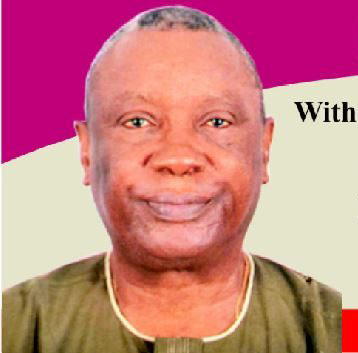
Eric Teniola, a former director at the Presidency wrote from Lagos.
The post Let Anioma, Ijebu, Ogoja, Ibadan and other states be (3), by Eric Teniola appeared first on Vanguard News.