
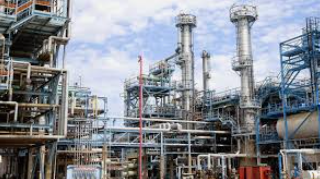
Another roll of the dice for Nigeria’s ailing refineries?
For decades, Nigeria’s state-owned refineries in Port Harcourt, Warri and Kaduna have served as monuments of administrative rot, massive corruption and fiscal leakage. Despite the infusion of billions of dollars into perennial “turn around maintenance” (TAM) cycles, these facilities have remained largely dormant, forcing Africa’s largest oil producer into the humiliating paradox of importing its fuel for decades.
The recent partnership between the Nigerian National Petroleum Company Limited (NNPCL) and Chinese firms—Sanjiang Chemical Co. Ltd and Xingcheng (Fuzhou) Industrial Park—represents what many industry observers consider possibly a final, desperate roll of the dice for public-sector refining. The credentials of the Chinese partners offer a glimmer of technical hope. Sanjiang Chemical has animpressive stature in ethylene and petrochemical derivatives, and in integrated downstream operations. From available records, it has proficiency in industrial park management and large-scale infrastructure development.
Unlike in the past when contractors were merely paid to “fix” parts, it is hoped that these entities will bring a culture of high-efficiency operational management and technological synergy that has defined China’s rise as a global refining powerhouse. However, the Nigerian public remains understandably cynical. Given the trail of broken promises, Nigerians expect the Chinese to do four things differently upon completion. First, they must ensure consistent operational uptime; the era of refineries working for a month and shutting down for a year must end. Second, they must implement cost-competitive efficiency, ensuring the plants produce fuel at prices that reflect the benefit of local processing.
Third, there must be a genuine transfer of technology to the local workforce to ensure sustainability. Also, the partnership must operate with commercial transparency, proving that this is a profit-driven equity model rather than a conduit for state-sponsored graft. The revitalisation of these assets, alongside the trailblazing operations at the Dangote Refinery and the emergence of modular plants like Waltersmith, Aradel and others, promises to transform Nigeria’s domestic refining capital. This tripartite synergy—state-owned, mega-private, and modular—offers three distinct advantages. It will eliminate the prohibitive freight and insurance costs associated with fuel imports, easing the pressure on the Naira. It will catalyse a domestic petrochemical revolution, providing raw materials for local plastic, pharmaceutical, and fertiliser industries. Most importantly, it will create a competitive market that breaks the monopoly on supply, ensuring long-term energy security.
If this partnership succeeds, Nigeria may finally transition from a mere exporter of crude to a hub of refined value. If it fails, it will likely be the final nail on the coffin for the NNPCL’s refining ambitions. Nigerians are no longer interested in the optics of MoUs; they are waiting for Nigeria to emerge as Africa’s downstream powerhouse, which will directly and meaningfully impact on the people’s welfare. The time for excuses has expired.
The post Another roll of the dice for Nigeria’s ailing refineries? appeared first on Vanguard News.