
Lai Mohammed: Africa must exploit $1.3trn MICE market
By Joseph Erunke
Former Minister of Information and Culture, Alhaji Lai Mohammed, has urged African governments to reposition the Meetings, Incentives, Conferences and Exhibitions (MICE) industry as a major economic tool, saying the continent currently accounts for only about four per cent of a global market estimated at $1.3 trillion.
Mohammed said African countries could no longer afford to treat MICE mainly as a tourism activity, arguing that business events should be deliberately used to attract investment, expand trade, build partnerships and create jobs.
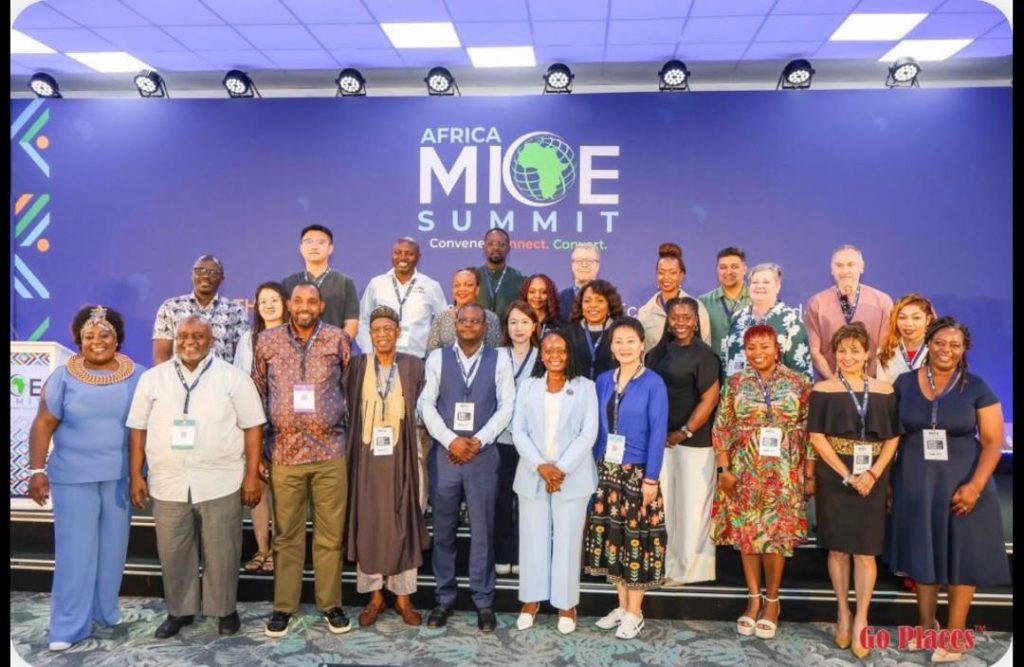
The former minister made the call while speaking as a panellist at the ninth Africa MICE Summit in Mombasa, Kenya, themed, “Building Africa’s MICE Economies.”
He said conferences and exhibitions should serve as platforms for bringing investors, buyers, policymakers, experts and businesses directly into African economies.
“ MICE should not be seen simply as people coming to Africa, staying in hotels, eating in restaurants and flying home.
“MICE is an economic instrument. It can bring investors, buyers, policymakers, experts and businesses into our economies. In other words, MICE can become Africa’s deal-making engine,” he said.
Mohammed urged African countries to develop MICE strategies around their respective economic and cultural strengths rather than competing indiscriminately for the same events.
He cited Nigeria’s entertainment industry, Kenya’s athletics and tourism sectors, South Africa’s conference industry and Rwanda’s emergence as a regional business gateway as examples of comparative advantages that could be converted into stronger MICE economies.
The former minister also advocated collective African bids for major international events, with hosting responsibilities shared among countries.
He cited the joint hosting of the 2026 FIFA World Cup by Canada, Mexico and the United States as an example of how countries could collaborate to stage major international events.
Turn events into economic ecosystems
Mohammed identified Lagos as a potential case study in transforming events into wider economic opportunities, recalling a study commissioned during his tenure as minister which indicated that about 20,000 events were held in the city every month.
He also cited the growth of “Detty December” as evidence of how major events could stimulate activity across sectors including aviation, hospitality, transportation, entertainment, media, fashion, technology and retail.
“The opportunity is to turn events into ecosystems,” he said.
However, Mohammed, who chairs the Board of Trustees and Governing Council of the Eko Tourism Foundation, said Africa’s MICE ambitions would remain constrained without significant improvements in infrastructure and ease of movement across the continent.
He listed convention centres, hotels, airports, transportation networks, digital infrastructure and reliable utilities among the facilities needed to attract major international events.
He also called for improved intra-African air connectivity, wider adoption of e-visas and visa-on-arrival arrangements where appropriate, as well as expedited visa processing for accredited conference delegates.
Beyond physical infrastructure, Mohammed said African countries must strengthen their broader investment environments, warning that political uncertainty, policy reversals, weak institutions and corruption could undermine investor confidence.
“Africa does not only have to sell its opportunities. It has to sell credibility,” he said.
Shift from delegate numbers to investment
Mohammed said African governments should also change how they measure the success of business events.
Rather than focusing mainly on delegate numbers and hotel occupancy, he urged governments to track investments attracted, business meetings held, trade generated and jobs created through MICE activities.
He further advocated the establishment of empowered National Convention Bureaux in African countries to bid for major international events, coordinate government and private-sector efforts, facilitate business visitors, generate MICE intelligence and measure the economic impact of events.
According to him, smaller African countries could also become significant MICE destinations by positioning themselves as platforms connecting businesses and markets rather than merely as destinations for consumption.
He cited Rwanda’s positioning as a regional business gateway as an example of how a smaller country could leverage strategic positioning to attract business events.
Mohammed said the ultimate test of any MICE event should go beyond attendance figures.
“Did an investment come? Did a trade relationship begin? Did a business partnership emerge? Did jobs get created?
“That is when MICE stops being merely an event, and becomes an engine of economic transformation,” he said.
Delegates from 19 countries participated in the two-day summit, which was formally opened by the County Executive Council Member for Tourism, Culture and Trade, County of Mombasa, Mohamed Osman Ali.
The post Lai Mohammed: Africa must exploit $1.3trn MICE market appeared first on Vanguard News.