
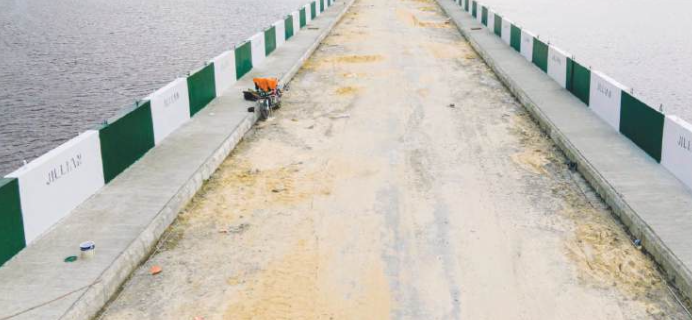
Kaa-Ataba Bridge can end our agony if completed — Natives
.We’ve lost many in boat mishaps — Akpotor
By Daniel Abia
PORT HARCOURT — For natives and residents crossing the rivers between Kaa in Khana Local Government Area and Ataba, Andoni Local Government Area of Rivers State to schools, hospitals and markets in canoes and boats, has been a daily struggle. But that agony may change when the Niger-Delta Development Commission (NDDC) complete and inaugurate the Kaa-Ataba Bridge, started in 2009 and abandoned by several boards of the commission.
For families in the riverine communities, the bridge offers hope of safer journeys for schoolchildren, quicker access to medical care and a lifeline for farmers and traders whose livelihoods have long been constrained by difficult and expensive water transport.
The human cost of travelling on the river is captured in the experience of Ataba community leader, Mr James Akpotor, who said residents had lost loved ones in boat mishaps and suffered losses of perishable farm produce because they could not cross the waterways on time.
For him, the bridge means children could attend school and return home more safely, while families would have better access to essential services.
The Minister of Regional Development, Engr. Abubakar Momoh, has however, assured that the bridge would be completed and commissioned this year, describing it as evidence of the Federal Government’s commitment to infrastructure development in the Niger-Delta.
Momoh, who inspected the project alongside NDDC Managing Director, Dr Samuel Ogbuku; Executive Director, Projects, Dr Victor Antai; and Executive Director, Corporate Services, Hon. Ifedayo Abegunde, commended the Commission’s board and management for responding to President Bola Tinubu’s directives on delivering impactful projects. “I have good news to transmit to Mr President. I am hopeful that Mr President will commission the project in November,” he said.
Ogbuku said the bridge reflected the Commission’s determination to complete long-delayed legacy projects and deliver infrastructure capable of transforming communities.
He described NDDC’s approach as a shift “from transactional to transformational,” stressing that projects should produce lasting economic and social benefits rather than serve merely as structures for commissioning ceremonies. He also attributed some construction delays to adverse weather, which affected the movement of materials.
Giving details of the project, Antai explained that it comprised a two-kilometre, double-lane road and two bridges. The main bridge measures 1.2 kilometres and links Kaa with Ataba, while the second bridge is 250 metres long. According to him, the first bridge has 57 piers, while the second has 15, making the project a major engineering intervention in an area where waterways have long dictated the pace of movement and commerce.
Beyond easing transportation, the bridge is expected to strengthen agricultural trade by connecting farming communities with markets in Bori, Port Harcourt and other parts of the region. Farmers who currently depend on boats to transport produce could move their goods more easily, while improved access for agricultural inputs such as fertilisers and seedlings could help reduce costs and post-harvest losses. The anticipated benefits align with NDDC’s wider objective of supporting food security, poverty reduction and regional agricultural integration across the nine Niger-Delta states.
For commercial motorcycle riders, the expected opening of the bridge could also change the economics of their daily business. Mr Johnbull Shedrack, a rider in Kaa, said operators currently transport passengers to the waterside and wait for them to cross by boat. With direct access to Ataba, he expects shorter journeys, lower transport costs for passengers and increased business opportunities.
Mrs Edna Ikuru, a fish seller in Ataba, said improved road access would help her get fresh fish to urban markets with fewer losses and less dependence on ice. Her expectation captured the wider hopes of traders who have had to factor boat fares, delays and the risk of spoilage into the prices of their goods.
The project has also received support from traditional and community leaders. Chief Idan-Owaji Erasmus, second-in-command to the Paramount Ruler of Ataba Kingdom, praised the NDDC for executing the bridge and said it would improve social and economic activities. He assured the Commission that residents would cooperate with the contractor to ensure timely completion and protect the infrastructure once it becomes operational.
Ogbuku has urged benefiting communities to safeguard the bridge, describing it as an investment in their collective future. Its completion forms part of NDDC’s wider effort to deliver legacy infrastructure across the Niger-Delta, where difficult terrain and waterways have historically limited access to essential services and commercial opportunities. For residents of Kaa and Ataba, the project’s true value will ultimately be measured by the changes it brings to everyday life.
As work approaches completion, expectations are rising that the bridge will help replace long, costly boat journeys with easier road connections. For schoolchildren, farmers, fish sellers, motorcycle riders and families seeking medical attention, the Kaa-Ataba Bridge represents the possibility of a different future—one in which the river no longer stands between them and opportunities.
Community folks are hopeful that work on the bridge will be completed and commissioned this year.
The post Kaa-Ataba Bridge can end our agony if completed — Natives appeared first on Vanguard News.