
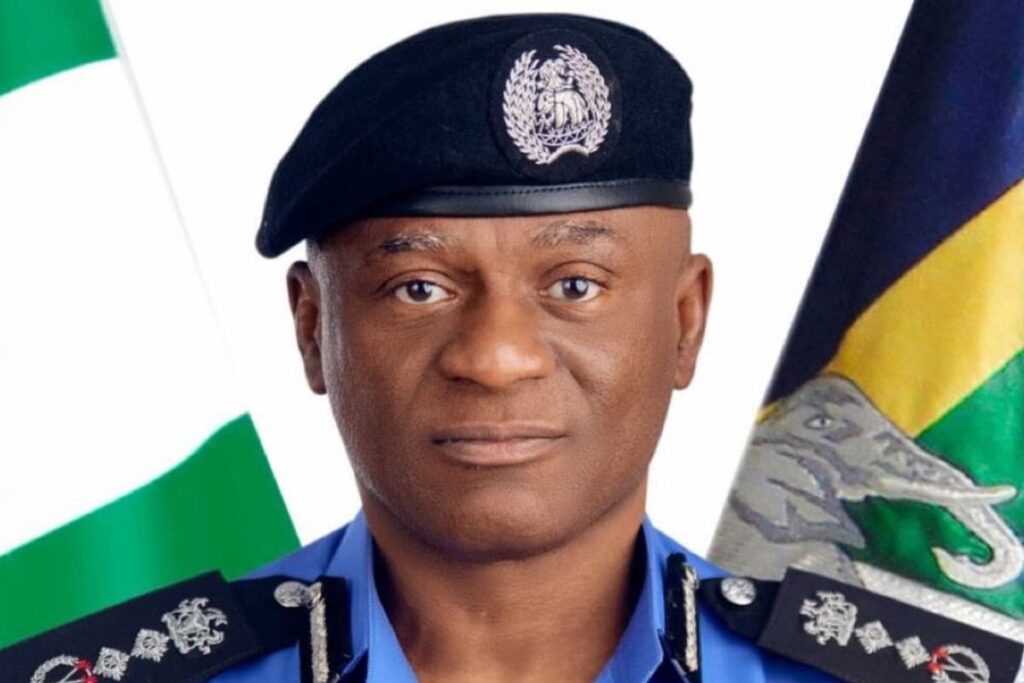
State Police Reality: IGP Disu Inaugurates Implementation Committee as Senate Sets 2026 Deadline
MAKOGI — The long-debated decentralization of Nigeria’s security architecture has officially transitioned from political rhetoric to actionable policy. On Wednesday, newly confirmed Inspector-General of Police (IGP), Tunji Disu, inaugurated an eight-member State Police Implementation Committee in Abuja, signaling the Federal Government’s aggressive push to localize law enforcement.
The inauguration marks Disu’s first major administrative action since replacing former IGP Kayode Egbetokun, underscoring President Bola Ahmed Tinubu’s absolute intolerance for delays regarding the nation’s security reforms.
The National Economic Council (NEC) reports that 33 out of 36 states have already submitted their favorable positions on the creation of State Police, leaving only three states and the FCT to finalize their submissions. As Prof. Ogunsakin’s committee begins its work, Nigeria stands on the brink of its most profound constitutional security overhaul since the return to democracy in 1999.
The Committee’s Mandate and Leadership
During his maiden official meeting with senior officers, IGP Disu tasked the newly formed committee with designing the operational framework that will integrate state-level forces with the federal policing system.
The Leadership: The committee is spearheaded by Professor Olu Ogunsakin, a veteran law enforcement strategist.
The Core Task: The team will immediately oversee the practical rollout of the State Police model, ensuring a smooth transition that decentralizes police functions while maintaining national security standards.
Human Rights Focus: Disu strictly warned the top brass that the new policing vision must prioritize accountability. He announced plans to grant operational independence to the Public Complaint Unit and the X-Squad to aggressively investigate abuses within the force.
Tinubu’s Ultimatum: “The Yam and The Knife”
The rapid inauguration of the committee aligns directly with President Tinubu’s recent ultimatums. The President has staked massive political capital on State Police as the ultimate solution to the banditry and kidnapping crises ravaging the country’s forests and highways.
Sources within the Presidential Villa confirm that the sudden removal of former IGP Egbetokun was catalyzed by his perceived “unenthusiastic” approach to the State Police agenda. Addressing governors and lawmakers during consecutive Ramadan Iftar dinners this week, President Tinubu declared: “What I promised you will not be postponed. We will establish state police to combat insecurity. Start looking around you.”
Senate Pledges Speedy Constitutional Amendment To ensure the State Police Committee’s framework has constitutional backing, the National Assembly has completely aligned with the executive’s vision.
The Senate has officially committed to concluding the rigorous constitutional amendment process before the end of 2026. Senate spokesperson, Yemi Adaramodu, confirmed the timeline over the weekend, assuring Nigerians that the legislative groundwork is already in its advanced stages.
Pre-Election Timeline: The National Assembly intends to finalize the amendment and secure presidential assent before political campaigns for the 2027 general elections kick off.
Checks and Balances: Lawmakers are heavily focused on writing strict safeguards into the bill to prevent state governors from turning the localized forces into private political militias.
State Compliance: The National Economic Council (NEC) reports that 33 out of 36 states have already submitted their favorable positions on the creation of State Police, leaving only three states and the FCT to finalize their submissions.
As Prof. Ogunsakin’s committee begins its work, Nigeria stands on the brink of its most profound constitutional security overhaul since the return to democracy in 1999.