
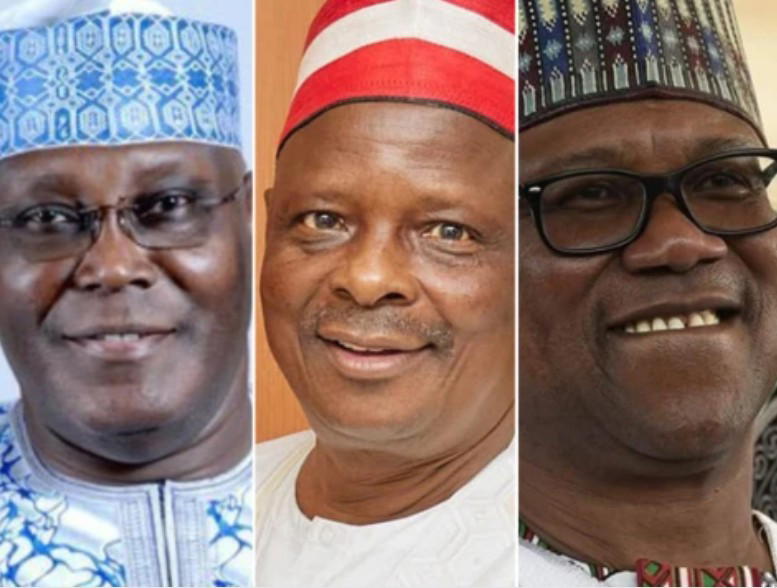
Ibadan meeting: Atiku, Obi, Kwankwaso still have opportunity for grand alliance — Ologbondiyan
•2027: ‘Hungry Nigerians, not the opposition, will give Tinubu sleepless nights’
By Luminous Jannamike, Abuja
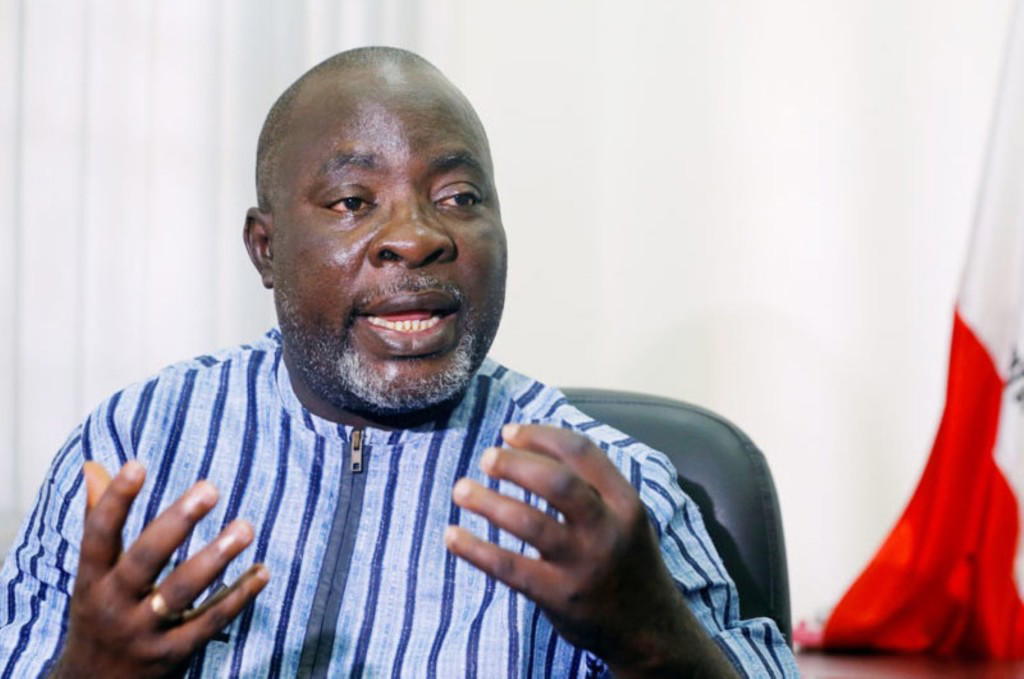
Few opposition figures have witnessed Nigeria’s political twists and realignments from as close a vantage point as Kola Ologbondiyan. A former National Publicity Secretary of the Peoples Democratic Party (PDP), he now serves as Special Adviser on Media and Publicity to the National Chairman of the African Democratic Congress (ADC), Senator David Mark, placing him at the centre of fresh efforts to forge a formidable opposition ahead of the 2027 general election. In this interview, Ologbondiyan speaks on the prospects of a united opposition, the PDP’s lingering crisis, the ADC’s mission, and why he believes President Bola Tinubu’s biggest political test in 2027 will come not from rival parties, but from millions of Nigerians battling economic hardship. Excerpts:
You spent years shaping the PDP’s public communication. Looking at where the opposition stands today, with the ADC and NDC pulling in different directions, do you still believe, it can mount a credible challenge to President Tinubu before the January 2027 election?
I strongly believe so. And my belief is based on the decision reached at the meeting held in Ibadan among all the opposition political parties to look at that proposed grand alliance. The decision reached by the majority of the opposition parties was that, at the nick of time, they were going to pull together. I believe that the opposition political parties are going to realign and work in the direction of rescuing our nation from the path of perdition into which it is gradually drifting.
When Peter Obi and Rabiu Kwankwaso left the ADC coalition in May, what really went wrong? Was it a clash of personalities or disagreement over zoning or were there deeper issues Nigerians still don’t know about?
I think when the decision was taken to leave the ADC, my reading was that the decision was arrived at in a hurry. And I said this publicly because no point had been reached in the discussion to arrive at the position of leaving the alliance. And that is why I still believe that the opposition, if it can read the game properly, still has the opportunity for the grand alliance which the Ibadan meeting projected.
So, you think there is no real danger that both Atiku Abubakar and Obi/Kwankwaso camps will split the opposition vote again, just as happened in 2023?
What I’m saying, essentially, is that at the point at which the camps of Peter Obi as well as Kwankwaso left the coalition, no decision had been reached to warrant their departure. Because talks were still ongoing. I’ve also said that the best decision that can rescue our nation today is a government of national unity. And that this government of national unity was a disposition which the opposition political parties were working towards when they arrived at the Ibadan coalition’s decision, which is that all the political parties must come together, have one candidate, and work together. And I’m saying that I do not believe, I don’t want to say, that that decision has been foreclosed. I don’t want to say or hold on to the notion that that decision is dead. I believe that if the opposition political parties are determined to rescue this nation, the best approach is for all opposition political parties to pull together.
The PDP has elected a new national leadership this year? In your assessment, does the party still have the reach and strength to compete nationally? Do you think the PDP has lost too much ground?
I think my worry about the PDP is, I know you talked about the PDP today, but which PDP are you talking about? I think that is the challenge that I have. And I say so essentially because the role of the PDP was to serve as an opposition political party after losing power in 2015. But can we, with every sense of responsibility, say that the PDP as we have it now will serve that same purpose? I think the answer is no. And I want to leave it at that.
Many Nigerians argue that opposition parties become vocal only when elections are around the corner. But after the elections, everybody seems to go back to their various cocoons. Why has the opposition struggled to sustain pressure on the government over the economy, insecurity and the cost-of-living crisis?
I give it to the African Democratic Congress (ADC) coalition. Since it came onto the political scene about a year ago, I think the party spokesman Bolaji Abdullahi has been consistent in holding the government in power to its responsibilities. So I think that, moving forward, even if the party continues in that line, irrespective of what the disposition is after the 2027 election, I think it should emerge as a political party that has focus, that has determination, and that is going to serve the interests of Nigerians.
Both the ADC and NDC are still facing legal disputes. How confident are you that neither party will run into serious legal obstacles allegedly put in their way by the ruling party before the next general election?
I’m very confident, as long as the judiciary stands upright and continues to work in the interests of our democracy. Because if you look at the entirety of the matters in court, without being judgmental and without showing any form of disrespect to the judiciary, I think there are no issues. For instance, when you look at the issue of the party’s deregistration, and Nigerians are saying they are going to deregister it, I can say to you that I can’t see that happening because the law is very clear. I am not a lawyer; I never claimed to be one either. But it is clear what the law stipulates. It says that either you have won 25 per cent in the presidential election, or you have done this, or you have done that. The provisions of the law are not tied to one issue. You understand? And also, it is INEC that has the authority to decide which party to recognise or not recognise. So when you talk about deregistration and the whole issue, I don’t even look at the circumstances of everything that has happened. To me, the way I see it, it is just bringing the Presidency into disrepute because the law is very clear on how a party can be deregistered. You don’t just form a group suddenly, go to court suddenly, and then say that so-and-so party should not be registered. Then you have a Chief of Staff to the President, the face of the Presidency, who comes out and says that somebody (Hon. Leke Abejide) who left his party and took his party’s structure should go and scatter a particular political party. You just look at all this and discover that there is an arrangement to even bring the democracy that we all live for into disrepute and to a sudden death.
Beyond criticising the APC, what is that one policy proposal you believe clearly distinguishes the opposition and gives Nigerians a genuine alternative?
I think I would say that one distinguishing factor between the APC and the ADC coalition lies in the character of those who left the ruling party for the ADC. And I say so clearly because one thing that the ADC coalition has stood for since its inception, and also in the new turnaround of the political party, is the battle to ensure that democracy survives. I think that has been the focus. We object to a system that gives power to one man, to an individual, because democracy cannot thrive in a situation where only one man is respected and accorded the rights of a king in a democratic setting. So I think if you look at the ADC, that is the area of focus from the new turnaround of the political party.
Proceeding from there, what differentiates the ADC from the APC?
I will clearly tell you that the ADC has a vision of working with Nigerians to bring about a government that will work only in the interests of Nigerians, a government whose focus shall be to ensure that Nigerians thrive democratically and that the people benefit from democracy. Let’s go back a little to the Second Republic. When you mention the UPN in the Second Republic, what comes to mind is free education and an egalitarian society. When you mention the NPN, what comes to mind is agriculture, housing, and so on and so forth. When you mention the PRP, you think about the Talakawa. Come to the Fourth Republic. Mention any political party, any one, that gives you a clear picture of what it stands for. It is only the ADC now that can clearly say that it stands for democracy and is completely opposed to one-man rule. And I think that’s where we are.
Apart from the prominent opposition leaders Atiku, Obi, and Kwankwaso, do you see any other emerging figures Nigerians should keep an eye on after the 2027 vote and ahead of 2031?
I think what is common to the majority of Nigerians as we speak today is how to stop this government through the ballot. For it from proceeding beyond 2027. I think that is the task. And I would advise that the political groupings, whether in the PDP, the ADC, or wherever, the common denominator should be this: How do we rebuild this country? How do we rework this country using every democratic means to stop this suffering from continuing? I think that is the focus for now. I don’t want to go beyond that.
The President recently declared that he was ready to “fight to finish”, politically. How should the opposition interpret that statement?
Well, I believe that, for instance, the African Democratic Congress, where I belong, has already made its position very, very clear. But beyond that, I think there is a misconception in what Mr President said, and that misconception is on the part of Mr President. I think the President sees the issue of 2027 as one between him and the opposition political parties. The answer to that is no. I think the issue is between Mr President and Nigerians who are suffering, who are hungry, who have no money in their pockets. I think they are the people he should be prepared to contend with. And I am sure that, through their ballots, those Nigerians are also prepared to ensure that they vote against Mr President. So it is not about the opposition. It is a misconception to think or believe that the whole issue is between the President and the opposition political parties. Who are the people in the opposition political parties? They are Nigerians who do not want him to continue in office, and they are prepared, democratically, through their ballots, to stop him from continuing.
If you had one minute to convince an undecided Nigerian voter that the opposition; not particularly the ADC, the PDP, or any specific party, will win in 2027, what would you say?
Look, let me tell you. The facts speak for themselves. You don’t need to tell Nigerians anything. What are you going to tell them? That their lives are better today? The answer is no. What are you going to tell them? When the President came into office and said subsidy was gone and gone forever, those who believed him are now experiencing the consequences. There is no need to tell Nigerians anything. Nigerians are already telling themselves what they are passing through and what they are suffering. So, no, let’s not even go into that.
The post Ibadan meeting: Atiku, Obi, Kwankwaso still have opportunity for grand alliance — Ologbondiyan appeared first on Vanguard News.