
How Remi Tinubu’s N2bn lifeline could revive Akwete’s dying weaving heritage
By Steve Oko
For generations, the rhythmic clatter of wooden looms echoed through Akwete, a quiet riverine community in the Ukwa East Local Government Area of Abia State. Every woven thread told a story of ingenuity, resilience, and culture. The famous Akwete cloth was more than fabric; it was the people’s identity, painstakingly woven by women whose skills had been passed from one generation to the next.
Yet, behind the beauty of the colourful handwoven textile lay a painful reality. The women who kept the centuries-old tradition alive worked with little government support, obsolete equipment, limited access to finance and shrinking markets. Many younger people abandoned the craft in search of better opportunities, leaving fears that one of Nigeria’s oldest indigenous textile traditions could gradually fade into history.
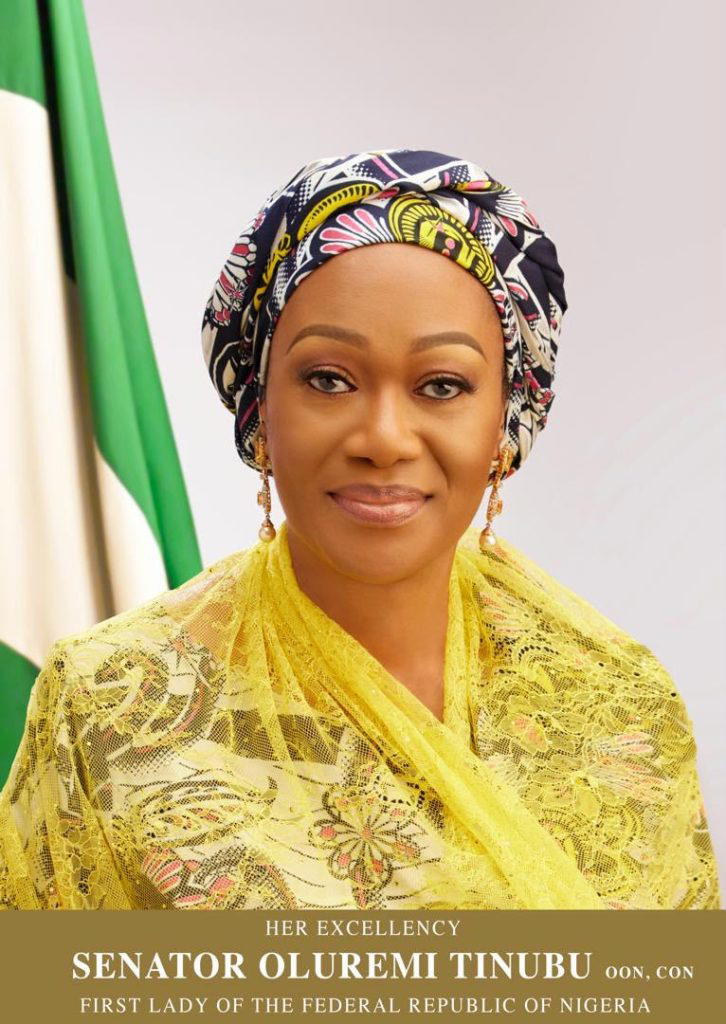
That long season of neglect may now be drawing to a close. When Nigeria’s First Lady, Senator Oluremi Tinubu, arrived in Akwete on July 21, 2026, her visit was more than ceremonial. It was an acknowledgement that hidden within the modest weaving community is an economic asset capable of creating jobs, empowering women, and preserving Nigeria’s cultural identity.
The defining moment came when she announced a N2 billion intervention to establish and strengthen an Akwete production hub. For the women seated before her, it was more than a financial commitment. It was validation after decades of waiting for meaningful government intervention.
“I am donating N2 billion to the project,” the First Lady declared, while urging Nigerians, especially the South-East, to embrace Akwete cloth as a national fabric rather than merely a local cultural product.
Her words resonated deeply because they addressed one of the biggest challenges confronting the industry: visibility.
For decades, Akwete fabric has enjoyed admiration among cultural enthusiasts but has struggled to compete with more commercial indigenous textiles such as Aso Oke, despite possessing comparable historical and artistic value. The First Lady challenged Nigerians to change that narrative.
Her promise to wear Akwete fabric if President Bola Tinubu secures a second term was itself a powerful endorsement capable of projecting the fabric onto national and international fashion platforms.
However, Mrs Tinubu will not be the first high-profile Nigerian to proudly wear Akwete fabrics. In fact, Gov. Chukwuma Soludo of Anambra State is a brand Ambassador of Akwete textile. He has proudly adorned himself with different colours and designs of the prestigious local fabrics. Former Governor Okezie Ikpeazu of Abia State also did so well in promoting Akwete textile, just as the incumbent Gov. Otti is towing a similar line.
The diaspora Igbo community is scrambling for Akwete textile, as the women in the weaving industry confirmed to this Correspondent earlier that they were receiving orders for the Akwete fabric from different parts of the world. Beyond orders from the diaspora, some communities and women’s associations in Rivers, Bayelsa, and other neighbouring states have adopted Akwete textile as their uniform. The famous Arochukwu kingdom has been celebrating one of its traditional festivals with Akwete textile as the official attire. Some Government officials as well as patriotic individuals take pride in adorning themselves with Akwete fabrics.
Beyond symbolism, however, the N2 billion intervention has the potential to fundamentally transform the local economy. Experts have long argued that Akwete’s greatest challenge is not the absence of skilled artisans but the absence of investment. Most weavers still rely on manual production methods that limit output and income. Access to quality raw materials, modern finishing equipment, product packaging, branding, and organised marketing has remained poor.
A properly developed production hub could address many of these structural constraints. With adequate investment, hundreds of women could expand production, younger residents could acquire weaving skills as a viable means of livelihood, and the community could evolve into a major cultural and tourism destination.
For Abia State, which is increasingly positioning itself as Nigeria’s hub for small and medium-scale enterprises under Governor Alex Otti, the intervention fits neatly into the administration’s economic diversification agenda.
Governor Otti, while receiving the First Lady, acknowledged that his administration had recognised Akwete’s economic potential soon after assuming office in 2023 and pledged the state’s full cooperation in translating the intervention into tangible development.
He described the First Lady’s visit as timely and strategic, noting that the government was prepared to partner with her in building a modern production hub capable of unlocking the enormous commercial value embedded in the famous fabric.
The visit also demonstrated how development can transcend partisan politics. Although Governor Otti belongs to the Labour Party and the First Lady is a leading figure in the ruling APC, both emphasised collaboration rather than political differences. Their shared commitment underscored an important lesson: when livelihoods are at stake, governance should rise above party lines.
The significance of the visit was not lost on the people of Akwete. For perhaps the first time, they saw the First Lady of Nigeria walk through their weaving centre, inspect their looms, interact with the artisans and publicly commit substantial resources to their future.
The excitement reflected more than appreciation. It reflected renewed hope. If transparently implemented, the intervention could stimulate cottage industries supplying yarns, dyes and accessories, create employment across the value chain, attract fashion designers and textile entrepreneurs, encourage exports and improve household incomes across the community.
It could also inspire many young people to return to a profession their parents and grandparents once proudly practised but which declining returns had made unattractive. Perhaps the greatest significance of the intervention lies in its timing.
Across Nigeria, conversations about economic diversification increasingly focus on agriculture, technology and manufacturing. Yet, cultural industries remain one of the country’s least exploited economic frontiers.
Akwete represents what can happen when heritage becomes enterprise. Countries across Asia have transformed indigenous crafts into billion-dollar industries through strategic investments, branding and tourism. Nigeria possesses similar opportunities in communities like Akwete, where tradition and entrepreneurship naturally intersect.
The First Lady’s intervention therefore extends beyond charity. It represents an investment in culture, women, rural enterprise and economic inclusion.
Whether the N2 billion becomes a true game-changer will ultimately depend on transparent implementation, proper management and sustained institutional support from both the federal and Abia State governments. Some elder statesmen from the area, including former Senate President, Adolphus Wabara, and former Secretary General of Ohanaeze Ndigbo, Okey Emuchay, have, while lauding the gesture by the First Lady, called for transparency in the disbursement of the funds. It, therefore, becomes imperative that a corruption-free mechanism be put in place to checkmate abuse and the usual squandermania associated with ‘free money’.
For the women of Akwete, however, hope has returned to the looms. After decades of weaving history into every thread while waiting for government to notice them, they may finally be on the threshold of a new chapter—one in which their craft not only preserves the past but also secures the future. It is a challenge to the women and young girls in the area to double down and prove that, indeed, they can ‘do wonders’ with the necessary support.
Perhaps most importantly, the age-old myths that weaving in Akwete is exclusive of only the womenfold has to be broken. Similarly, there is a need for the trade to go beyond manual weaving and embrace technology for mass production. If the industry must break even and survive in this era of global competition, it must think about commercialisation and refuse to be limited by the ropes of tradition and myths.
The post How Remi Tinubu’s N2bn lifeline could revive Akwete’s dying weaving heritage appeared first on Vanguard News.