
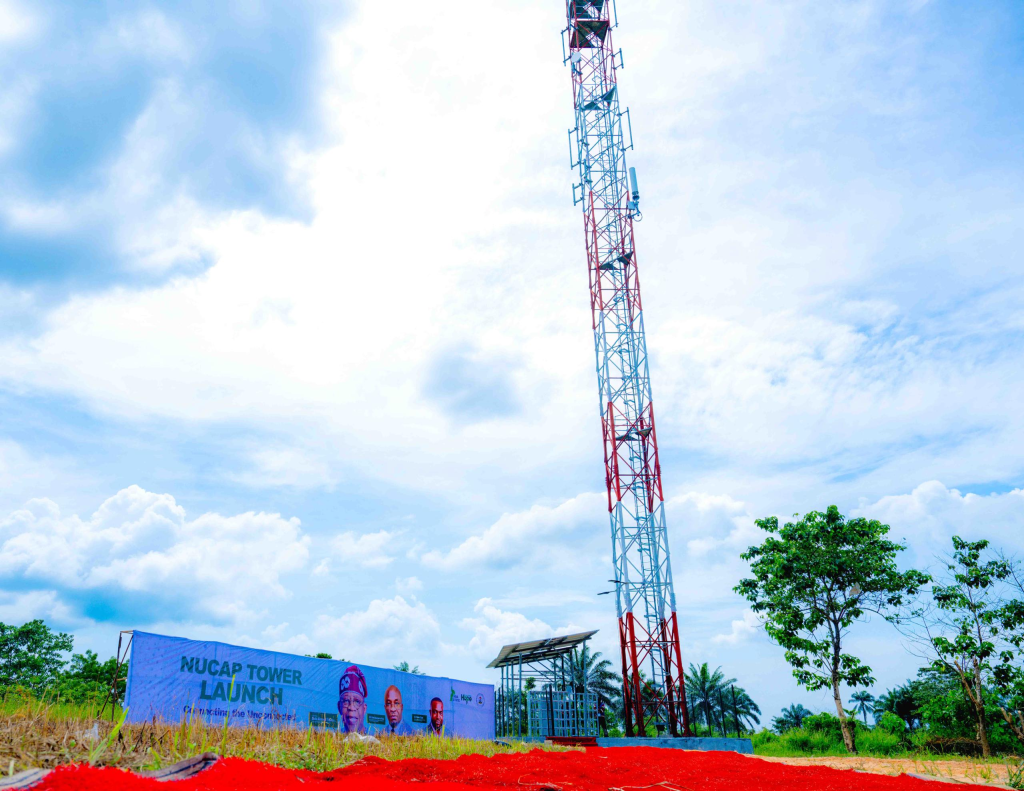
From Bende to the Nation: Inside Ben Kalu’s Push to Connect the Unconnected Through FG’s 3,700-Tower Drive
By Udora Orizu
“When a community is connected, its children gain access to knowledge, its patients gain new pathways to care, and its entrepreneurs gain access to wider markets.”
In Bende, Abia State, a student trying to access an online lesson, a farmer waiting to receive payment for produce, a trader attempting to confirm a bank transfer and a family seeking urgent medical assistance may have something in common: the need for a reliable network connection.
For many people in well-connected urban centres, access to a mobile network is an everyday convenience. In many communities, however, connectivity can determine whether a business transaction succeeds, a learning opportunity is accessed, a patient reaches a health professional or a family receives important news on time.
It is this gap between the opportunities available to connected communities and the limitations faced by those without reliable network coverage that the Federal Government’s latest digital inclusion initiative seeks to address.
On Friday, October 16, 2026, Bende Federal Constituency became the launch point for a nationwide rollout of 3,700 communication towers under the Federal Government’s National Connectivity Programme, NUCAP, as announced by the Minister of Communications, Innovation and Digital Economy, Dr Bosun Tijani.
The commissioning represents more than the arrival of telecommunications infrastructure. It marks a practical step towards connecting underserved communities to the services, information and economic opportunities increasingly shaped by digital technology.
For Rt. Hon. Benjamin Kalu, Deputy Speaker of the House of Representatives, the intervention also reflects a central principle of representation: the needs of local communities must find their way into national policy, and national development must ultimately deliver tangible benefits to ordinary people.
Bende First: Turning Advocacy into Connectivity
The selection of Bende as the first location for the rollout gives the intervention particular significance for the constituency.
At the launch, Kalu expressed appreciation to President Bola Ahmed Tinubu, GCFR for the administration’s commitment to expanding digital infrastructure and extending connectivity to underserved communities.
He also commended the Ministry of Communications, Innovation and Digital Economy, under Dr Bosun Tijani, and the implementing partners responsible for delivering the project.
His message was clear: digital access should not be determined by geography.
“Where a person lives should not determine the limits of what that person can become,” he said.
The statement captures the human dimension of the connectivity drive. It is not simply about erecting towers or expanding network coverage. It is about reducing the disadvantages that prevent people in rural communities from accessing services and opportunities available elsewhere.
Speaking at the commissioning, Tijani acknowledged Kalu’s sustained advocacy for his constituents, describing the Deputy Speaker as a leader who understands that leadership means creating opportunities that lift people.
He explained that the Federal Government had made resources available to acquire the infrastructure required to connect underserved communities, with 3,700 towers scheduled for deployment nationwide under NUCAP.
Bende, he announced, would be the first commissioning location.
He further pledged that every community in Bende would be connected before Christmas, signalling an ambition to extend the benefits of the initiative beyond the initial commissioning.
The announcement sets an important expectation for the constituency: the first tower should be the beginning of a wider expansion of reliable connectivity, not the end of the process.
Education: Bringing the Wider Classroom to Rural Children
For a student in Bende, a reliable network can open access to educational resources that extend far beyond the physical classroom.
Digital connectivity can help pupils and students access online lessons, research materials, tutorials, educational videos and scholarship opportunities. It can also enable teachers to obtain learning resources, strengthen their professional skills and introduce new approaches to teaching.
For young people preparing for examinations, university admission or employment, internet access can provide a valuable connection to opportunities that might otherwise remain out of reach.
The benefits extend to digital skills development. As more industries incorporate technology into their operations, familiarity with online learning platforms, digital communication and internet-based tools becomes increasingly important.
A young person in a rural community should be able to develop these skills without having to relocate simply to obtain a dependable internet connection. For Bende’s children and young people, the towers offer an opportunity to participate more fully in a world where knowledge is increasingly accessible online.
Healthcare: Helping Care Reach Beyond the Hospital Walls
In healthcare, connectivity can make a meaningful difference to the delivery and coordination of services.
For patients in rural communities, accessing specialist care may involve travelling considerable distances. Reliable communication networks can help health workers consult specialists, coordinate referrals, transmit relevant medical information securely and support telemedicine where the necessary facilities are available.
Connectivity can also improve communication between health facilities and help patients and their families obtain information about services, appointments and follow-up care.
In emergencies, the ability to place a call, communicate a location and coordinate assistance can be especially important.
Kalu highlighted this human reality in his remarks, noting that a patient in a rural community should be able to benefit from expertise located many kilometres away.
For families in Bende, the promise is straightforward: distance should not automatically translate into isolation from information, medical expertise or assistance.
Agriculture: Connecting Farmers to Markets and Better Opportunities
Agriculture remains an important source of livelihood across rural communities. Yet farmers often face challenges in obtaining timely market information, communicating with buyers, coordinating transportation and receiving payments.
Reliable connectivity can help address some of these barriers. With dependable mobile service, farmers can communicate directly with produce buyers, compare market information, arrange deliveries and explore new commercial relationships.
Access to digital platforms may also help them obtain weather updates, agricultural advice and information about available support programmes. For a farmer selling produce, a delayed payment confirmation can disrupt a transaction. A buyer who cannot reach a supplier may turn elsewhere. A trader who cannot coordinate transportation efficiently may lose time and money. By improving communication, the towers can help create better conditions for farmers and agricultural businesses to participate in wider markets.
Local Enterprise: Making Every Successful Transaction Count
For small businesses, connectivity is not a luxury. It is increasingly part of the infrastructure required to operate.
A trader receiving payment through a mobile banking application, a shop owner confirming a transfer, a service provider communicating with customers or an entrepreneur promoting products online all depend on reliable network access.
When connectivity is weak, these routine activities become uncertain. Transactions may be delayed, customers may lose confidence and businesses may miss opportunities.
Kalu drew attention to this challenge, describing the frustration of rural traders whose payments fail because of poor network service.
Reliable coverage can support mobile banking, electronic payments and other digital financial services. It can also help local businesses communicate with customers and reach buyers beyond their immediate surroundings.
The objective is to create an environment in which a business in Bende can compete more effectively, transact with greater confidence and pursue opportunities beyond its immediate location.
Beyond Bende: A National Drive for Digital Inclusion
The significance of the Bende commissioning extends beyond Abia State.
The planned rollout of 3,700 communication towers nationwide reflects a broader recognition that digital infrastructure must reach communities that have historically experienced limited or unreliable coverage.
The initiative complements other Federal Government efforts to expand digital infrastructure, including Project BRIDGE, which is designed to deploy an additional 90,000 kilometres of fibre-optic infrastructure, and Project 774 Local Government Connectivity, which targets internet access in local government secretariats across the country. Together, such interventions seek to strengthen the foundations on which wider digital access and public service delivery can develop.
The Work Ahead: Connecting Every Community
While welcoming the intervention, Kalu made clear that the constituency’s connectivity needs extend beyond the initial rollout.
He identified 16 locations requiring further connectivity intervention and urged the Ministry and its partners to work with his office and community leaders to validate the locations, assess coverage gaps and develop a clear programme for addressing them.
The Deputy Speaker appealed to residents to protect the newly installed infrastructure, cooperate with authorised maintenance teams and report vandalism or damage through the appropriate channels.
As the nationwide rollout gathers momentum, Bende’s experience offers a reminder that infrastructure achieves its greatest purpose when it responds to real needs and expands the possibilities available to ordinary people. The ambition is national, but its impact begins locally.
And from Bende, the message is clear: no community should be left disconnected from the opportunities of a digital future. Development reaches its purpose when it reaches the people.
*Orizu is SA Press Affairs to the Deputy Speaker