
Fibroid without the knife: How sound waves are giving women a new treatment option
By Sola Ogundipe
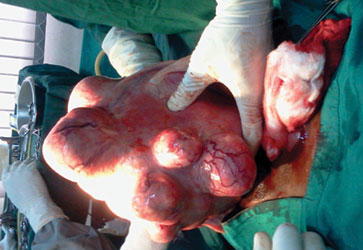
FOR generations, the word “fibroid” has carried a familiar fear for Nigerian women: heavy bleeding, severe pain, a swollen abdomen, infertility and, often, the prospect of surgery and a long recovery. For many women, it starts quietly.
Periods become heavier, the pain worsens and the abdomen gradually becomes distended. Eventually comes the hospital visit, the scan and, for some, the word they have dreaded all along: surgery.
Treatment has traditionally meant procedures such as myomectomy or hysterectomy, with the possibility of blood loss, hospital admission and a prolonged recovery. The fear is not only about the operation itself. Women worry about anaesthesia, the cost of treatment, time away from work and, perhaps most importantly, whether treatment could affect their chances of having children.
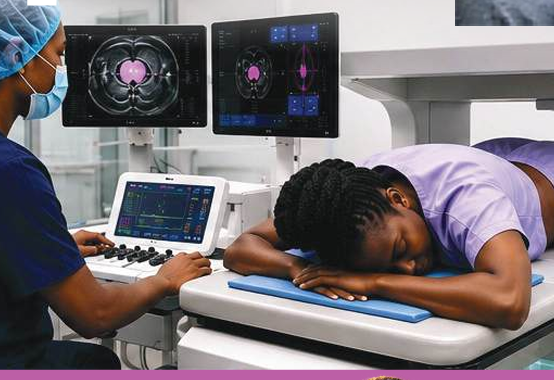
For women who have completed their families or have severe symptoms, removal of the uterus may sometimes be recommended. But the picture is changing. Instead of cutting into the abdomen to remove fibroids, doctors can use concentrated sound waves to heat and destroy targeted fibroid tissue without a conventional surgical incision. The technology is called High-Intensity Focused Ultrasound, or HIFU. Nigeria is now part of that story.
Beyond the surgeon’s scalpel For years, Patricia Omoke lived around her periods. The cramps could become so severe that she was out of action for days. She also experienced heavy bleeding and persistent back pain, accompanied by the unsettling feeling that something was not right. A scan in 2018 finally gave the problem a name: uterine fibroids. Knowing what was wrong, however, did not make finding a solution any easier. Every doctor she consulted recommended surgery. Patricia had never undergone an operation, and the thought frightened her.
“Every doctor recommended surgery, but I had never had surgery. In fact, I was afraid and continued to seek alternative treatment possibilities. I was hoping for a miracle,” she said. She tried supplements, searched online and explored virtually every option that might spare her the operation she feared. Then she came across HIFU, a non-invasive treatment that uses focused ultrasound energy to heat and destroy targeted fibroid tissue. When she saw a social media campaign by the Fibroid Care Centre at Nordica in Lagos offering free HIFU treatment, Patricia applied and was shortlisted along with two other women. She eventually became the first beneficiary of the treatment at the centre. “I did the first scan and it confirmed the fibroid and I eventually went for the treatment on June 25, 2021. I cannot forget the experience.
Naturally, I was anxious and scared, being the first person, but once I signed the consent form, I just put my trust in God and went through the usual process of getting prepared,” she said. She had expected the procedure to be difficult and mentally prepared herself for an intense experience. Instead, it went smoothly and lasted about one hour and five minutes. “It doesn’t bring the fibroid out. There is nothing like cutting or scraping. The fibroid is destroyed by the heat and, over time, the treated tissue is broken down and absorbed by the body. I have not had any complications,” she recalled. But the biggest surprise came when she got off the treatment table.
“After the procedure, the first thing that I noticed was that the persistent back pain I had been feeling had disappeared. As soon as I got up from the table, I discovered that I didn’t feel the pain anymore. The second thing that I observed was that I wasn’t feeling the fibroid itself again. Prior to the surgery, I was feeling the fibroid, but now afterwards, I no longer feel it while breathing. Also, there is no discolouration on my skin from the laser.” Patricia’s experience helps explain why HIFU is attracting interest among women living with symptomatic fibroids. But it does not mean every woman with fibroids is a candidate. From surgery to sound waves For Dr Abayomi Ajayi, Medical Director of Nordica Fertility Centre and the Fibroid Care Centre at Nordica, the attraction of HIFU is not simply that it is a new technology. His interest in finding a way to treat fibroids without surgery began years before HIFU arrived. He recalled the death of a popular journalist following fibroid surgery. “That was one of the things that drew me into this in the first place. I was a young doctor when a popular journalist died from fibroid surgery, and since then, I have been fascinated about the issue of fibroid and to see what we could do to treat fibroid without surgery and that is what I have been trying to do. When finally, we saw HIFU, we took it to heart, and we have not had reason to regret because a lot of women have embraced it and we have many testimonials.”
According to figures provided by HIFU Medical and Nordica, 965 women have undergone fibroid treatment through HIFU at the centres in Lagos and Abuja, while 30 pregnancies have also been recorded following treatment. Fibroids disrupt more than periods Fibroids are non-cancerous growths that develop in or around the uterus.
They are common among women of reproductive age and can cause heavy or prolonged menstrual bleeding, pelvic pressure, pain and, in some cases, fertility problems. For women confronting fibroids, the issue is not always simply medical. It can affect work, relationships, finances and plans for motherhood. The question is often how best to treat the fibroid while preserving the uterus and, where possible, fertility.
The post Fibroid without the knife: How sound waves are giving women a new treatment option appeared first on Vanguard News.