
FG to deploy mobile CNG stations for rural communities
By Johnbosco Agbakwuru
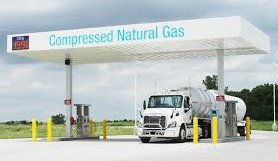
The Federal Government is exploring the use of mobile Compressed Natural Gas (CNG) refuelling stations to improve gas availability in rural areas, especially for farmers who need more affordable energy for irrigation and agricultural production.
The disclosure was made by Ismaeel Ahmed, Chairman/CEO of the Presidential CNG Initiative and Electric Vehicles (Pi-CNG & EV), at the APC–Progressive Strategy Roundtable event in Abuja, themed Promise to Proof: The Renewed Hope Conversation
Speaking at the session, “Fuel That Works: Reliable Energy, Affordable Transport and Fair Prices for Every Household and Business,” Ahmed said the government was considering mobile CNG stations to bring fuel to remote communities, where permanent facilities may not be commercially attractive to private investors.
He explained that consultations with state governments, particularly in northern Nigeria, had revealed that the demand for CNG was increasingly extending beyond transportation to agricultural activities.
He said farmers are seeking to switch from expensive diesel and petrol to CNG-powered irrigation pumps to reduce production costs.
Ahmed, the Convener of the Roundtable, cited Jigawa State as an example, noting that the governor had told the initiative that more than two million farmers in the state could benefit from affordable energy for irrigation
He explained that mechanical irrigation pumps could cover about three hectares of farmland, compared with solar-powered pumps, which typically cover about one hectare.
He said although solar-powered irrigation had been introduced as an alternative, some farmers preferred mechanical pumps because of their greater coverage and operational capacity.
Ahmed said the Federal Government was committed to aggressively pursuing the expansion of gas infrastructure, adding that President Bola Tinubu had given the initiative the go-ahead to intensify its activities.
However, he identified gas supply and delays in obtaining licences for CNG refuelling stations as major challenges that needed to be addressed.
He appealed to the Nigerian Midstream and Downstream Petroleum Regulatory Authority (NMDPRA) to help accelerate the licensing process for investors seeking to establish CNG stations.
He acknowledged the importance of safety regulations, explaining that gas infrastructure required strict safety considerations, but urged the regulator to find ways of expediting the process in view of the urgency of the programme.
He also raised the possibility of deploying mobile CNG stations to serve farmers and other users in remote communities where investors might not immediately find it economically viable to establish permanent facilities.
Ahmed said the CNG programme had recorded about 143,000 vehicle conversions, with investments estimated at $2.6 billion.
The roundtable also featured presentations by the Managing Director of the Rural Electrification Agency, Dr. Abba Abubakar Aliyu; the representative of the Niger Delta Power Holding Company, Mr. Abdullahi Kassim; the Chairman of the Nigerian Electricity Regulatory Commission, Dr. Musiliu Oseni; and the representative of the Nigerian Midstream and Downstream Petroleum Regulatory Authority, Dr. Mustapha Lamorde.
On rural electrification, Aliyu discussed electricity-access gaps, national mapping, least-cost electrification planning and the deployment of mini-grids and captive power projects.
The meeting was informed of plans to deploy 1,350 mini-grids under a $750 million project to improve electricity access in underserved communities.
Kassim, while presenting the activities of the Niger Delta Power Holding Company, discussed the company’s ownership structure, the history of the National Integrated Power Projects assets and its contribution to electricity generation.
He disclosed that the company operates 10 power plants with a combined generation capacity of 4,000 megawatts.
He also highlighted the company’s transmission and distribution infrastructure, industrial power initiatives, solar deployments and recently awarded community infrastructure contracts.
Oseni addressed electricity tariffs, affordability and service delivery, explaining the different customer bands and the relationship between electricity tariffs and hours of supply.
He said electricity costs were estimated at about ₦200 per kilowatt-hour, while the commission was pursuing measures to improve power supply through investments in generation, mini-grids, debt recovery and net billing.
NERC also reported an increase of approximately 780 megawatts in installed generation capacity.
On fuel availability and energy security, Lamorde discussed the regulatory framework for petroleum supply, domestic refining, product pricing and strategic fuel reserves.
The presentation highlighted efforts to monitor fuel availability, with a target of 30 days of supply monitoring and an eventual goal of building strategic reserves capable of covering 90 days.
The meeting was also informed that the Port Harcourt, Warri and Kaduna refineries, with a combined capacity of about 445,000 barrels per day, were currently shut down.
The representative said the government was engaging international technical expertise to facilitate the resolution of challenges affecting the facilities.
He further disclosed that more than 26 refineries had been licensed across the country, while a pre-start-up safety review had recently been conducted for a 30,000-barrel-per-day Brenco refinery, which is expected to commence operations soon.
The discussion also addressed product quality, with the petroleum regulator highlighting the modernisation of laboratories across the country. Two laboratories had recently been completed, while another was expected to be commissioned before the end of the year.
Participants raised questions about historical electricity generation capacity, additional refinery investments, local production of electric vehicles and solar panels, diaspora investment opportunities and complaints against electricity distribution companies.
On electric vehicles and battery production, Ahmed said lithium development was being handled by the Ministry of Solid Minerals Development, adding that the government was interested in encouraging local battery manufacturing, vehicle assembly and the production of electric vehicles.
Responding to concerns about electricity disconnections, Oseni explained that mass disconnections were prohibited and outlined complaint channels available to electricity consumers.
He also discussed possible compensation arrangements for customers who finance improvements to electricity distribution networks.
The NERC chairman acknowledged that electricity supply to Band A customers had improved but admitted that overall service delivery remained below the desired level.
Vanguard News
The post FG to deploy mobile CNG stations for rural communities appeared first on Vanguard News.