
FG orders halt to child labour in mining, other sectors
By Johnbosco Agbakwuru
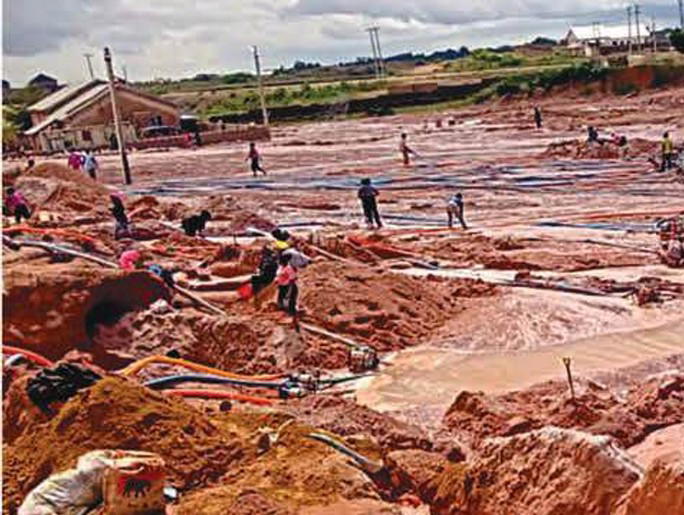
ABUJA — The Federal Government has declared child labour intolerable in Nigeria, describing it as a criminal offence and directing relevant agencies to immediately report cases involving children engaged in hazardous work, including mining, agriculture and construction.
Permanent Secretary, Federal Ministry of Labour and Employment, Dr Kamil Shoretire, gave the directive at a training workshop for labour reporters organised by the Labour Correspondents Association of Nigeria, LACAN, in Abuja.
Shoretire also clarified the responsibilities of ministries, departments and agencies in monitoring and enforcing regulations against child labour, stressing that specialised sectors such as mining must be monitored by the agencies regulating them.
He said although the ministry had a clear policy on the elimination of child labour, monitoring activities in specialised sectors remained primarily the responsibility of the relevant regulatory authorities.
According to him, legal mining operations must meet prescribed standards, while local and state authorities should report illegal mining activities to enable relevant security agencies to intervene.
The latest available national survey by the National Bureau of Statistics, NBS, showed that 24.7 million children aged five to 17, representing 39.2 per cent, were engaged in child labour in 2022.
The survey also indicated that 14.4 million children, or 22.9 per cent, were involved in hazardous work, with child labour higher in rural areas at 44.8 per cent, compared with 30 per cent in urban areas.
Shoretire said the ministry would take appropriate action whenever cases of child labour were reported, particularly where children were involved in street trading, hazardous domestic work or other forms of exploitation.
He said the government operated through different ministries, departments and agencies with distinct responsibilities, stressing that effective enforcement of the national policy on the elimination of child labour required collaboration among relevant institutions.
“For us in the Ministry of Labour and Employment, our child labour policy is very clear. Child labour will not be tolerated; it is a crime.
“If it is illegal mining, it is incumbent on the local government and state governments to report such and then invite the security agencies to come in.
“To see a child carrying cement and climbing four or five stories when the child is supposed to be in school, supposed to be in a safe environment, supposed to be in a safe place where he’s being cared for, not to take responsibility of another,” he said.
The permanent secretary said the recent launch of the National Child Labour Policy by President Bola Tinubu underscored the administration’s commitment to protecting children from hazardous work and ensuring that they remained in safe environments and in school.
He also identified construction and agriculture as sectors requiring increased vigilance, warning against allowing children to carry cement, metals or other heavy materials, particularly on multi-storey building projects.
Shoretire urged regulatory agencies responsible for such sites to report violations when detected, rather than assuming that enforcement was solely the responsibility of the Ministry of Labour and Employment.
Nigeria’s legal framework prohibits child labour and hazardous work. Section 34 of the 1999 Constitution protects the dignity of the human person, while Section 28 of the Child Rights Act 2003 prohibits children from hazardous employment.
Nigeria has also ratified International Labour Organisation, ILO, Conventions 138 on minimum age and 182 on the worst forms of child labour, which require measures to eliminate child labour and protect children from hazardous work.
The workshop also focused on strengthening journalists’ capacity to report emerging issues in the world of work, including artificial intelligence, the gig and platform economy, social security, migration and labour mobility, occupational safety and health, skills development and the future of work.
Shoretire said responsible journalism was essential to promoting industrial peace, warning that inaccurate or sensational reporting could heighten tensions and undermine efforts at reconciliation.
He urged journalists to distinguish between facts, allegations, opinions and interpretations, while reporting labour and employment matters with accuracy, fairness and objectivity.
He said the ministry regarded the media as a strategic partner in promoting sound labour administration, accountability and public understanding of government policies and interventions in the sector.
Earlier in her welcome address, Head of Press and Public Relations of the ministry, Annah Daniel, described the workshop as timely, given the changing nature of the world of work and the critical role of the media in promoting public understanding of labour matters.
“Labour reporting goes beyond the dissemination of information; it serves as a bridge between government policies, workers, employers, and the general public,” she said.
Daniel said the media remained an indispensable partner in advancing industrial harmony, promoting decent work and ensuring that labour-related issues were communicated accurately, fairly and responsibly.
She added that labour reporters played a vital role in shaping public discourse on employment, workplace relations, social security, occupational safety and health, labour migration, social dialogue and other issues affecting the workforce.
She said the training was designed to enhance participants’ knowledge and build their capacity to report labour and social security matters effectively.
The post FG orders halt to child labour in mining, other sectors appeared first on Vanguard News.