
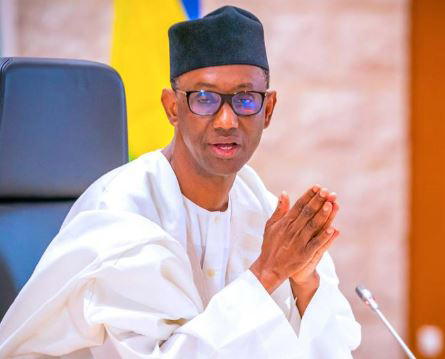
FG destroys over 19,000 illicit weapons in anti-terrorism drive — Ribadu
By Musa Ubandawaki
The Federal Government has disclosed that it has destroyed more than 19,000 illicit weapons since 2022 as part of sustained efforts to dismantle the operational capacity of terrorists, bandits and other criminal networks threatening Nigeria’s security.
The National Security Adviser (NSA), Mallam Nuhu Ribadu, disclosed this on Saturday in Sokoto during a high-level brainstorming session on tackling banditry in Sokoto State, stressing that the government was intensifying efforts to stem the proliferation of illegal firearms and restore lasting peace to vulnerable communities.
The dialogue, themed “Coping with Banditry in Sokoto State: A Multi-Stakeholder Dialogue for Prevention, Containment and Community Resilience,” was convened by the Sokoto Advancement Forum (SAF) in collaboration with the Centre for Peace Studies, Usmanu Danfodiyo University, Sokoto. It brought security concerns, community resilience and coordinated action to the forefront of discussions on addressing insecurity in the North-West.
Ribadu, who was represented by Barrister Zakariyya Mijinyawa, said the administration of President Bola Ahmed Tinubu was strengthening the national security architecture through intensified military operations, intelligence gathering, law enforcement, border surveillance and improved inter-agency collaboration. He maintained that defeating banditry required a coordinated strategy capable of dismantling criminal networks, disrupting their supply chains and preventing armed groups from exploiting security gaps.
He identified Operation FANSAN YAMMA as a critical platform for coordinating security operations across the North-West, noting that sustained pressure on criminal elements remained necessary to protect lives, secure communities and prevent armed groups from establishing safe havens. He said the government would continue to reinforce operational cooperation among security agencies to confront emerging threats across the region.
Highlighting recent weapons-control operations, the NSA cited figures from the National Centre for the Control of Small Arms and Light Weapons (NCCSALW), whose Director-General, retired Deputy Inspector-General of Police Johnson Kokumo, was identified in his remarks. According to Ribadu, the centre recovered 5,449 firearms and destroyed 1,419 illicit weapons during nationwide operations in September 2026, underscoring the continuing challenge posed by illegal arms trafficking.
“These figures demonstrate the importance of sustained weapons-control operations. The NCCSALW and relevant security agencies will continue to strengthen efforts to disrupt arms-trafficking networks, trace recovered weapons and prevent illicit firearms from reaching criminal groups,” he said.
Ribadu, however, cautioned that military action and weapons seizures alone would not deliver sustainable peace unless accompanied by effective governance and a sustained government presence in communities recovered from criminal groups. He argued that security operations must be backed by measures that restore public confidence, rebuild local institutions and enable displaced and vulnerable populations to resume their normal lives without the constant threat of violence.
To strengthen coordination, he said the Office of the National Security Adviser was advancing a whole-of-government and whole-of-society approach through the National Crisis Management Doctrine (NCMD). The framework, he explained, was designed to improve preparedness, strengthen collaboration among relevant institutions and ensure that security responses were coordinated rather than fragmented across government agencies and community structures.
Addressing the peculiar security challenges confronting Sokoto State, Ribadu called for intelligence-led operations to deny bandits access to safe havens around vulnerable settlements, forest corridors and border communities. He stressed the importance of supporting State Forest Guards and NSCDC Agro-Rangers as part of broader efforts to improve surveillance, protect rural populations and disrupt the movement of criminal groups.
He also underscored the need for stronger cross-border intelligence-sharing and functional early-warning mechanisms linking local authorities, traditional rulers, community leaders and security focal points. According to him, timely reporting and rapid responses to credible security alerts would be crucial to preventing attacks and protecting residents in vulnerable areas, including Sabon Birni, Isa, Tangaza and Goronyo.
The NSA further called for stronger community participation in the fight against banditry, warning that misinformation, economic hardship and the vulnerability of young people could undermine security interventions if left unaddressed. He urged stakeholders to protect livelihoods, expand access to education and employment opportunities, and develop community-based measures capable of discouraging youth recruitment into criminal networks.
“Reintegration must never replace justice or reward violence. National security frameworks can succeed only when communities help translate them into local action,” Ribadu declared, emphasising that reconciliation and rehabilitation efforts must operate within the framework of accountability and the rule of law. His position highlighted the need to balance opportunities for peace with justice for victims and measures to prevent the recurrence of violence.
He commended the Sokoto Advancement Forum (SAF) for developing its Blueprint for the Strategic Development of Sokoto State, urging participants to translate the dialogue into measurable actions rather than allowing the discussions to end as another policy exercise without practical consequences. He specifically called for the development of a community security and early-warning plan that would establish clear responsibilities, improve information-sharing and strengthen cooperation between residents and security agencies.
“Let this dialogue mark a decisive step towards a safer Sokoto where communities live without fear, agriculture and commerce flourish, young people pursue productive lives, and public institutions protect every citizen,” Ribadu said.
He maintained that restoring security in Sokoto and the wider North-West would require sustained commitment, collective responsibility and a comprehensive strategy that combines military pressure, intelligence-driven policing, effective governance, economic opportunity and community resilience.
The post FG destroys over 19,000 illicit weapons in anti-terrorism drive — Ribadu appeared first on Vanguard News.