
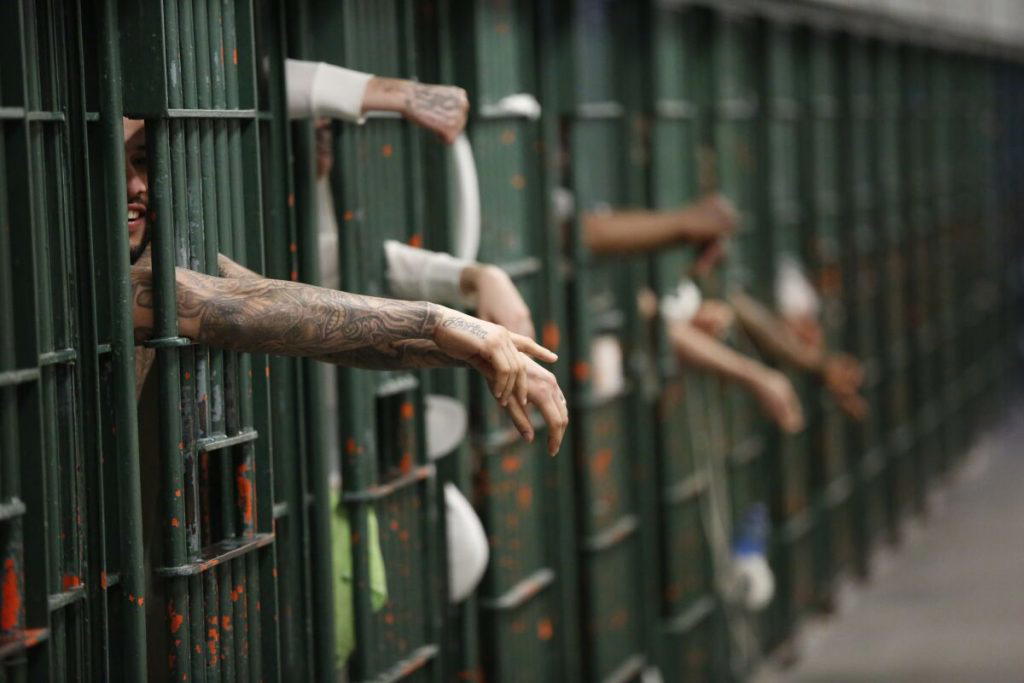
Ex-inmates beg FG to intervene as over 30 Nigerians languish in Tanzania prisons
•FG to push prisoner transfer deal with Tanzanian authorities — Foreign Affairs Ministry
By Nkiruka Nnorom
Two Nigerian men recently released from prisons in Tanzania have appealed to the Federal Government to urgently intervene and secure the transfer of other Nigerians still languishing in jails across the East African country.
The ex-inmates, Okechukwu and Henry, told Saturday Vanguard separately that poor prison conditions, lack of parole for foreigners, and long delays in trial were worsening the plight of Nigerians convicted and those awaiting trial in Tanzania.
They noted that over 30 Nigerians were jailed in different prisons in Tanzania with more than 20 in Ukonga Central Prison in Dar es Salaam alone and appealed to the government to take advantage of the prison transfer agreement with the country to bring the inmates back to the country.
In a swift response, the Federal Government said it would take up the issue of a prisoner transfer agreement with Tanzania as part of efforts to secure the return of Nigerians serving jail terms in the East African country
One of us died, we served 15 years
Narrating his experience, Okechukwu, who was deported to Nigeria three months ago after spending15 years in prison, said he was among four Nigerians sentenced to 30 years for drug-related offences. One of them died in prison in 2016.
“There were four of us. Out of the four people, one passed away in prison in 2016 while I was there. So, three of us remained,” he said.
He explained that although they were sentenced to 30 years, Tanzanian law requires a convict to serve at least 20 years. He explained that after three failed appeals, their lawyer pleaded for the sentence to count from the day they entered prison in March 2011.
“As God will have it, the judge gave us that privilege. So, we started counting from 2011. Our release date was supposed to be 2031,” he said.
He noted that their release was fast-tracked in 2020 when Tanzania’s President granted a general remission.
“In 2020, the woman president pardoned all cases. Those on life sentences, who have served for 20 years went home. Those on 30 years had five years removed. For us, they removed five years. So, instead of 2031 that was supposed to be our release date, it became 2026. That is why I came back this year,” Okechukwu said.
He added that upon release, deportees are held by immigration and given three weeks to provide their own tickets or risk being returned to prison.
“After our release, we were taken to immigration detention and given three weeks to provide our own air tickets. They don’t buy tickets for anybody. Everybody has to fight for himself. God helped our families; we bought tickets and came back home,” he said.
I spent 10 years, I was not guilty
Henry, who was deported to Nigeria in October 2025, said he was arrested in 2016 on allegations of drug trafficking and spent six years on trial before being sentenced to life imprisonment. He was later discharged and acquitted by the Court of Appeal.
“I was accused of drug trafficking and sentenced to life imprisonment. I was on trial for six years and I was later jailed. I was released by the appeal court,” he said.
“They deported me because I was not found guilty. I did not finish my sentence,” he explained.
Over 20 Nigerians still in Ukonga alone
Both men said the number of Nigerians in Tanzanian prisons was significant, with many serving long terms for offences they did not commit. Okechukwu estimated that more than 20 Nigerians were currently in Ukonga Central Prison in Dar es Salaam alone, with four serving life sentences and others serving between 20 and 32 years. He said Nigerians were also in other regional prisons.
Henry corroborated this, saying: “Many of our people have the same issue. Many are serving life imprisonment. Many are serving 30 years. Some have spent even 15 years there. Some have spent 10 years, 12 years, 14 years.”
“The fact is that there are many that committed the offence. There are many that were accused. They are still in jail and the prison conditions there are no good. People are suffering so much,” Henry added.
Okechukwu raised concerns about inmate health, revealing that: “About two of the inmates now have pipes on their private parts due to sickness. Three people I told you about died of hypertension and liver problems. Some people cannot hold it. That’s the challenge we have there.”
He noted that while inmates can access lawyers, they must pay for them. “The Tanzanian government does not provide free legal representation,” he said.
Call for prisoner transfer agreement
The two ex-inmates said Tanzanian law provides for prison transfer, which allows convicted foreigners to serve the remainder of their sentences in their home countries. They, however, said that the process must be initiated by the Nigerian government.
“The Tanzania government is open. According to their law, there is something called prison transfer. They can transfer the prisoners to the home country,” Henry said.
“Tanzania has a code of transfer. They can transfer you back to your home country to finish your sentence there but your government has to request it. It’s not Tanzanian authorities that will initiate the move. We have to request,” Okechukwu added.
He cited the 1990s transfer of Nigerians from Thailand during the Obasanjo administration and a recent transfer from Ethiopia as precedents, saying that Nigerians in Tanzania prisons were not up to 200. “There are maybe about 50 convicted people,” he said.
The men also decried Tanzania’s “possession” law, under which anyone found where drugs are discovered is arrested.
“If they come to your house and find a substance, they pick everybody, even visitors. If you don’t prove your innocence, which is always a 1 percent chance, you will be detained. That’s the problem,” Okechukwu said.
They said women were also affected, including an elderly Nigerian woman arrested while trying to “help her family.”
Okechukwu noted that the presidential remission policy that aided their release had stopped. “Foreigners, even Tanzanian citizens, don’t get criminal cases remission again, but their citizens have parole. If you serve one-tenth of your time, you can go on parole. Foreigners don’t have that chance,” he said.
Appeal to Ministry of Foreign Affairs
The ex-inmates urged the Ministry of Foreign Affairs to engage Tanzanian authorities immediately.
“I assume if the Nigerian government can just go down there and seek for the citizens of Nigeria, I hope things will work out for them,” Henry said.
“We are talking now to create awareness. There are people who have not even started their sentencing. Their condition is worse. If people can help buy tickets to bring them home, and the government can come in and take some people, it will help,” Okechukwu said. He referenced a recent intervention by the Minister of Foreign Affairs in Ethiopia that led to the release of some Nigerians.
Human rights groups have repeatedly called on the Federal Government to strengthen consular services for Nigerians in detention abroad and to pursue bilateral agreements that allow for prisoner transfers.
The post Ex-inmates beg FG to intervene as over 30 Nigerians languish in Tanzania prisons appeared first on Vanguard News.