Evil or HelpingAngel? How one librarian keeps AI honest and accurate
By Ebele Orakpo
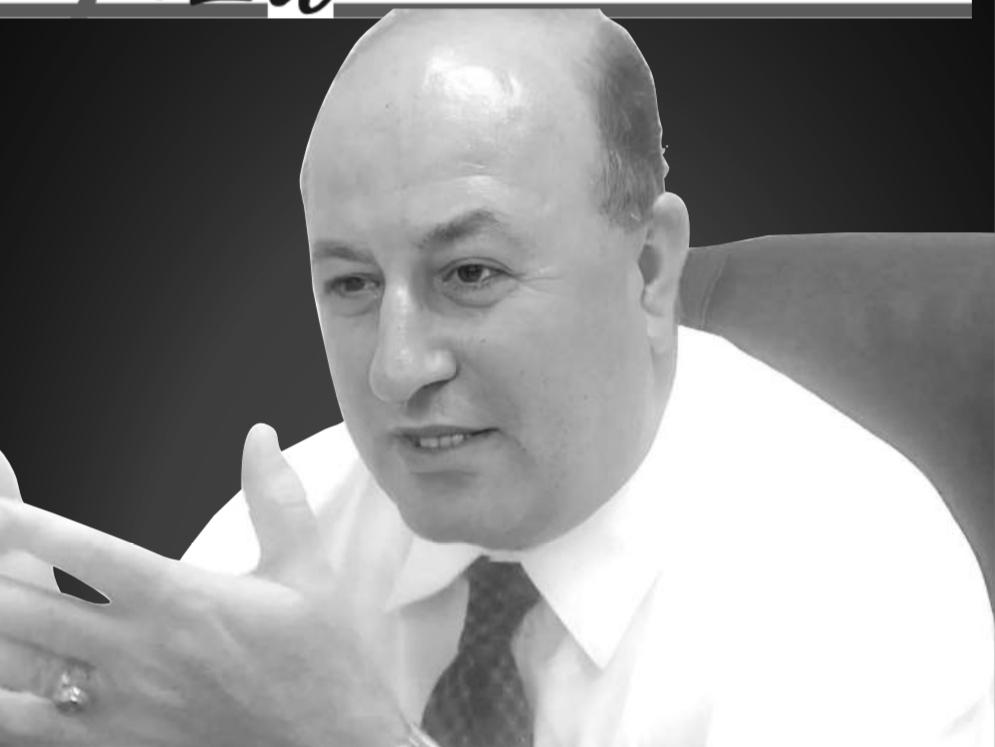
The widespread adoption of Artificial Intelligence has sparked growing concerns over its societal impact. Critics warn that heavy reliance on AI weakens critical thinking, creativity, and human mentorship in education while widening the digital divide. Also, creative industries face job displacement, copyright theft, and unauthorised likeness cloning. Digital markets are flooded with mass-produced AI content, devaluing human artistry. In this chat with Vanguard, Mr. Amed Demirhan, one of the pioneers of e-library worldwide and the General Manager/Director of the Barzani National Memorial Library and Museum in Kurdistan, Iraq, deviates from the norm of merely learning how to operate AI and advocates for training AI to maximize its output. The former Director of Library Services, American University of Nigeria, Yola, argues that this proactive approach can preserve jobs previously considered vulnerable to automation and concludes that human intelligence is still the ultimate. Excerpts:
Training the AI
Like many new innovations, AI sharply divides public opinion. While some praise it as an exceptional breakthrough, others view it as very dangerous, raising serious ethical concerns like information manipulation. However, I believe AI remains one of the most effective research assistants one can get.
AI capabilities
AI can perform complex tasks associated with human intelligence, including learning, adapting, analyzing information, problem- solving, and remembering.
Within seconds, it can browse billions of global, multilingual records and resources—far exceeding the collections of the largest physical national libraries—to retrieve requested information.
However, as a human creation, AI reflects all human imperfections. Just like any student, researcher, or research assistant, it requires proper training to become truly effective.
Otherwise, when you ask a question or direct it to gather research information, it will retrieve overwhelming, unhelpful results, much like sailing across the vast ocean without a compass or clear direction.
Set the rules
Training AI with information literacy standards, including evaluating source content, verifying facts, checking author and publisher credibility, and citing properly, makes it far more effective for academic researchers.
Beyond these foundational standards, we can add tailored, research-specific rules to target unique project needs. The AI operates strictly within a structured framework rather than searching randomly if instructed to retain these guidelines.
My rules
I rely on a strict set of principles when working with AI; I call these “my rules” because, much like students, AI does not always follow instructions automatically. Instead of constantly repeating my guidelines when requesting research, I simply tell it to follow “my rules.”
Usually, it remembers the standards and corrects its output. While I did not invent these guidelines myself, as they are standard academic rules, I simplify my instructions to the AI by referring to them simply as “my rules.”
Strict academic standards
These are some of the rules I set for the AI:Research generated must be factual, precise, evidence-based, and academically defensible.
*No fabrication. The AI is explicitly instructed never to invent facts, dates, quotations, citations, documents, or historical events.
*Distinguish between hard evidence and human interpretation. Documented facts, estimates, scholarly opinions, and mere assumptions must never be treated as same.
*Read the full context. Statements must always be read in their full context, evaluated against the weight of cumulative evidence rather than judged in isolation.Sources and verification
•Prioritize primary sources using original archival documents, diplomatic correspondence, official records, and contemporary evidence whenever available.
•Verify original documents by checking the actual source before attributing statements or quotations.
•Cross-reference evidence by comparing historical findings with relevant independent sources.
•Identify conflicting evidence and not to silently resolve contradictions or discrepancies between sources.
•Respect source limitations by explicitly acknowledging when a document or claim could not be verified.Citations and References •Always use APA 7th edition rule book.•Provide accurate author names, publication dates, document titles, page numbers, and archival identifiers.
•Include retrieval dates for online archival materials when appropriate. (It is not required but it is important to have.)
•Never invent missing bibliographic information. Editorial work preservation of original text
•Do not change my wording and anything in my text, just make recommendations.
•When reviewing my writing, I recommend grammatical corrections in parallel sentence by sentence. Translation, transliterations, and transcribing
•When translating, preserve the original meaning without adding interpretations and don’t change anything.
•Mark illegible passages rather than guessing.
•Transliterate precisely without adding or changing anything; mark any illegible letters clearly and never guess.
*When transcribing historical documents, reproduce the original text faithfully and 100 per cent.
Academic Evaluation
•Keep evaluations short, factual, and strictly academic. (No stories and no theories)
•Evaluate the argument actually presented rather than introducing unrelated criticisms.
•Recognise the professional knowledge and firsthand research experience of a subject specialist.
•Do not automatically require separate documentation for every statement grounded in the author’s professional experience.
•Distinguish scholarly interpretation and strategic proposals from claims requiring empirical verification.
Always remember my rules
The AI will not always follow the rules but one has to remind it about the rules and verify information.
Let me give some examples of how these rules work and what happens when they are not followed.
One: ‘Keep evaluations short, factual, and strictly academic.’ Without this instruction, the AI will generate overly long responses that take too much time to read. Because this would happen after every request, it would waste valuable time.
Therefore, this instruction is essential for making the AI more effective.
Two: AI writing skills – Many teachers restrict or ban students from using AI in their writing. This is wrong, as it denies students access to a valuable learning tool.
While AI can generate an essay or research paper in 20 to 30 seconds, the resulting work is often ineffective. Instead, teachers should instruct students on how to use AI responsibly to improve their own writing.
For example, writers should prompt the AI with a strict rule: “Do not change my wording or anything in my text; only provide recommendations.”
This allows the author to preserve their original voice while receiving actionable feedback on how to improve.
The same rule applies to grammar correction, where the AI must be restricted to suggesting edits rather than rewriting entire sentences. Used this way, AI functions much like a writing tutor in a university writing lab.
Three: Ethical use of resources – An important element of ethical use is proper citations. If you don’t tell an AI which citation style to use, it will pick one at random and give you a different format every time.
That is why one of my main research rules is to instruct it to always use APA 7th edition. Even though it isn’t always required for online sources, I also tell it to add the retrieval date right before the link. It doesn’t always follow this perfectly, but it gets it right most of the time—and when it forgets, I just remind it of “my rules.”
Even as technology advances and changes, our fundamental ethical values remain the same.
Humanity has upheld principles like righteousness, integrity, morality, honesty, and respect for thousands of years. In fact, what universities teach today about the ethical use of research resources is much the same as it has always been.
Conclusion
AI is an exceptionally great research assistant with multiple abilities. Nevertheless, it has to be focused and regulated for more effective research.
A strong human supervision is still required for evaluations and verifications. The ultimate responsibility for research rests with human beings, not AI.
Vanguard News
The post Evil or HelpingAngel? How one librarian keeps AI honest and accurate appeared first on Vanguard News.