
Editors’ Conference 2026: After 27 years, why democracy still fails ordinary Nigerians — Onaiyekan
By Juliet Umeh
For 27 uninterrupted years, Nigerians have lived under elected governments. They have queued under scorching sun and rain to vote, watched presidents and governors come and go, and seen disputed elections move from polling units to courtrooms.
Read Also: All Nigeria Editors Confab, 2026: Before ballot box, Africans already knew democracy — Achebe
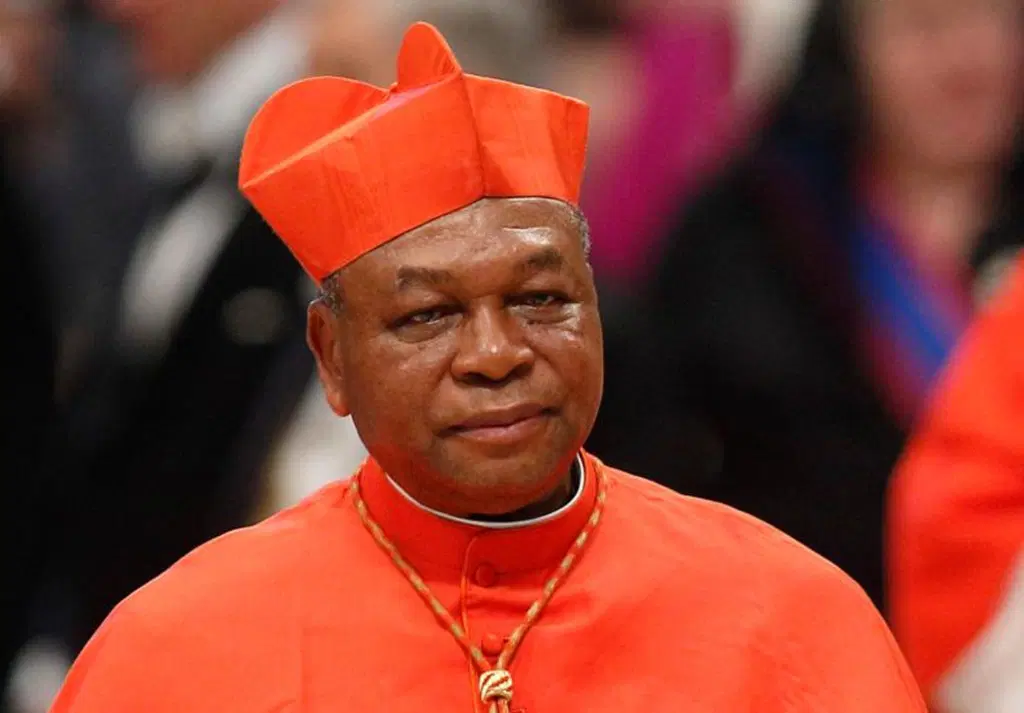
Yet, for the ordinary Nigerian, John Cardinal Onaiyekan believes a fundamental question remains: Has democracy really put the people at the centre of governance?
At 82, the Archbishop Emeritus of Abuja has witnessed Nigeria’s journey through colonial rule, independence, military governments and civilian administrations. His conclusion is sobering: having democracy is one thing; making it work for ordinary people is another.
“I speak as an 82-year-old Nigerian who has seen this nation going up and down with hopes of greatness that have continued to elude us,” Onaiyekan told editors at the All Nigeria Editors Conference, ANEC 2026, in Enugu.
For him, the true test of democracy is not merely how many elections have been conducted or how long civilians have remained in power. It is whether the government serves the people.
When citizens become pawns
Nigeria has achieved something that once seemed difficult: more than a quarter-century of uninterrupted civilian government.
But elections alone, Onaiyekan argued, do not make democracy meaningful.
He said: “Democracy must be governance for the good of the people. The leaders must be serving the interests of the governed, and people must be at the centre of governance – what we call the common good.”
It is, he said, “the kind of democracy that Nigerians have been dreaming about.”
Yet, that ideal is tested whenever elections become primarily struggles among politicians for control of power
Onaiyekan accused some politicians of adopting a “do-or-die” attitude because political office brings wealth and influence.
“In all this, the people hardly count at all,” he said. “Rather, they are just pawns on the political game.”
That is perhaps one of the contradictions of Nigeria’s democracy: the citizen who is supposed to be its most powerful participant can become its least influential actor.
Who owns the vote?
Since Nigeria returned to civilian rule in 1999, successive elections were expected to strengthen democratic institutions.
“We have had several elections since 1999. It is difficult to believe that we have been making progress. In fact, it seems that the quality of the elections has been reducing from one election to the other, and this is not good news at all,” he said.
His concerns range from the conduct of politicians to the independence of INEC, deployment of security agencies and role of the judiciary.
But he reserved one of his sharpest questions for politicians who boast that they will “deliver” entire states to preferred candidates.
“Where is the freedom of the people of the state to vote according to their individual consciences?” he asked.
“Or does the governor intend to vote for everybody in his state?”
Behind that question lies another: Who owns the vote – the citizen who casts it or the political structure claiming to control it?
Ballot box or courtroom?
Onaiyekan also questioned the growing prominence of courts in electoral outcomes.
“The judiciary is not to determine elections about who wins, but rather to adjudicate disputes when they arise.
“If elections were well conducted, there ought not to be any need for judicial cases.”
But Nigeria, he observed, has increasingly witnessed electoral battles moving from polling units to tribunals.
“Our experience in the recent past has almost become that we have been witnessing a situation where our elections are being determined not at the polls, but in the courts by the tribunals.”
For voters who queued to exercise their franchise, such prolonged disputes can raise questions about where electoral power ultimately resides.
‘Power belongs to the people’
For Onaiyekan, Nigeria’s democratic journey must eventually return to its simplest promise: government exists for citizens.
He said: “In political terms, we say that power belongs to the people. By that, we mean that it does not belong to the political leaders and office holders.”
He also rejected arguments that Nigerians should simply wait for democracy to mature over generations.
“We must never give up our efforts to keep pushing for a government of the people, by the people, for the people.
“We cannot accept the specious argument that democracy has taken centuries to build in some nations, and that so we should wait for hundreds of years to achieve our own.
“We have the experience of history, and we cannot be re-inventing the wheel.”
After 27 years, therefore, Nigeria’s democratic challenge is no longer merely keeping soldiers out of government or conducting another election.
It is ensuring that the ordinary Nigerian who stands in a polling queue truly has a stake in determining how the country is governed.
“The ultimate objective,” Onaiyekan said, “is to install a government that is freely chosen by the people and that works for the common good of the people.”
Until that promise reaches the ordinary citizen, Nigeria’s democracy, in Onaiyekan’s reckoning, remains unfinished.
Vanguard News
The post Editors’ Conference 2026: After 27 years, why democracy still fails ordinary Nigerians — Onaiyekan appeared first on Vanguard News.