
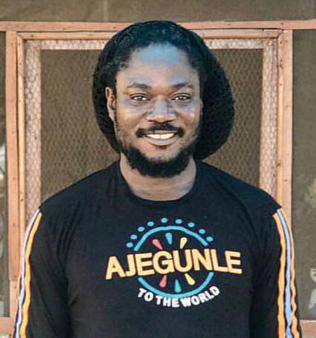
Daddy Showkey: From ghetto to grace, celebrates 50 years on stage
…How Ajegunle, ‘Dyna’ miracle, Vanguard, Eko hotels shaped my journey
…To honour on August 9 concert
…’I once scavenged for aluminium to survive’
…Reveals how he created Galala sound, got the name ‘Showkey’
For Daddy Showkey, the journey has been one of survival, music, and miracles. On August 9, 2026, the pioneer of Galala music will mark 50 years on stage with a golden jubilee concert at Eko Hotel and Suites, Lagos, the same venue where it all started for him nearly five decades ago with an acrobatic performance at the hotel’s opening .
“Eko Hotel opened in 1977, and I performed an acrobatic display during the opening ceremony,” he recalls.
Ahead of the milestone event, the 56-year-old entertainer walked into the Vanguard headquarters in Apapa, Lagos, on Thursday evening with gaiety. The visit was more than courtesy. It was a homecoming of sorts: nostalgia and gratitude wrapped in one.
The “ghetto soldier” with the signature dreadlocks used the moment to revisit memories that shaped his career and to thank Vanguard for its role in his rise.
From picking aluminium in Ajegunle dustbins, to birthing Galala music, to making a promise to God about his community, Showkey said the journey has been nothing short of grace.
Read on…
By Onochie Anibeze, Ayo Onikoyi & Benjamin Njoku
We heard you’re celebrating 50 years on stage, and we decided to bring you to Vanguard because we also want to celebrate you. Tell us about the milestone concert?
I will be celebrating 50 years on stage on August 9 at Eko Hotel and Suites, Lagos. I chose Eko Hotel because it is part of my journey and my story. Eko Hotel opened in 1977, and I performed an acrobatic display during the opening ceremony. By the grace of God, there was a Banquet Manager there, Mr. Ben, who always gave me a chance to perform whenever they had events. So, Eko Hotel has always been part of my story. My journey actually started in 1976, at Gondola, Bar Beach, and Panorama. I was just six years old then. Sometimes, people would ask me, “How old are you?” I will be 56 on August 4. People think it is impossible to discover a child’s talent at a young age, but I am living proof that it is possible. That is why I always tell parents that documenting their children’s talents and growth is very important. Back then, we only had photographs to capture memories. Today, when I look back, I always tell people to go through my old newspaper interviews. I have consistently said I started entertainment in 1976, because that was when I began appearing on television. But if I wanted to count from when I first started entertaining people on the streets of Ajegunle, it would have been even earlier. My journey has simply been from ghetto to grace.
Would you like to recall some of those early days in Ajegunle?
Entertainment-wise, I can remember that around the 80s, I formed a group called Barrel Paragon Dancers. Before I turned 10, I was already an established entertainer. People paid me to perform at events. We performed together until about 1983. At the same time, I was also acting part-time. I appeared in “The Village Headmaster” as an acrobat. The person who introduced me to the production was Dejumo Lewis. I was also part of the later production of “The Village Headmaster”.
My first manager, Mr. Bod Alaba, who acted the part of journalist Emeka in “The Village Headmaster” helped secure performance opportunities for me. Mr John Chukwu (J.C.) and Mr. Jimmy Johnson, popularly known as Okoro, also booked shows for me.
When Jimmy Johnson launched his album in 1983, I performed acrobatics at the event. So, even if I decide to count only from when I became active professionally, it is still more than 40 years as a musician. But I don’t just see myself as a musician. I see myself as an entertainer. Acrobatics is entertainment too. Many of the veteran musicians who knew me as a child performer are still surprised whenever they see me today. Someone like veteran actor Jide Kosoko played an important role in my journey. At the time, he worked at Eldatech, a candle manufacturing company near my school. I attended Dr. Lucas School in Kirikiri. One day, he saw me performing acrobatics during our inter-house sports competition. By then, I had stopped appearing on television because I had lost contact with my managers.
Uncle Jide invited me to the National Theatre, where they were reorganizing the Ojo Ladipo Theatre after the death of Baba Mero. Through him, I met several theatre veterans, including Mama Bibi Alice Ambebo. He introduced me as his boy, and they began taking me to different performances and events. From there, I continued performing and working with several theatre practitioners.
Honestly, I don’t even know where to begin counting the journey. All I know is that I started entertainment in 1976, and if you count from then until now, it is 50 years. It is my Golden Jubilee, and I believe it is worth celebrating.
What should we expect on that day?
First of all, the Special Guest of Honour will be my mother. My mum was a teacher, and she supported me despite what people were saying. Many people would ask her, “How can the son of a teacher not be in school?” I also have to appreciate some of my teachers, especially Mrs. Moneke, who went to meet my mother and told her, “Don’t force him. If this is what he wants to do, let him pursue it.”
Looking back today, I went through a lot. But I believe God used my mother to shape my journey. I lost my father in 1978, when I was just eight years old. So, my mum had to carry the burden of raising us alone. She went through a lot of hardship. I am the last child of my mother. People constantly questioned her because I wasn’t following the conventional path of staying in school. But she always defended me. She would simply say, “He’s a special child.”
Today, many of those same people now tell my mother, “You were right. He truly is a special child.”
That is one of the reasons she is the Special Guest of Honour. It will also be the first time in her life that she will sit in the audience and watch me perform live on stage.
It will be her first time ever?
Yes. That is why she is my Special Guest of Honour.
What is the story behind your song ‘Dyna (If You See My Mama)’?
The song “Dyna” is based on a true-life story. Back in 1996, before I travelled to Germany, a woman named Dyna came to meet me. She had been married for nine years without having a child, and there was a lot of pressure from her husband’s family. Some people even believed all kinds of superstitions about why she couldn’t conceive.
She came to me crying and asked me to speak to her husband. She told me she wasn’t against him marrying another wife if that would make him happy. Her only request was that he shouldn’t send her away because she had nowhere else to go.
At first, I wondered why she came to me because I wasn’t a pastor. But I promised to visit their home and speak with her husband. When I got to their house, I knocked on the door and it was her husband who opened it. The moment he saw me, he shouted, “Showkey Baba!” He welcomed me warmly and invited me inside. As soon as I entered their living room, I saw a large portrait of myself hanging on the wall.
Dyna had already told me that her husband was one of my biggest fans, so she believed he would listen to me. I explained why I had come. I told him his wife had shared with me that they had been married for nine years without a child and that there was pressure from members of the family.
The husband simply said, “Don’t mind my mother and my sisters. They are only saying those things because they want children.”
I told them to buy ‘pelebe (a local drink)’. When they brought it, I poured a little on the ground and prayed. I declared that before another three months passed, Dyna would become pregnant.
After praying, I left. Not long after that, I travelled to Germany. Exactly three months later, while I was at a train station in Germany, I received a phone call informing me that Dyna was pregnant. I was overjoyed. I bought drinks right there and celebrated because God had answered their prayers.
When I returned to Nigeria, I went back to meet the couple and asked for their permission to turn their story into a song. Her husband gladly agreed.
One of the happiest days of my life was when Dyna gave birth to a baby boy. They named him John, after me. That day remains one of the greatest honours I have ever received. I was the chairman of the naming ceremony. The husband and wife even made an outfit for me from the same fabric they wore.
He also gave me money to spray during the celebration. As the celebration continued, people started spraying money on me because they believed God had used me in their testimony. Women who had not yet conceived came to me asking me to pray for them as well.
I also have to appreciate the late Chief Raymond Dokpesi. He believed strongly in that song and insisted it would change lives. He said it would give hope to many women and help people understand that only God gives children.
Many people get married expecting to have children immediately, but they don’t always know what challenges a couple may be facing. That song became a message of hope and also a way of standing up for women who were unfairly blamed for infertility. The song changed my life too. Everywhere I go in the world, people still talk about it.
Dyna and her husband now live in the United States, and after that first child, God blessed them with four more children. Apart from Dyna’s testimony, many other women have come to me asking me to pray for them just as I prayed for her. I thank God for everything He has done.
So they are in the United States now and doing well?
Yes, they have been there for a long time. Their first son is almost 30 years old now. My own son is 29, while Dyna’s son is about 30. It has truly been a long journey.
What a remarkable story. Back to the present day, Vanguard is happy to celebrate your achievements. Many of today’s biggest stars; Burna Boy, Davido and Wizkid show you a great deal of respect whenever they run into you. Perhaps it’s because you started the revolution?
I wouldn’t say it’s because I started the revolution. I believe that if you respect yourself, people will respect you. I grew up among Yoruba people, and there’s a saying that teaches you to respect others so they will respect you too. I’ve always lived by that principle. I don’t see myself as being above anyone.
Some people mistake humility for weakness, but I don’t. To me, humility is strength. If you can relate with people genuinely, they’ll appreciate you for who you are. The people who think humility is weakness are the ones who don’t really understand it. Sometimes, when you think you’re too important, that’s when you become nothing.
But do they really respect you?
Why wouldn’t they? If I respect myself and respect others, they’ll respect me too.
What would you say about the Nigerian music industry today?
First of all, I thank God for this new generation of artists. They’ve taken Nigerian music to the level we dreamed about during our own time. They’ve done incredibly well. If you travel outside Nigeria and see how our music is celebrated around the world, you’ll thank God. Nigerian music has become a global force, and I’m proud of what they’ve achieved.
Everything about you reflects Ajegunle. You were never ashamed to identify with the community. It shaped your music, your character and your career. Does it worry you that some people say Ajegunle music has disappeared?
No. I think that’s a wrong impression. Ajegunle music hasn’t disappeared. Look at Don Jazzy. He’s from Ajegunle. Wizkid that you’re talking about, also has roots in Ajegunle. People say different things, but what I always tell people is this: music doesn’t belong to any particular place or tribe. Music has no language. Someone can be Igbo and perform Yoruba music. What matters is the rhythm and the message. Every day, a child is born with talent. Every single day, new talents emerge, regardless of where they come from. Talent isn’t limited by geography. What matters is recognizing it, developing it and giving it the opportunity to grow. That’s what I believe, and that’s the story of my own journey.
You also survived serial attacks on you!
That happened around 2014 or 2015. People said it was a robbery, but it wasn’t. They came to my house to assassinate me. By the grace of God, they didn’t find me. As we say, they only touched the back of my leg (laughs). About three months later, they traced me again. We got to a filling station in Agidingbi, and that was where they shot at my car. By the grace of God, we’re still alive. They destroyed the car, but life is what matters, not the car.
Who sent those assassins?
It’s a long story. I can’t explain it because you don’t always know who your enemies are. You may be going about your life without knowing who is jealous of you or who has something against you. I can’t point to anyone and say, this person did it. But if people come to your house, kill someone there, and then six months later they trace you again and shoot at you at a filling station, that’s not robbery. It means they were following you. I thank God that we’re alive. As for me, I don’t have enemies. I don’t fight anybody. They’re the ones fighting themselves.
As you celebrate 50 years on stage at Eko Hotel, will this mark the beginning of a new chapter for you? And looking at the lineup, many of the performers are artists from your generation. What’s the idea behind that?
I wouldn’t say they’re all from my generation. They’re great entertainers, and some of them came after me. If you’re talking strictly about my generation, you won’t even find many of them on the lineup.
Let’s take 2Baba, for example. He came after me, but he’s someone who has always appreciated the little role I played in his career. Whenever he sees me, he reminds me of the things I did for him. Sometimes, I don’t even remember them myself, but he does. African China will be there. 9ice will also perform. Oritse Femi, King Saheed Osupa, Flectaman, Danfo Drivers, Marvelous Benjy, Tony Tetuila, Korede Bello, Iyanya, and Pasuma, among others, will join me on stage. A lot of great entertainers will be there.
Earlier, you spoke about changing people’s perception of Ajegunle. Can you tell us more about that?
The reason I decided to fight for the children of my neighbourhood was because of the impression people had about Ajegunle. It wasn’t because Ajegunle was better than other places or because other communities didn’t have talented people. Back then, if you told people you were from Ajegunle, they immediately labelled you an armed robber or a criminal.
Before me, many talented people had already come out of Ajegunle, but they were afraid to identify themselves with the community. There were great footballers and other successful people who would rather say they were from Apapa than admit they came from Ajegunle.
I wasn’t just born in Ajegunle, I grew up with the good, the bad and the ugly. I experienced everything that came with living there. I also experienced the stigma firsthand. After I finished secondary school in 1989, I applied for a job. The moment they saw my home address, they accused me of stealing a German Shepherd dog. At that time, I didn’t even know there were different breeds of dogs. We simply called every foreign dog a “police dog.” They arrested me, beat me and took me to Apapa Police Station simply because they saw “Ajegunle” on my application.
There was a police woman who recognised me. She knew me as the young boy who performed acrobatics in the market and entertained people for money. She told the others, “This boy isn’t a thief.” She admitted that pickpockets sometimes operated around places where I performed, but she insisted I wasn’t one of them. While I was still at the station, someone arrived with the dog they claimed I had stolen. By then, the dog had already bitten me. That experience changed my life. I made a promise to God that if I ever became successful, I would change the way people viewed Ajegunle.
Today, many people proudly identify with their neighbourhoods. People now openly say they’re from Mushin, Surulere or wherever they come from. Before then, many people were ashamed to do that because communities like Ajegunle and Mushin were stereotyped.
One of my greatest achievements is helping people become proud of where they come from. Be proud of your family. Be proud of your roots, even if your parents didn’t have money. I grew up around refuse dumps. I scavenged for aluminium in dustbins just to survive.
I remember reading one of your interviews where you told the late Ogbonna Amadi that you knew you would become a star the day Vanguard published your story?
Vanguard played a major role in my life. The first time my elder brother and I came to Vanguard, we didn’t know anyone except Sunday Areh because we were from the same area. He introduced us to people in the newsroom. One of the photographers saw me and jokingly asked how I could be Sunday Areh’s younger brother when I spoke Yoruba so fluently. He took my photograph, and that moment changed my life.
People like Ogbonna Amadi, Sunday Areh, Blessyn Okpowo, the late Victor Omoregie and many others at Vanguard supported me. Vanguard wasn’t just reporting my story, it was also helping me survive.
The late Ogbonna Amadi mentored me. He shaped me into the person people know today. Whenever I tried to force myself to speak English, he would stop me and say, “No. Express yourself naturally. Speak Pidgin.”
I remember when I won my first award in 1994. I was invited to a dinner at the Sheraton Hotel. They served a buffet and placed a fork and knife in front of me. I called Ogbonna and told him I didn’t know how to use cutlery. He tried explaining it over the phone, but I still couldn’t figure it out. Eventually, I quietly asked one of the waiters for help. Those are memories I can never forget.
Another journalist who made a major impact on me was Yinka Bola of FAME magazine. He wrote a headline that has stayed with me ever since: “From Ghetto to Grace.” I still have that magazine in my house today.
That’s why I always tell people my story isn’t just about Ajegunle. It’s about giving hope to children who think where they come from determines where they’ll end up. You can become somebody regardless of your background. That’s why, even today, I still go back to Ajegunle.
Fifty years on stage is a major milestone. Looking back at your very first performance, what would you say is the biggest difference between the Showkey of that time and the Showkey of today?
Back then, there was no Daddy Showkey. I was known as John Odafe, also called Professor Boy. The name “Showkey” actually came from my grandmother and my uncle. They used to call me “Showkid” because I was a little boy who was always entertaining people. Overtime, “Showkid” evolved into “Showkey.” The biggest difference between then and now is the responsibility that came with fame. Music opened many doors for me and made me popular. The late Ras Kimono was the first person who paid me as a musician. He invited me to perform at a show, and afterwards, they handed me an envelope containing ₦15,000.
At that time, it was a huge amount of money. I had never received that kind of money before from performing. I was so excited that when I got back to Ajegunle, I told everyone at the drinking spot to keep drinking because I had money.
As Daddy Showkey, fame came with a lot of responsibilities. When I was younger, I didn’t have those responsibilities. Some people exploited me along the way, but looking back now, I believe they were also part of my growth. If they hadn’t given me those opportunities, even under those circumstances, I might not be where I am today. So, I thank God for the journey.
You are credited with birthing ‘Galala’. How did you create the movement?
‘Galala’ simply means growth and expansion. ‘Galala’ is the music, while ‘Konto’ is the dance. I wanted something that would distinguish my music from traditional reggae, even though reggae was the foundation of my sound. I blended reggae with highlife and other traditional Nigerian musical influences to create something unique.
My first album was an experiment. I tried a bit of Fuji, rap and several other styles just to discover what connected most with people. That’s how ‘Galala’ was born. The dance itself came from boxing because I used to be a boxer. Some of the movements we used in the ring eventually became dance steps. We also decided to sing reggae in Nigerian Pidgin English rather than copying the Jamaican style. That became our identity, and that’s why we called it ‘Galala’.
If you had to choose five songs that best define Daddy Showkey’s career, which ones would they be?
I don’t like choosing favourites because every song is part of my creativity. Each song carries its own message, and different listeners connect with different songs in different ways. Sometimes, people focus on the melody, while others pay attention to the lyrics. For example, when people hear “Shine Your Eyes,” some misunderstand the message. I’m not encouraging people to do wrong things. I’m simply telling them to be alert and aware of what’s happening around them.
Everyone interprets music differently, but as the songwriter, I know the message behind every lyric. Today, some people may not even pay attention to lyrics. They simply enjoy the beat. That’s the trend with many younger listeners.
What’s your opinion of today’s music, especially Afrobeats? How different is it from your own style?
Every generation listens to the kind of music it enjoys. Today’s audience is different. Many people are looking for songs that make them feel good or get them excited, so musicians create music that reflects what the audience wants. If you’re talking strictly about lyrical content, I don’t believe today’s music is necessarily stronger than the music of earlier generations.
The post Daddy Showkey: From ghetto to grace, celebrates 50 years on stage appeared first on Vanguard News.