
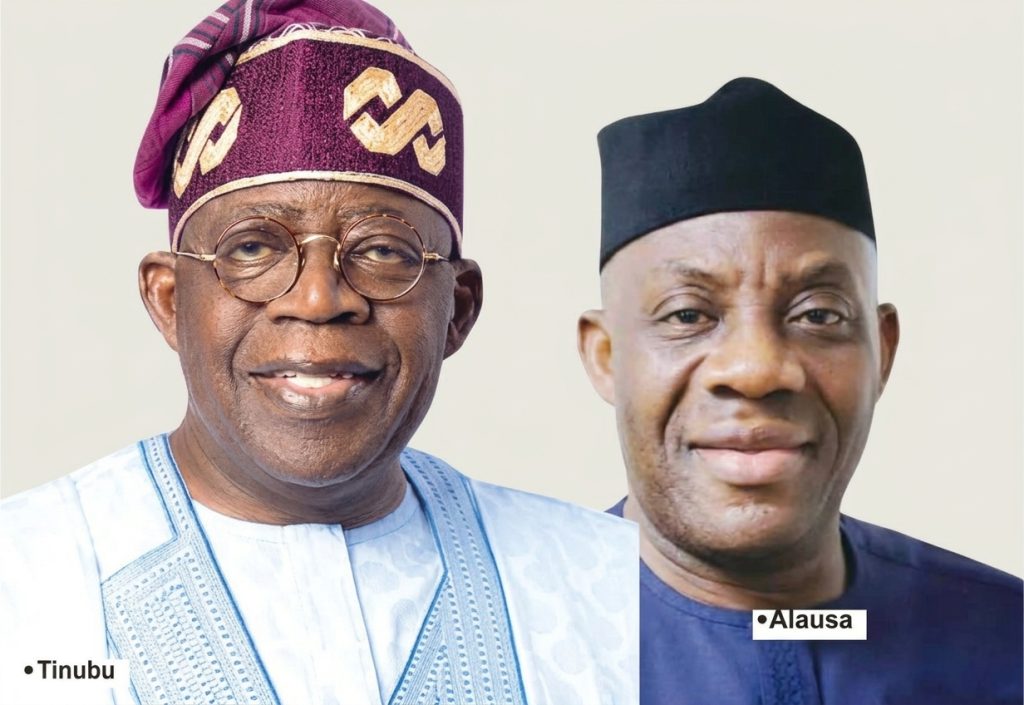
Can Tinubu’s education reforms rescue a generation? – Inside Alausa’s ambitious agenda
By Joseph Erunke, Abuja
With nearly 46 million children reportedly captured in a new education data system, almost 250,000 Nigerians undergoing technical skills training and the government claiming to have returned one million out-of-school children to classrooms, the Tinubu administration is making an ambitious case for an education turnaround. But can impressive figures translate into lasting educational transformation?
For decades, Nigeria’s education crisis has been defined by millions of children outside classrooms, overcrowded schools, inadequate facilities, poorly equipped laboratories, frustrated teachers and graduates struggling to find employment despite their qualifications
Now, in the office of the Minister of Education, Dr Tunji Alausa, a digital dashboard is offering a different picture–one the minister says provides an unprecedented opportunity to monitor schools, track enrolment, identify infrastructure gaps and examine the distribution of teachers and pupils nationwide. With a few clicks, Alausa explained, officials can drill down into individual schools to examine enrollment figures, the number of girls, available facilities and teaching personnel.
For a country long challenged by fragmented education statistics, this represents a potentially significant shift. But the real test of Nigeria’s education reforms is not how impressive the dashboard appears in Abuja. It is whether the technology delivers better classrooms, competent teachers, improved learning outcomes and greater opportunities for millions of children. That is the central question confronting Alausa as he presents President Bola Tinubu’s education reforms as the beginning of a measurable turnaround.
Alausa
Speaking while receiving notification of his selection for Vanguard’s Public Sector Icon of the Year award, the minister outlined six priority areas: technical and vocational education and training, science and technology education, reducing the out-of-school population, girls’ education, data and digitalisation, and improving educational quality and teacher effectiveness.
Together, these priorities seek to address a fundamental contradiction in Nigerian education: expanding access without guaranteeing learning, producing graduates without adequate practical skills and increasing enrolment without providing sufficient infrastructure. With Nigeria’s population estimated at approximately 220 million and a youthful demographic, Alausa argued that education reform was imperative. The challenge is to turn this demographic advantage into economic productivity rather than allow it to deepen unemployment, inequality and insecurity
Perhaps the most consequential element of Alausa’s presentation was the ministry’s cloud-based education dashboard, which he said captures information on nearly 46 million children. Its potential lies in replacing fragmented administrative records with a more comprehensive picture of the education system. Reliable information could help authorities identify schools without adequate classrooms, locate teacher shortages, track enrolment and attendance, and direct resources towards underserved communities.
For years, inadequate or inconsistent data have complicated education planning. Children who drop out may disappear from official records, while schools with urgent needs may struggle to attract appropriate interventions. A functioning digital system could change that by helping policymakers identify problems early and monitor whether government investments produce results.But there is a crucial distinction between collecting data and using it effectively.
The minister’s presentation did not independently establish the completeness of the dashboard’s coverage, the frequency of updates or the extent to which its information has been verified against school-level records. For the system to become a credible accountability instrument, its data must be regularly updated, independently validated and linked to decisions on funding and intervention. Appropriate information should also be accessible to researchers, journalists and the public, without compromising children’s privacy. Otherwise, the dashboard risks becoming an expensive digital catalogue of problems rather than an instrument for solving them.
Back to school
Among the most compelling claims in Alausa’s presentation was that the government had brought approximately one million children back into school over the preceding three years. If independently verified and sustained, the achievement would represent a significant step towards addressing Nigeria’s persistent out-of-school crisis.Yet, educational exclusion is not simply a question of school admission. Poverty, insecurity, displacement, child labour, early marriage, inadequate infrastructure and the cost of schooling all contribute to keeping children away from classrooms.
In conflict-affected communities, children may be enrolled but unable to attend safely. In poor households, the immediate need for income can outweigh the perceived benefits of education. Girls may face additional barriers, including household responsibilities, early marriage and inadequate sanitation facilities.
Consequently, returning a child to school is only the beginning. The government must establish how many of the reported one million children remain enrolled, attend consistently, progress through school and acquire foundational literacy and numeracy skills. It must also demonstrate that interventions are reaching the hardest-to-reach populations, particularly children in remote rural settlements, economically disadvantaged households and communities affected by insecurity.
Without transparent definitions, a clear baseline and independently verifiable evidence, the reported figure cannot by itself establish the extent to which Nigeria’s out-of-school crisis has been reduced. The country needs not merely children counted in school records, but children who attend, learn and complete their education.
Another major pillar of Alausa’s agenda is technical and vocational education and training, under which he reported that nearly 250,000 Nigerians were undergoing skills training. The initiative challenges the longstanding perception that conventional university education is the principal route to success. Nigeria needs electricians, welders, mechanics, construction technicians, renewable-energy installers and manufacturing specialists whose expertise requires practical training rather than classroom theory alone.However, the number of people enrolled in training programmes is only an initial measure of success. The decisive questions concern the quality of instruction, relevance of the courses, availability of modern equipment and whether participants obtain recognised qualifications.
Jobs
More importantly, are trainees securing jobs, establishing businesses and earning sustainable incomes? Training institutions must work closely with employers to identify skills shortages, update curricula and provide practical experience. The government should publish completion rates, certification figures and employment outcomes to establish whether the initiative is creating genuine pathways to economic mobility. Without such evidence, Nigeria risks producing another generation of certificate holders without the practical competencies employers need.
Alausa also identified girls’ education as a priority, citing approximately six million girls reached through interventions and referring to an initiative involving an African Development Bank credit facility of about $1.2 billion. The precise programme scope, financing terms and beneficiary figures require further clarification.
Nevertheless, the policy direction addresses an important national challenge. Denying girls education restricts their employment opportunities, weakens their economic independence and deprives communities of the broader benefits associated with female education.
But interventions must go beyond enrolment figures.Safe schools, adequate sanitation, menstrual hygiene facilities, qualified teachers and protection against gender-based violence are essential to keeping girls in education. In insecure communities, school safety is particularly critical.The government must distinguish between girls newly enrolled, those already attending school who receive additional support and those successfully returned after dropping out. It must also demonstrate whether beneficiaries remain in school, progress academically and complete their education.The ultimate objective should be to ensure that a girl’s future is not determined by her birthplace, family income or the obstacles confronting her
The quality of teachers and education may ultimately determine whether the other reforms deliver lasting results.A country can build classrooms, enrol millions of pupils and introduce new curricula but still fail if children cannot read proficiently, understand mathematics or apply scientific knowledge. Teachers are the most immediate link between government policy and the child’s classroom experience. Strengthening science, technology, engineering, mathematics and medical sciences education therefore requires more than curriculum changes. It demands qualified teachers, functional laboratories, appropriate learning materials and effective practical instruction.
Alausa also highlighted the shift towards competency-based and outcome-oriented curricula, an important response to a world increasingly shaped by technology, artificial intelligence and changing labour-market demands. But teachers need adequate preparation, continuous professional development and the resources to deliver these changes.
Schools must also be assessed against credible learning benchmarks rather than judged mainly by enrolment, examination participation or certificates awarded.
Without reliable evidence of improvements in reading, mathematics and science, it will remain difficult to determine whether the reforms are improving learning or merely expanding the machinery through which education is delivered.
At the tertiary level, Alausa said the number of Nigerian universities appearing among the world’s top 1,000 to 1,200 institutions had increased from approximately 14 before Tinubu assumed office to 29. He also reported that the administration had invested more than ₦800 billion in student hostel construction across nearly 120 federal institutions over three years. If substantiated, these interventions point to efforts to improve institutional visibility and student welfare. Additional accommodation could ease overcrowding, improve safety and reduce the difficulties students face in securing housing. However, the value of the reported investment depends on how many hostels have been completed, how many bed spaces have become available and whether accommodation remains affordable.
Rankings
Similarly, international rankings provide useful indicators of research activity, reputation and institutional performance, but do not capture every dimension of educational quality. Research output, laboratory capacity, graduate employability, completion rates and teaching standards must also feature in assessments of university progress.
Alausa also highlighted relative stability in the tertiary academic calendar. Reducing strikes and disruptions is essential to limiting delays, additional household expenses and declining confidence in the university system.
But stability must be accompanied by adequate funding, improved working conditions, research facilities and better learning environments. The objective is not merely to keep universities open, but to make them productive centres of teaching, research and innovation.
The controversy surrounding the management and funding of federal unity schools, including King’s College, Lagos, raises difficult questions about school financing, deteriorating infrastructure and the financial burden on parents.The government is right to recognise that public schools cannot consistently deliver quality education without adequate funding for facilities, teaching materials and essential services. However, reform cannot rest on the assumption that higher fees are justified simply because improvements are promised.
Any adjustment must be supported by transparent costs, a clear account of how additional revenue will be spent and safeguards for pupils whose families cannot afford higher charges. Where government subsidies are intended, their terms should be publicly explained.
Challenges
The challenge is to develop a sustainable financing model that improves quality without excluding children from disadvantaged backgrounds.
A reform that upgrades facilities but prices poorer pupils out of school would solve one problem by creating another.
Alausa’s presentation offers an ambitious picture of an education system undergoing reform. The digital dashboard, reported return of one million children to school, expansion of technical training, girls’ education interventions, hostel investments and improved university rankings point to efforts to address longstanding weaknesses.
But policy announcements and impressive figures are not, in themselves, proof of educational transformation.Nigeria needs evidence that children are learning, teachers are equipped to teach, girls are completing school, vocational trainees are finding work and university students are benefiting from better facilities and uninterrupted academic programmes.
It also needs independently verifiable data, transparent financing and accountability when programmes fail to achieve their objectives.
Here lies the potential importance of Alausa’s dashboard. If it enables Nigerians to identify underserved schools, compare performance and monitor the results of government interventions, it could help establish a new standard of evidence-based education governance.
If it remains largely an internal administrative tool, much of that potential will be lost.
Ultimately, Tinubu’s education reforms will be judged not by what officials display on a screen in Abuja, but by what children experience in classrooms across Nigeria.
The decisive evidence will be the child who learns to read after years of exclusion, the girl who completes secondary school despite formidable obstacles, the young person who acquires a marketable skill and secures decent employment, and the university graduate equipped to contribute to a modern economy.
For now, Alausa has presented a roadmap and a digital instrument that could make education governance more transparent. The harder task is proving that the numbers translate into learning, opportunity and lasting change.
Nigeria does not merely need an education system that can count its children. It needs one that can educate them.
Vanguard News
The post Can Tinubu’s education reforms rescue a generation? – Inside Alausa’s ambitious agenda appeared first on Vanguard News.