
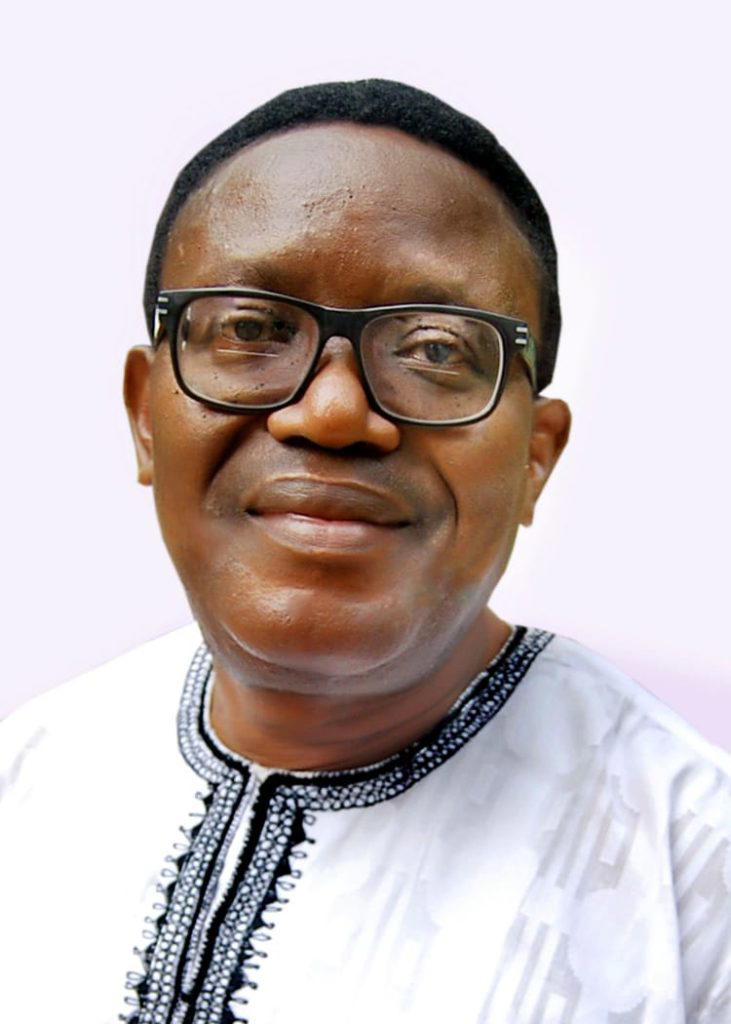
Calypso: Enslaved African gift and its Mighty Sparrow, by Owei Lakemfa
Slinger Francisco, better known as Mighty Sparrow, the “Calypso King of the World”, flew away on September 27, 2026. He was ninety.
Calypso music was invented in the seventeenth century by African slaves in Trinidad who had mainly been taken from the Ibibio, Efik and Igbo peoples in present-day Nigeria and Congo. It is generally accepted that the name calypso originated from the Efik word “kaiso” (ka isu), which means “go on!”, and the Ibibio words “kaa iso”, meaning “continue, go on”. They were common words used by the slaves to urge somebody to go on or meet a challenge. Eventually, the word “cariso” emerged among Trinidadians. It meant “old-time” calypsos. Calypso was not just music, but also a coded means of communication from which the colonial masters were excluded. It spread news among the enslaved, made fun of slave owners, advanced social commentary and allowed verbal competition, including insulting lyrics.
It was initially sung in French Creole because the masters who brought the slaves to the Trinidadian sugar plantations were French planters. But it was a Spanish colony which changed hands between the Courlanders from present-day Latvia, the Dutch, French and British. The latter fully took over the territory following ‘The Treaty of Paris’, signed on May 30, 1814. This is how Calypso was eventually rendered more in English.
Calypso evolved with varied instruments, including guitar, congas, trombone, double bass, saxophone, piano and maraca. It was street music that became the famous Trinidad Carnival, which promoted competition, especially after the 1834 abolition of slavery. The best-known calypso musicians adopted names that sounded bombastic, such as Roaring Lion; historical, like Attila the Hun; and, given British colonialism, royal titles like Duke and Lord. This might have given rise to the common name or title ‘Lord’, such as Lord Invader, Lord Melody, Lord Pretender, Lord Creator, Lord Brynner and, of course, Lord Kitchner, referred to as the “Grandmaster of Calypso”.
Mighty Sparrow explained how he earned his new name: “When I started singing, the bands were still using acoustic instruments and the singers would stand flat-footed, making a point or accusing someone in the crowd with the pointing of a finger, but mostly they stood motionless. When I sing, I get excited and move around, much like James Brown, and this was new to them. The older singers said, ‘Why don’t you just sing instead of moving around like a little sparrow?’ It was said as a joke, but the name stuck.” Later, he changed his name from Little Sparrow to Mighty Sparrow.
His first public performance was the song “The Parrot and the Monkey” in 1954. The following year, he recorded “Missing Baby (Ruby)”, “High Cost of Living” and “Race Track”. Sparrow had been born a Grenadian, but at the age of one, his mother moved him to Trinidad and Tobago, T&T. His music explored the wide themes of calypso music. In 1956, he celebrated the departure of United States troops from T&T with his famous song ‘Jean and Dinah’ or “Yankees Gone”. In it, he accused them of promoting prostitution. When T&T became independent on August 31, 1962, he released a song, ‘Our Model Nation’. He sang: “The whole population of our little nation Is not a lot But oh! what a mixture of races and culture That’s what we’ve got Still no major indifference Of race, color, religion or finance It’s amazing to you I’m sure.”
But there was a political crisis in the new nation, and Mighty Sparrow, in his album ‘Sparrow the Conqueror’, defended the Government of Dr. Eric Williams. He sang that the actions of the opposition were senseless: “Come on, what is wrong with this island Poor Dr. Williams Come on, I said what’s wrong with this island Poor Dr. Williams Everybody doing what they like Striking when they want to strike It appears that nobody cares About the island economy I tell you.”
He crooned that what was going on was anarchism: “No gas today, no phone tomorrow What next I don’t know No drain digging, no rubbish cleaning Only corbeaux working The island as you see suffering politically Because the present Government have some stupid opponent Oh Lord man they ignorant Because the present Government have some stupid opponent Not one is intelligent Some of them, them opposing So much crime they commit Some again have no education Is them does make the confusion Anything at all the Premier say They always standing in the way And like they suffering from a mental block Talking one set of sewerage talk I tell you.”
Mighty Sparrow was so fanatical in his support of the Williams administration, and so angry with those opposed to it, that he recommended the death penalty for the opposition: “The Premier cannot make a suggestion Without a big objection And some of them way want to object Really should have a rope ‘round they neck.”
But Sparrow eventually fell out with the Williams administration. Part of his criticism is captured in the song “No, Doctor, No”. Pan-Africanist Kwame Nkrumah strove in the late 1950s not just to mould Africa into a single country but also to strive for wider African-Diaspora unity. But it appeared the Caribbean was moving faster as it, in 1958, established the West Indies Federation, made up of ten British colonies, to jointly secure independence and build a united region with its capital in T&T. But disagreements over issues like leadership, power distribution and the choice of a capital surfaced. Jamaica sounded the death knell by holding a referendum in 1962, resulting in its exit and the collapse of the federation.
Sparrow was inconsolable. In a song that year titled ‘Federation’, he sang: “Whether you’re a damn Trinidadian (We are as one!) If they say you’re a smart Barbadian (We are as one!) Get away from me you crazy Grenadian (We are as one!) I don’t care if you’re a bad Jamaican (We are as one!) Let us join together and love one another (We are as one!) If you’re born in New York and your parents are West Indian (We are as one!)”
He had long stays in Britain and the US. In 1977, he went to West Africa on a music tour during which he was given a Yoruba chieftaincy, Omowale (the child has returned home) of Ikoyi. Sparrow settled in the US and, in 2008, released “Barack the Magnificent” in support of Barack Obama’s race to the White House. In all, he had over 280 songs captured in more than seventy albums, straddling varied aspects of life, from love and politics to gospel. For over seven decades, Mighty Sparrow flew around the world, pollinating generations. Now, he has flown out into eternity.
The post Calypso: Enslaved African gift and its Mighty Sparrow, by Owei Lakemfa appeared first on Vanguard News.