
Birth registration: NPC, UNICEF unite to give every child legal identity
By Chioma Obinna & Rotimi Ojomoyela
The National Population Commission (NPC), National Identity Management Commission (NIMC), Association of Local Governments of Nigeria (ALGON) and the United Nations Children’s Fund (UNICEF) have intensified efforts to ensure that every Nigerian child is registered at birth and given a legal identity from the earliest stage of life.
The stakeholders are pushing for stronger integration of birth registration with primary healthcare services, greater decentralisation of registration centres to local communities and seamless interoperability between civil registration and national identity systems.
The renewed push is aimed particularly at newborns and children under one, with stakeholders stressing that timely birth registration can serve as the gateway to a child’s access to healthcare, education, social protection and other essential services.
The initiative forms part of efforts to strengthen Nigeria’s civil registration and vital statistics system and close the gap that has left millions of children without proof of legal identity.
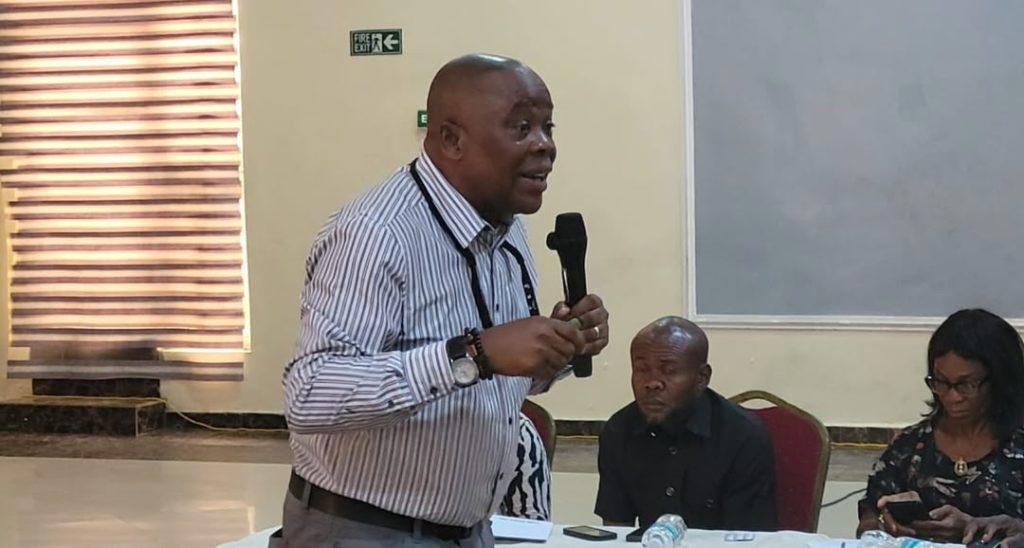
At a media dialogue on birth registration for children under one year, UNICEF Child Protection Specialist, Mr. Denis Onoise, said the challenge was not simply about parents failing to register their children, but also about removing barriers that make registration difficult for families.
Onoise identified inadequate registration centres, long distances to service points, language barriers, inefficient registration processes and insufficient financial, human and material resources among factors limiting access to civil registration services.
He said: “The main challenges to accelerate civil registration and legal identity in Nigeria include limited accessibility to civil registration services, inadequate number of registration centres and associated long distances, language barriers, inefficient registration processes, and insufficient financial, human capacity and material resources.”
According to him, families also bear indirect costs, including transportation, time away from work and repeated journeys to registration points.
“The problem is compounded in hard-to-reach areas and among disadvantaged population groups,” he added.
The stakeholders, however, are seeking to turn the challenge into an opportunity by connecting birth registration with the country’s broader identity management system.
Under the proposed stronger collaboration, NPC would oversee birth and death registration, while NIMC would facilitate the linkage of registered births to the national identity database and prompt assignment of the National Identification Number (NIN).
Local governments would play a critical role by bringing registration services closer to families through ward and community-level registration points and integrating birth registration into primary healthcare services.
The approach is expected to reduce the burden on parents and ensure that registration becomes part of routine services provided when a child is born or taken to a health facility.
The partnership also involved UNICEF, which provides technical, financial and technological support, while Barnksforte Technologies Limited supports the development and deployment of the electronic civil registration and vital statistics system.
The stakeholders particularly advocated the integration of birth registration into primary healthcare, where mothers and newborns already interact with the health system.
Under the proposed model, birth notification at a health facility or community level would trigger the registration process, followed by issuance of a birth certificate and linkage with the national identity system.
This, they said, would make birth registration less dependent on parents making separate journeys to registration centres.
The strategy is also expected to improve the accuracy and timeliness of population data required for planning healthcare, education, social protection and other government programmes.
The stakeholders said birth registration goes beyond obtaining a certificate.
According to Onoise birth record establishes a child’s identity, including name, sex, place and date of birth, and provides the foundation for recognition before the law.
He said without legal identity, children may face difficulties proving their age or identity and can become more vulnerable to exclusion from education, healthcare, social protection and justice systems.
In his presentation, he further noted that an estimated 24.8 million Nigerian children under five have been registered.
Such children, it warned, may also face increased vulnerability to child marriage, trafficking, child labour, abuse, exploitation and family separation.
He said stakeholders are also relying on digitalisation to expand coverage and improve efficiency.
He explained that: “An interoperable digital civil registration system would enable registration records to be securely shared across relevant government systems while maintaining data protection and confidentiality.
“The approach is expected to reduce duplication, improve data quality and make it easier to track births from notification through registration, certificate issuance and identity enrolment.”
He however, acknowledged that gaps remain.
He noted that health-facility interoperability had stalled in some areas, with none of 371 targeted facilities live at the time of the assessment, while the birth notification pipeline was yet to record notifications in the reporting year.
There was also a significant gap between registrations and certificates issued, with 443,162 registrations compared with 120,469 certificates issued.
He further noted that parents remain key in the reforms being proposed.
He stressed that government systems alone cannot achieve universal birth registration.
Parents and caregivers remain central to ensuring that every birth is registered promptly.
He urged parents to take advantage of registration services when available at health facilities, local government offices and community registration points, while calling on traditional and religious leaders, women’s groups, young people and the media to strengthen public awareness.
He also called for stronger domestic financing, recruitment of permanent registrars, improved coordination among agencies and sustained community mobilisation.
He explained that the overall objective was to make birth registration a simple, accessible and routine part of every child’s entry into life, ensuring that no child grows up without a recognised identity.
The post Birth registration: NPC, UNICEF unite to give every child legal identity appeared first on Vanguard News.