
Bini riva life festival: The river proves “Water No Get Enemy” as neighbours unite
By Paul Olayemi
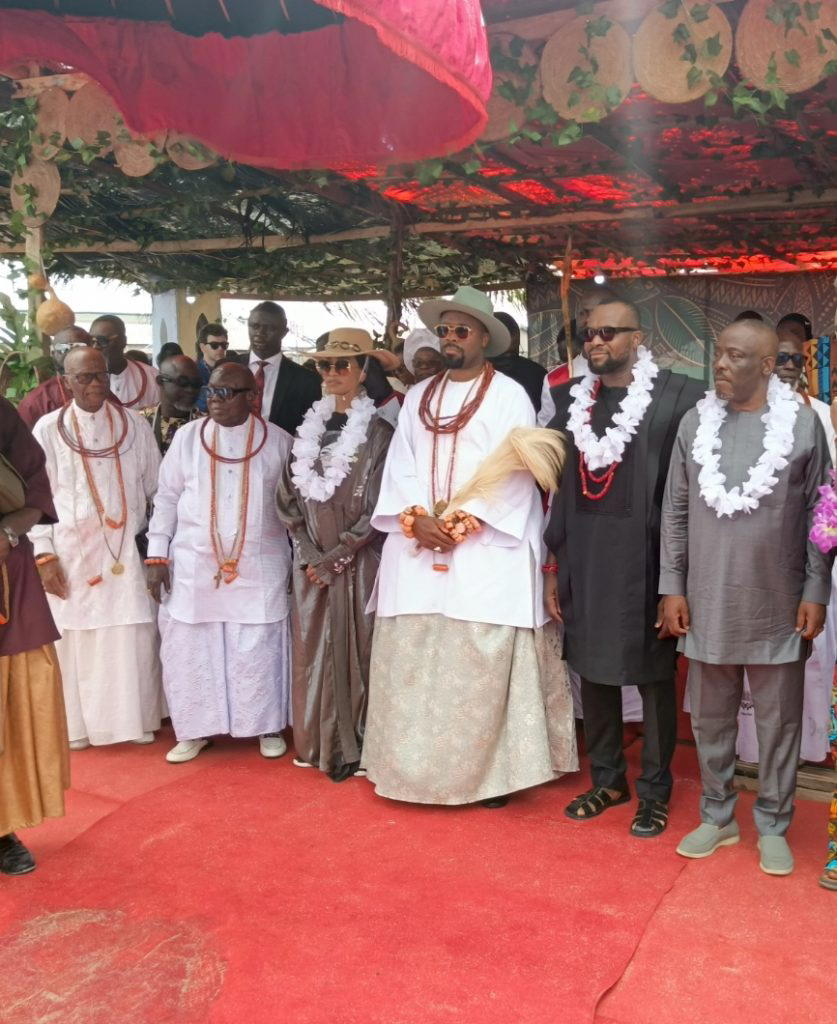
OBOGHORO—THE Benin River came alive on August 16, 2026 not just with fishing boats and trading canoes, but with royalty, federal ministers, dignitaries, fishermen, performers, and communities from across the Niger Delta converging for the closing day of Bini Riva Life, woven into the fifth coronation anniversary of the Olu of Warri, Ogiame Atuwatse III.
His Majesty sat in quiet excitement watching the boat races unfold before him. Around him, residents and visitors had gathered not merely to observe a festival, but to step into a way of life rarely glimpsed beyond the creeks and winding waterways of the Niger Delta. It was, in every sense, a homecoming, not of people, but of a people to their own story.
Boat races, traditional dances, grilled seafood, and vibrant crowds turned Oboghoro into a stage for a way of life rarely glimpsed beyond the creeks.
For Dr Godwin Ebosa, the community’s National Leader, the day carried deep meaning. “It is a festival that features live competitive performances by the Ijaws, Ilajes, Itsekiris and Urhobos, intentionally geared towards creating harmonious coexistence,” he said, urging support to make Oboghoro “an infectious cultural agent of development.”
Hannatu Musa Musawa, Minister of Art, Culture, Tourism and the Creative Economy, saw beyond the spectacle. “Our culture is not only our inheritance. Properly developed, it is also an economy.” She pointed to fishermen, boat operators, food vendors, artisans, musicians, and digital creators, all part of the creative economy.
She urged the community: “Do not allow Bini Riva Life to remain simply an annual event. Build it into a destination platform. Let visitors come for the festival and return for the river, the food, the heritage.”
The festival already spanned communities: Oboghoro hosted river games and the closing ceremony; Koko offered a seafood festival with cooking competitions, masterclasses, and an art exhibition; Ogheye showcased fishing and cultural displays. It was a constellation of traditions.
Former Delta Commissioner Orode Uduaghan highlighted the unity on display. “You are aware there’s always this funny tension, but in these games, everyone is here. Whether you are Itsekiri, Ijaw, from Kano, Benin, everybody is here. That unity is very important.”
She added, “Water no get enemy. Truly, all of us in this place are not enemies. We are brothers, sisters.”
Dr Bosun Tijani, Minister of Communications, Innovation and Digital Economy, on his first visit to a riverine community, recalled the Olu’s request to connect every part of Nigeria, including riverine areas, with digital infrastructure.
Even as he spoke of the future, the festival remained rooted in age-old traditions: fishermen returning to the river, children absorbing their heritage, performers reviving old songs, and vendors turning fresh catch into meals that drew long lines.
By evening, the celebration had become a conversation between memory, identity, and possibility. Oboghoro’s lingering question: can the world that came on August 16 be persuaded to return?
Musawa offered a clear answer: “Nigeria does not have to manufacture a tourism identity. We already have one. It lives in our rivers, communities, festivals, cuisine, fashion, music, craftsmanship, traditions and extraordinary cultural diversity.”
As fireworks lit the waterfront, the community had done more than stage a celebration; it had opened its river not as a spectacle, but as a living heritage to be understood. The river flows on, carrying fishermen and dignitaries, traditional songs and digital dreams, history and tomorrow on the same patient current.
The post Bini riva life festival: The river proves “Water No Get Enemy” as neighbours unite appeared first on Vanguard News.