
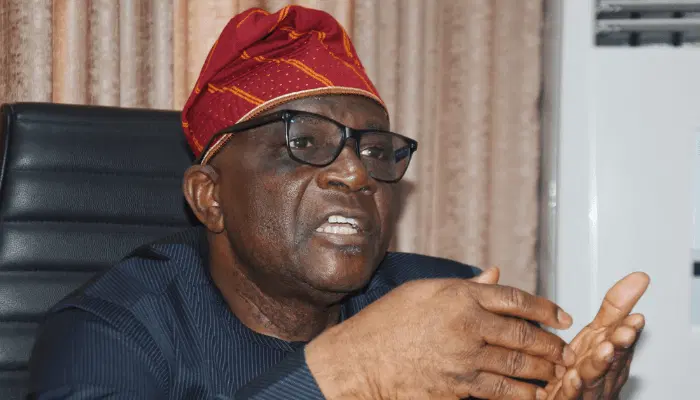
Atiku’s fuel subsidy position shows policy flip-flops — Presidency
— Accuses ex-VP of lacking understanding of his proposed policy
By Johnbosco Agbakwuru
ABUJA — The Presidency has criticised former Vice-President and African Democratic Congress (ADC) presidential candidate, Alhaji Atiku Abubakar, over his position on petrol subsidy, accusing him of political posturing and policy inconsistency.
The Presidency said Atiku was “suffering from a lack of basic understanding of his newfound policy prescription.”
In a statement issued by the Special Adviser to the President on Information and Strategy, Mr Bayo Onanuga, the Presidency said the former vice-president’s argument appeared to misunderstand the dynamics of the petroleum market.
It argued that petrol does not become cheaper simply because the government introduces a subsidy or because competition is expected to emerge.
The statement said Atiku’s recent comments had raised questions about the consistency of his proposed policy on petrol subsidy.
According to the Presidency, Nigerians had heard three different explanations within a week about what an Atiku administration would do regarding the subsidy.
It said Atiku’s spokesperson, Paul Ibe, initially stated that Atiku would restore petrol subsidy if elected president and later phase it out, describing the measure as a temporary intervention to allow Nigerians and businesses to recover.
The Presidency said another senior aide, Phrank Shaibu, subsequently described Ibe’s statement as an “unauthorised and misleading characterisation” of Atiku’s position.
It added that Atiku later intervened, insisting that his position “has not changed” and that he would restore what he described as a “targeted subsidy” if elected president.
Atiku was quoted as saying, “I will restore a targeted subsidy and put purchasing power back in the hands of Nigerians.”
The Presidency said the development went beyond semantics, describing it as a policy contradiction that required clarification.
It questioned why one of Atiku’s aides described the proposed subsidy as temporary and subject to a phase-out, while another publicly rejected the explanation before Atiku himself reaffirmed the original position.
The statement said Nigerians deserved clarity rather than what it described as “policy by trial and error.”
On the economics of fuel pricing, the Presidency argued that petrol prices were influenced by several factors, including international crude oil prices, exchange rates, refining costs, transportation, distribution and other market costs.
It said competition could improve efficiency and margins but could not shield Nigeria completely from global crude oil prices and other input costs.
The Presidency also challenged what it described as an oversimplification of the relationship between petrol prices, transportation and food inflation.
It acknowledged that energy and transportation costs affect food prices but said petrol prices alone did not account for food inflation.
According to the statement, agricultural productivity, insecurity, exchange rates, logistics, storage, flooding, input costs, money supply and supply constraints also influence food prices.
It said a comprehensive economic programme should address these factors rather than attribute the entire cost-of-living crisis to petrol prices.
The Presidency challenged Atiku to explain what he meant by “targeted subsidy”, including its projected cost, beneficiaries, funding mechanism and the conditions that would determine its eventual termination.
It said Nigerians could not afford another costly subsidy regime without clear details on how it would operate.
The Presidency also urged Atiku to present what it described as a coherent, costed and workable petroleum policy, rather than “playing politics” with a policy it said had improved the fiscal position of the three tiers of government and helped stabilise the macroeconomic environment.
It further criticised what it described as policy inconsistency and election-driven populism, saying the economy was too important to be subjected to “policy somersaults, incoherence, destructive populism and election gimmicks.”
On Atiku’s proposal to link subsidy to the crude oil barrel, the Presidency questioned whether the former vice-president had considered the other products obtained from crude oil refining.
It said petrol accounts for about 45 per cent of the products from a refined barrel, while other products include aviation fuel, kerosene, diesel, petrochemical feedstocks, asphalt, hydrocarbon gas liquids, lubricants and waxes, petroleum coke and sulphur.
The statement noted that diesel was deregulated in 2004 under the Obasanjo-Atiku administration, while kerosene and jet fuel were deregulated at different times.
It questioned whether Atiku would also subsidise other petroleum products if his argument was based on subsidising products derived from crude oil.
The Presidency also asked whether refineries receiving discounted crude would be allowed to profit from the remaining products while subsidy support was concentrated on petrol.
It concluded by accusing the former vice-president of lacking sufficient understanding of the policy he was proposing.
“The former vice-president is definitely suffering from a lack of basic understanding of his newfound policy prescription,” the statement said.
The post Atiku’s fuel subsidy position shows policy flip-flops — Presidency appeared first on Vanguard News.