
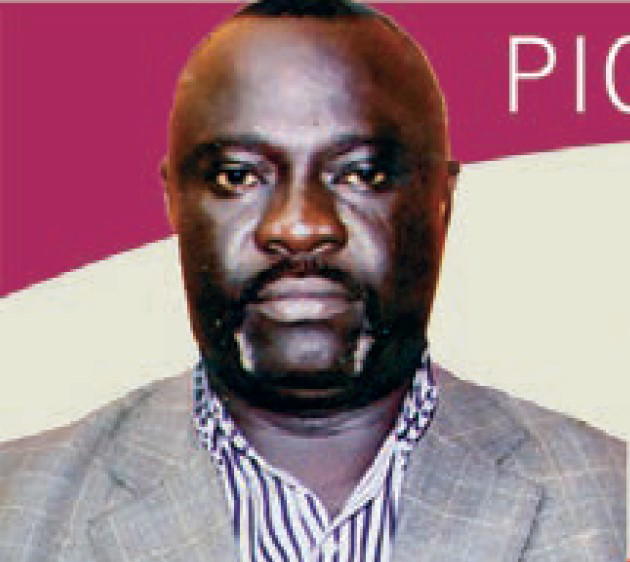
As Nigerians battle compounded hardship on a daily basis, by Adekunle Adekoya
THE last one week has been quite impactful on Nigerians. Just as everyone was figuring how to continue managing fast-disappearing resources as prices of just about everything resumed an upward climb, the price of fuel energy took off from its precarious perch in the stratosphere, and headed for outer space. Most of us Nigerians woke up to see filling stations selling petrol at above N1,350 last Monday. Ostensibly, the latest surge in the price of petrol was triggered by tensions in the Middle East, with crude oil selling well above $100 per barrel. What is worse, the price of cooking gas, used by millions of households all over the country jumped well above N1,300 per kilogramme, and in most of Lagos suburbs with bad roads, one kilogramme of gas is selling at about N1,500.
In other words, transportation costs and household expenses are rising astronomically, while increasing operating costs for businesses that depend on fuel for logistics, power generation and other activities.
For transporters, the increase translates into higher daily operating expenses. Commercial buses, taxis, tricycles and other petrol-powered vehicles may require higher fares to maintain their margins. What this all translates to is that me, you, the guy next door are paying far more than we can easily afford to move around and/or cook food. Economically, this has wider implications for the overall national economy as higher transportation costs will raise the cost of moving food, raw materials and finished products to and from factories.
Of course, distributors and retailers will pass the additional logistics expenses to consumers, potentially increasing the prices of food and other essential goods. Households that rely on petrol or diesel-powered generators are also likely to face higher electricity-generation costs.
What confounds me in all of this is that the faction of the power elite currently in charge of government seems unperturbed, and is carrying on as if things were okay, just as they were Before Change, BC, as in 1990 or 2010. Do the politicians really know that people are suffering? Do they know that people are being stretched to breaking point as they toil daily to make ends meet? It is like a father, the head of the household, sitting comfortably with his friends, playing Ludo under the mango tree while his child is hemorrhaging with a high fever in the house. All exhortations by his wife to come and see what could be done to the child’s fever are falling on deaf ears as Baba continues playing his game of Ludo.
This week, the Presidential Campaign Council of the All Progressives Congress headed by Senator Abdulaziz Yari hit the road with a visit to the Oba of Lagos. Next, they went to Benin, and visited the Omo N’Oba N’Edo, Oba Ewuare of Benin. The campaign has begun in earnest. But who are they campaigning to? People who are struggling with the basics of life? People who can no longer afford transport fares for their children to go to school? Are they campaigning to men wearing shirts whose collars are frayed, and whose toes are peeping out of worn shoes? Do they want women with torn wrappers and faded, worn blouses to listen to them? Will they be talking to youths that left universities and polytechnics four, five six, eight years ago but are still at home with no jobs?
If it has to be done, I think we need to remind these politicians that we are their first priority, and that we matter. I think campaigns should slow down, while elected officials put on their thinking caps to see what could be done to improve the lives of Nigerians, nay, rescue the ordinary man and woman from despair and agony as people try to figure out what next to do to bring in just N500. As if N500, which was once a princely sum, can do anything for anybody in today’s Nigeria.
One wonders if those in the corridors of power have any feedback mechanism through which they can judge the impact of their policies. It is good that the ruinous subsidy policy had been jettisoned. But at what cost? Has that been assessed? In fact, I am of the bent that the impact of subsidy removal was well-known by President Tinubu, if his position paper in 2012 when former president Jonathan wanted to remove it was anything to go by. If the president said all that in 2012, why did he deliberately, without consideration for the multiplier misery that would become our lot, put the cart before the horse? Why? Why?? Why???
I think those in the corridors of power, led by Mr President, do not know, at all, that THINGS ARE VERY HARD for us, Nigerians. And if they know, and have opted to do nothing to ameliorate our situation so far, then it must go on record that we are under the yoke of people who are spiritually wicked.
Whichever direction you turn, costs are rising to unaffordable levels — transport fares, cost of food items, housing and accommodation! What we have we done to deserve all this hardship? Some say that a people deserve the government they get. I disagree. I do not think my fellow country men and women, the good people of Nigeria are so bad that a generation of political leaders devoid of the slightest human feelings are in charge of the country. Are all of them bad? I do not think so, but if they are treating us so badly, then majority of them must be bad. For God’s sake, the basic duty of government in the social contract of Nigeria is to see how life can be most meaningful for the citizens they are ruling over. All this compounded hardship is not governance, it is something else by another name. No be so? TGIF.
The post As Nigerians battle compounded hardship on a daily basis, by Adekunle Adekoya appeared first on Vanguard News.